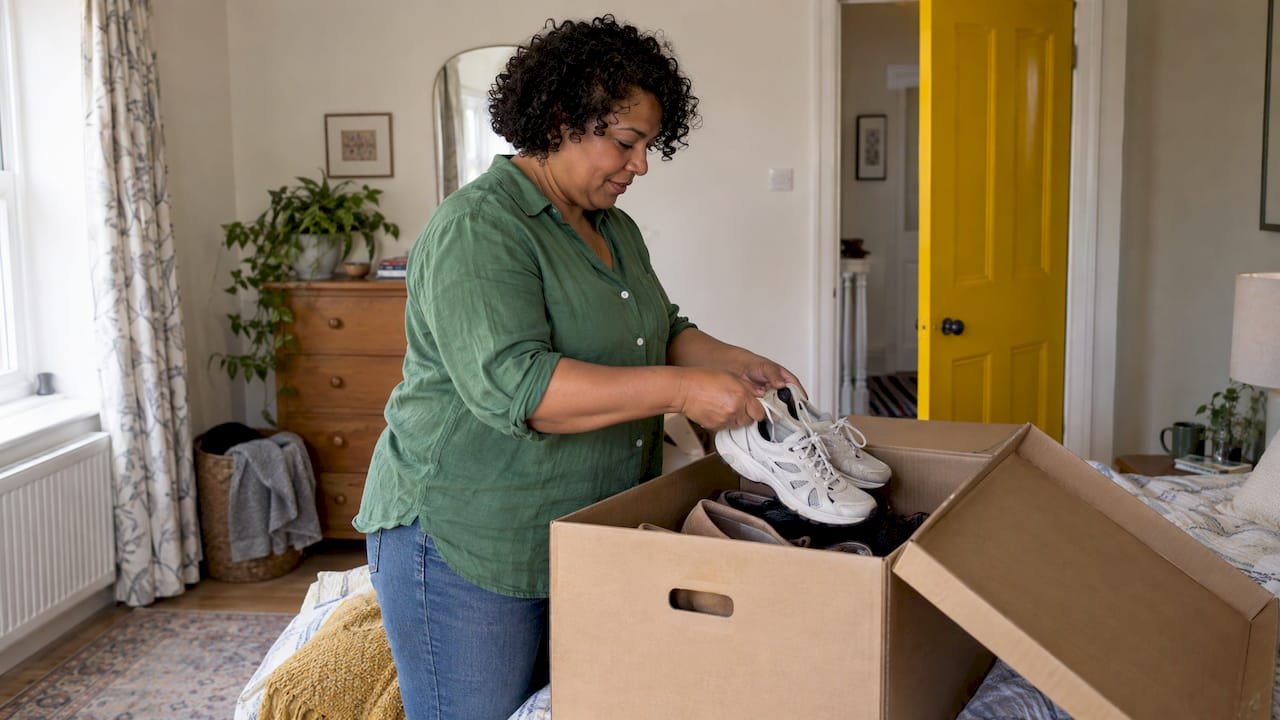
The best way to pack shoes for a move is to sort them first, clean and dry every pair, stuff each shoe so it holds its shape, keep each pair together, and put them in a rigid box with the heavy pairs at the bottom. A strong, lidded reusable box makes this easier, because there is nothing to assemble and nothing that gives way under the load. Here is the full routine, step by step, with what goes wrong at each stage.
Key Takeaways
- Sort shoes into keep, donate and bin piles before you buy a single sheet of packing paper. Fewer pairs means fewer boxes.
- Clean and fully dry every pair. Damp or muddy shoes can spread dirt to other pairs and develop mould or mildew in transit.
- Stuff each shoe with socks or paper, then keep the pair together by tying laces or wrapping the two as one.
- Pack heavy pairs upright at the bottom, light and delicate pairs on top, and fill gaps so nothing shifts.
- Wrap in plain paper rather than newsprint, and choose reusable containers to cut down on waste.
Table of Contents
- Start by deciding which shoes are coming with you
- Clean and dry every pair first
- Keep every pair together
- Stuff each shoe so it keeps its shape
- What to use for each type of shoe
- Original shoe boxes: use them with care
- Packing the box: weight, layers and gaps
- Why a rigid, lidded box suits shoes
- Cut down on packing waste
- A timeline that works
- Pack your shoes in boxes that go back after the move
- FAQ
- Sources
Start by deciding which shoes are coming with you
Most households own more shoes than they wear. A move is the cheapest moment to sort them, because every pair you carry has to be cleaned, wrapped, boxed, lifted and unpacked.
Make three piles on the floor or the bed:
- Keep: pairs you wore in the last year, plus occasion shoes you genuinely want.
- Donate: wearable pairs that no longer fit your life. Charity shops in Ireland generally take clean, paired shoes in good condition.
- Bin: split soles, broken heels, shoes with no partner.
While you sort, check each pair for damage. A loose heel or a worn sole is easier to deal with now than after it has been squashed in a box for a fortnight.
If the move also depends on selling your current home, the timeline matters for when you pack. A guide to selling your house before moving can help you plan the order of the bigger decisions, so that the shoe sorting does not end up in the last panicked evening.
The volume you end up with sets how many boxes you need. Our room-by-room guide to how many boxes you need for moving house shows how to count for the whole home, wardrobe and hallway included.
Clean and dry every pair first
This is the step people skip, and it is the one that causes the problems. Dirt rubs off onto neighbouring pairs, and shoes that go in damp can develop mould or mildew. Nike’s Irish guide makes both points: clean dirty shoes before packing, and make sure they are completely dry.
A simple routine for each type:
- Trainers and canvas: brush off dried mud, wipe the uppers with a damp cloth, and take out insoles and laces if you can so they dry properly.
- Leather: wipe clean and apply polish if you normally do. Leave it to dry before it goes near a box.
- Suede: use a suede brush rather than water.
- Wellies and walking boots: knock out the mud, rinse the soles, and give them a full day to dry. Irish weather means these are often the wettest items in the house, so start early.
Air-dry everything away from direct heat. Radiators can warp glue and leather. If a pair smells, a sprinkle of baking soda inside, left overnight and tipped out, or a silica gel sachet in the box helps keep things fresh during the journey.
Give yourself a day or two for this stage. Drying is the slow part, and it is the reason shoe packing should begin a week or so before the move rather than on the morning of it.
Keep every pair together
A single shoe in the wrong box is a small disaster when you are unpacking at the other end. There are three reliable ways to keep a pair as a pair:
- Tie the laces of one shoe to the other, as the Nike guide suggests.
- Bag the pair in a small cloth or plain bag and fold the top over.
- Wrap the pair together in two or three sheets of plain packing paper.
For flats, sandals and heels without laces, a bag or a paper wrap is the way. Never rely on the shoes simply sitting next to each other in a box. They will drift apart the first time the box tilts on the stairs.
Stuff each shoe so it keeps its shape
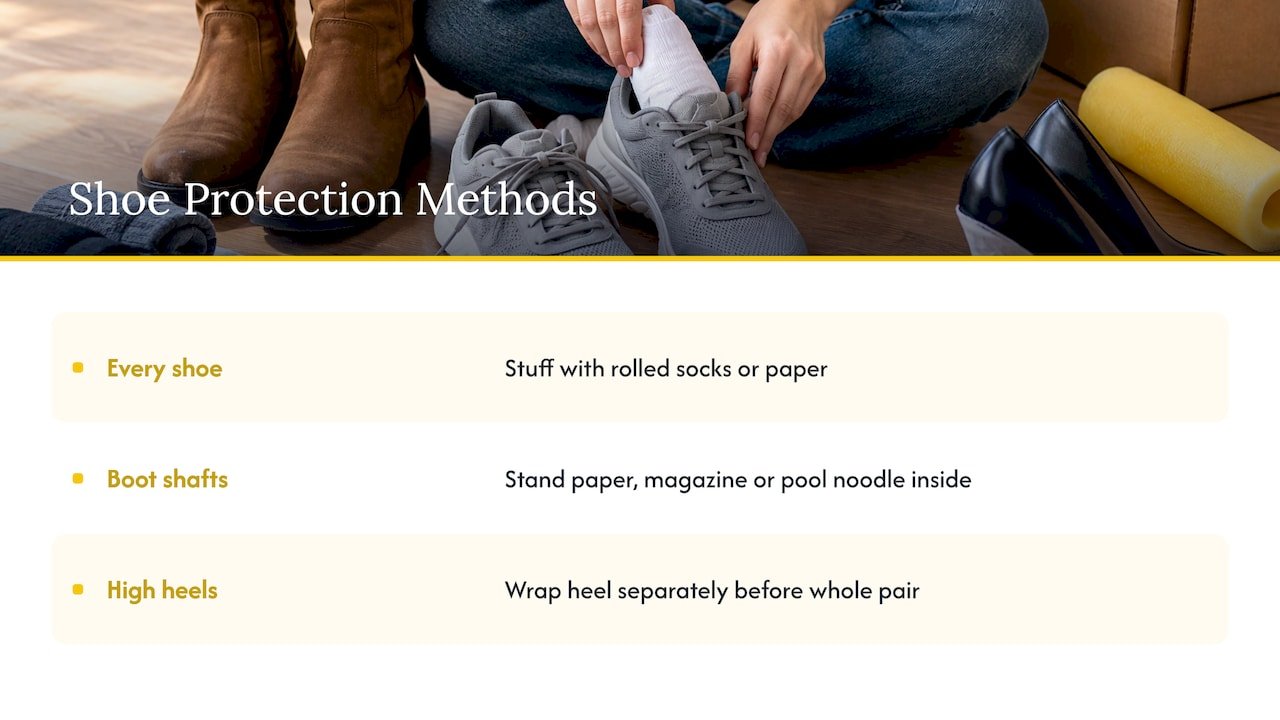
An empty shoe collapses under pressure. The fix costs nothing: push a pair of rolled socks or a crumpled sheet of plain paper into each shoe, toe first, so the front is supported. Nike’s guide recommends exactly this for shoes you care about.
Tall boots need more thought. A boot shaft that folds in half will crease, and the crease often stays. Roll a sheet of paper, a magazine or a pool noodle section and stand it inside the leg so the boot holds upright. Pack boots standing up, or lay them on their sides with the shaft supported.
For heels, wrap the heel on its own with a sheet of paper before wrapping the whole pair. A thin stiletto heel can otherwise work its way through a single layer of paper and mark the shoe beside it.
What to use for each type of shoe
Not every pair needs the same treatment. This table sorts it by what you own.
| Shoe type | Fill the inside | Wrap | Where it goes in the box |
|---|---|---|---|
| Trainers, everyday shoes | Socks | Pair bagged or tied | Upright, towards the bottom |
| Work boots, walking boots, wellies | Rolled paper in the shaft | Pair tied or bagged | Upright, bottom layer |
| Leather dress shoes | Shoe tree or paper | Each shoe wrapped, then the pair, in plain paper | Middle or top, own compartment |
| Heels, occasion shoes | Tissue or paper in the toe | Heel wrapped first, then each shoe | Top layer, or original box |
| Sandals, flip-flops | Not needed | Pair bagged | Top layer, or gaps between heavier pairs |
| Children’s shoes | Socks | Pairs bagged together by size | Anywhere with space |
Two extra details are worth knowing. First, use blank paper for anything pale. Newsprint can leave ink on light leather and canvas. Second, avoid wrapping shoes in sealed plastic bags for long periods, because plastic can trap moisture. A cloth bag or paper lets shoes breathe.
Original shoe boxes: use them with care
Original boxes are ideal for your most expensive or delicate pairs, because each shoe has its own protected space. Their weakness is stacking: the lids crush. If you keep a few, stand them on their sides inside a larger, rigid container and fill the spare room with paper so they cannot move.
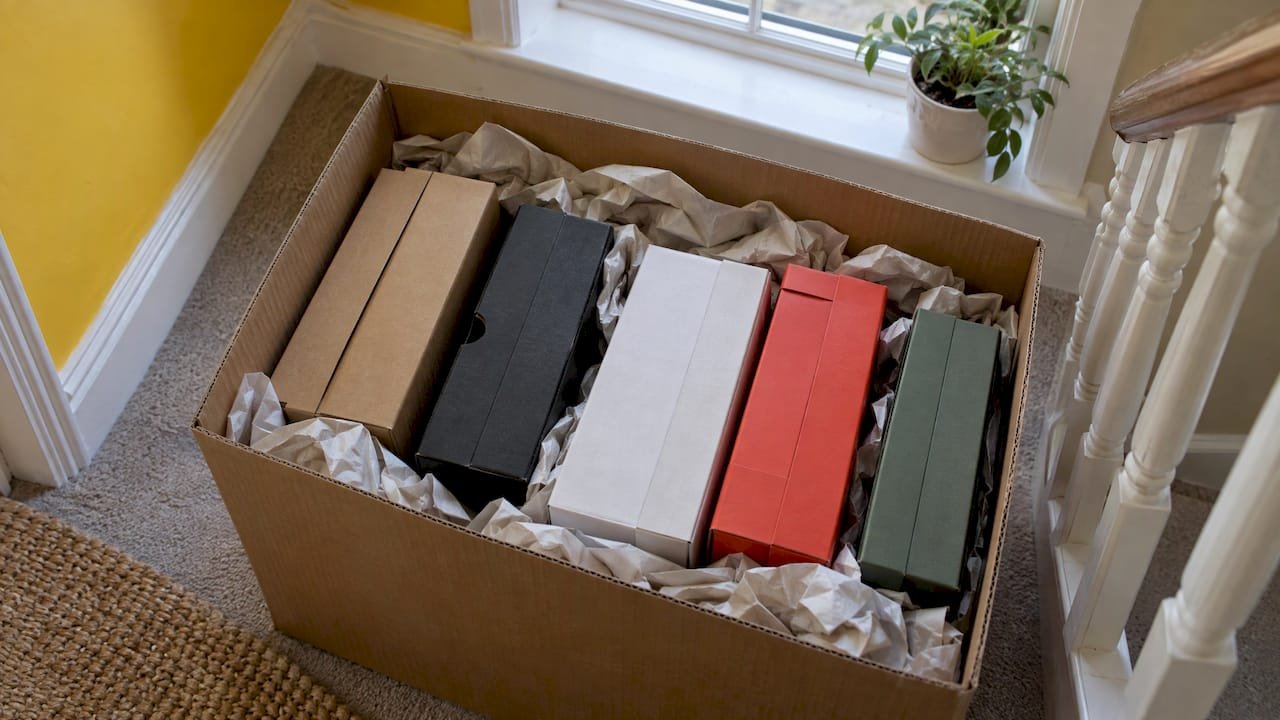
The mistake to avoid is cramming many pairs into one small box. They get squashed and the heels deform. It is far better to give the shoes a larger, sturdy box and pack them in layers.
Packing the box: weight, layers and gaps
Shoes are not heavy individually, but a full box of boots is. Pack in a sensible order:
- Bottom layer: heavy pairs such as boots and work shoes, upright and in pairs.
- Paper layer: a sheet of plain paper across the top so the layers do not rub.
- Middle layer: trainers and everyday shoes.
- Top layer: lighter and more delicate pairs, laid on their sides if needed.
- Gaps: fill every space with socks, scarves or crumpled paper, so that nothing shifts when the box is carried.
Keep shoes in their own box. Do not pack them in with clothes, especially delicate shoes. Shoe soles carry dirt, and a pair of heels can mark or crush what lies against it. If you are stuck for space, a shoe-only box with a few spare socks in the gaps is more efficient than a mixed box.
Label the lid and one side with the contents and the destination room, for example “Shoes, hallway” or “Boots, utility”. When you arrive, you will want the everyday pairs out first. Keep the pair you need for moving day, plus one spare, out of the boxes and in a bag you carry yourself.
Why a rigid, lidded box suits shoes
Cardboard is the usual choice, and it works if it is strong enough. But it has to be built, taped, and then thrown away, and a damp wellie or a heavy boot at the bottom can test a weak base. Rigid plastic boxes with secure lids do away with those problems. There is no assembly, no tape, and the lid keeps the contents clean and in place.
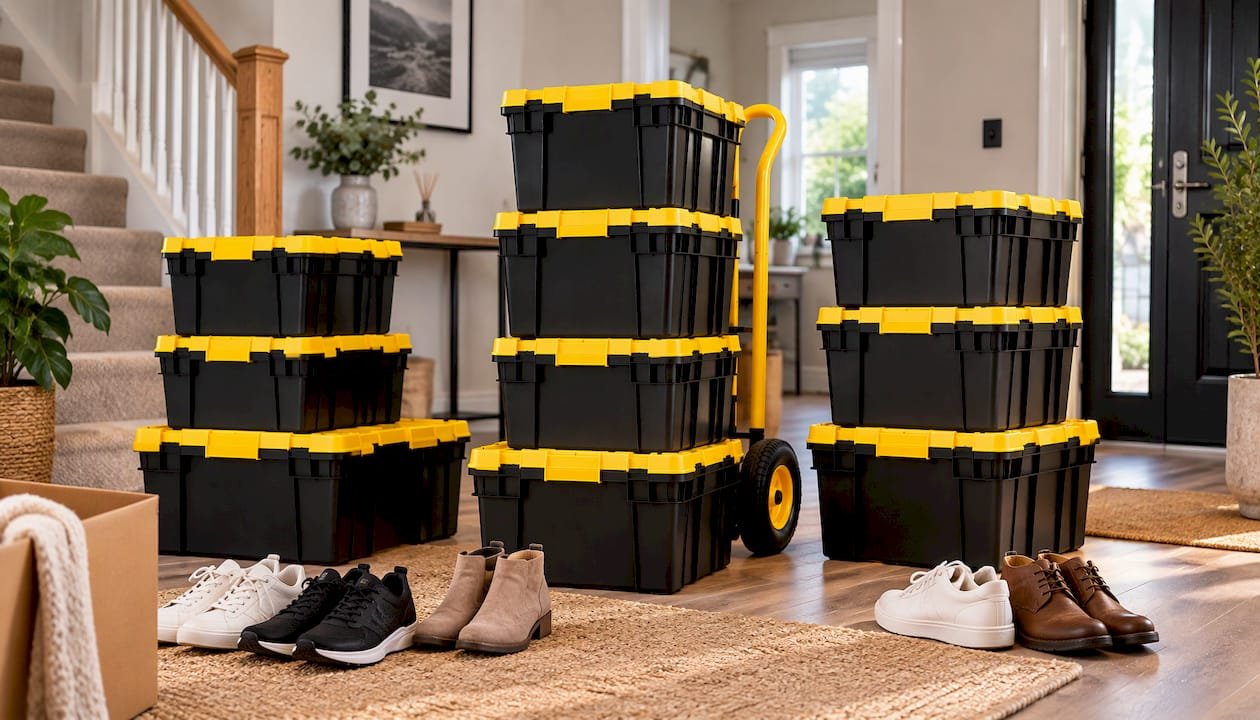
Our boxes are 100 litre reusable plastic boxes, which is generous for footwear: you can lay boots in one layer, add a paper divider and have room for a second. For a family, a single box often covers one person’s shoes, which makes unpacking simple: one box per person, labelled with a name.
If you want to see the boxes themselves, our page on moving boxes for moving house shows what you get.
Cut down on packing waste
Shoe packing can create a surprising amount of rubbish: paper, bubble wrap, tape, bags and flattened cartons. A few swaps reduce it:
- Use what you own: socks, tea towels, scarves and T-shirts all pad a shoe as well as paper does, and they need packing anyway.
- Reuse the bags: shoe bags, dust bags from handbags and cotton tote bags protect pairs and then go back to the wardrobe.
- Choose plain paper over bubble wrap where you can. Paper can go into household recycling afterwards.
- Skip tape and cardboard by using reusable boxes that are collected after the move.
- Donate before you pack. A pair that goes to a charity shop is one pair you never have to wrap.
For storage, whether you are a student with a few weeks between tenancies or a family between homes, the same rule applies: only store dry, clean shoes, add a silica gel sachet if you have one, and keep the box somewhere cool and dry rather than a damp shed or garage.
A timeline that works
- Two weeks before: sort into keep, donate and bin. Book your boxes.
- One week before: clean everything, then leave it to dry. Collect socks, paper and bags.
- Three days before: stuff, tie and wrap. Pack seasonal and rarely worn shoes first.
- The day before: pack the rest, keeping one pair out, then label and close the lids.
- After the move: unpack shoes early, so that any that arrived slightly damp can air.
Our view on shoes and boxes
We rent reusable 100 litre plastic boxes with secure lids, and shoes are one of the jobs they do best. Shoes are awkward: odd shapes, dirty soles, delicate heels. A rigid box with a lid gives them a clear, contained space, and there is no flattened cardboard left over once you have unpacked.
Our packages are delivered and collected, include a moving trolley, and need no assembly or packing tape. Rental runs from one to four weeks, so you can pack the shoes early, dry and ready, and return everything when the move is done.
The less you throw away, the better the move feels. Reusable boxes are the simplest way we know to get there.
Vincent
Pack your shoes in boxes that go back after the move
Our rental packages come as 10, 15, 20 or 25 boxes, delivered to you and collected afterwards, with a moving trolley included and no assembly or tape. You can choose a rental period of one to four weeks. Browse the packages in the shop and pick the size that matches your home.
If you are choosing between sizes, the 15 Moving Box Rental Package is a common place to look at for a typical home, and the room-by-room guide shows how to count. Students and small businesses needing longer-term space can look at our business storage box rental, from €5 per month for the Small Office plan.
FAQ
Should I pack shoes in their original boxes?
For delicate or expensive pairs, yes. Stand the boxes on their sides in a larger rigid container and fill the gaps with paper so they do not crush or slide. For everyday pairs, bagging or wrapping them in pairs saves space and works just as well.
What is the best way to stop shoes getting crushed?
Stuff each shoe with socks or paper, pack heavy pairs upright at the bottom and light pairs on top, and fill all gaps. Use a rigid box with a lid so the load does not give way, and never squeeze many pairs into a small box.
Can I pack shoes with clothes?
It is better not to. Soles carry dirt and heels can mark or crush fabric, and delicate shoes can be squashed by soft items packed tightly around them. Give shoes their own box, and use socks and scarves as padding inside it.
How do I pack wet or muddy shoes?
Do not pack them wet. Brush off the mud, wipe the shoes down, and let them air-dry completely away from direct heat, as Nike’s guide advises. Damp shoes can develop mould or mildew in a closed box.
How should I pack boots?
Clean and dry them, then support the shaft with rolled paper so it cannot fold. Tie or bag each pair, then stand them upright in the bottom layer of the box, where the weight sits best.
Leave a Reply