Start packing about six to eight weeks before moving day, and begin with the things you never use. Smaller homes can start closer to the date, while a family house with three or more bedrooms needs the full eight weeks. The rest of this guide gives you a week-by-week plan, a room order that works, and a clear idea of what to leave until the last 48 hours.
TL;DR
- Plan the move two months out and start sorting belongings about one month out, as Selectra advises. Start packing seriously from week six to eight.
- Pack in this order: storage areas, spare rooms and offices, living rooms, kitchen non-essentials, bedrooms, then bathroom and everyday items.
- Declutter before you pack. Every item you donate or sell is one less thing to box, carry and unpack.
- Keep an essentials bag with medication, documents, keys, chargers and a change of clothes. It travels with you, not in the removal vehicle.
- Get your boxes delivered about a week before you start packing in earnest, so the plan never stalls for lack of them.
Table of Contents
- How early should you start packing for a house move?
- The eight-week packing timeline at a glance
- Eight to six weeks before: clear and plan
- Six to four weeks before: pack what you will not miss
- Three to two weeks before: the main push
- One week before: admin and the essentials bag
- The last 48 hours: what to leave until the end
- Perspective: why we think a reusable box changes the timeline
- Choosing a box package to fit your timeline
- Common packing timeline mistakes
- FAQ
- Sources
How early should you start packing for a house move?
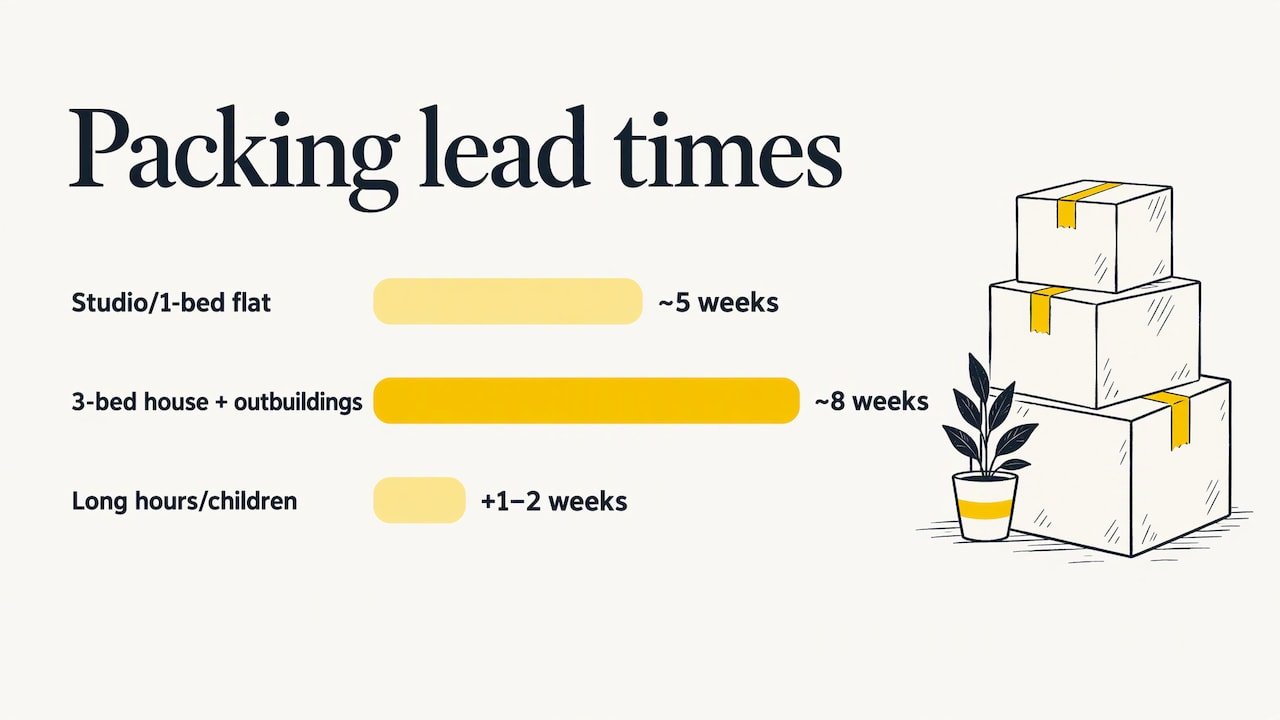
The honest answer depends on the size of your home and how much free time you have. A studio or one-bedroom flat can be packed in around five weeks of evenings and weekends. A three-bedroom house with an attic, a garage and a shed needs closer to eight. If you work long hours or have children at home, add a week or two on top.
Irish guidance points the same way. Selectra recommends planning at least two months ahead and sorting belongings into essential and non-essential about a month before you leave. Switcher calls six weeks plenty of time to get prepared, with packing and decluttering room by room from about three weeks out.
A professional organiser quoted by RTÉ Lifestyle makes a point worth remembering: you don’t have to do a whole room in a day. Chipping away gently beats cramming it all into the final weekend.
What changes your start date
- Size of the home. More rooms, more weeks. Count the storage spaces too, because attics and garages are where time disappears.
- Your schedule. Packing around a job, school runs or exams slows everything down.
- How much you own that you no longer need. If a clear-out is needed, it comes first and adds time.
- Time of year and month. Moves at the end of the month and in summer are busy for everyone, so key dates tend to get booked up early. Your own packing plan needs to work back from a fixed date.
- Where you are going. A cross-country move leaves less room for last-minute fixes than a move across the same town.
The eight-week packing timeline at a glance
| When | Main job | Pack |
|---|---|---|
| 8 weeks out | Measure the new place, plan boxes, start clearing | Nothing yet, or the attic and shed |
| 6 weeks out | Declutter, sell or donate, order boxes | Garage, storage, rarely used items |
| 4 weeks out | Pack non-essentials | Spare room, office, books, decorations |
| 3 weeks out | Keep going room by room | Living and dining rooms, ornaments, CDs and games |
| 2 weeks out | Kitchen and wardrobe edits | Baking tins, serving dishes, off-season clothes |
| 1 week out | Admin, essentials bag | Most bedrooms, pictures, mirrors |
| Final 48 hours | Last packing and cleaning | Bathroom, bedding, kettle, daily items |
Treat the table as a skeleton. If your home is small, squeeze the early rows together. If it is big, spread each stage across extra days.
Eight to six weeks before: clear and plan
This stage involves almost no boxes, which is why people skip it and regret it later.
- Measure the new home. Check which furniture will actually fit, so you do not pack and move things you will then have to get rid of.
- Start with the rooms you use least. An Irish clearance guide from HouseClearances.ie suggests the attic, garage, shed and spare room for the six-to-eight-week window.
- Sort into keep, sell, donate and bin. Do it in short sessions of an hour or so.
- Estimate how many boxes you need. Walk through each room and make a rough count. It is easier to adjust a plan than to panic with a half-packed living room.
- Check your tenancy or sale paperwork. If you rent, Citizens Information says to check your tenancy conditions and inventory, and to settle any outstanding bills so your deposit is not at risk.
Why boxes should be ordered now
When the boxes arrive early, you can start the moment a spare hour appears. If you rent, our 1 to 4 week rental periods are long enough to cover a staggered pack, so you can plan your delivery for when you really begin, rather than too early. Our moving boxes page shows what you get.
Six to four weeks before: pack what you will not miss
Now the boxes come out. The principle is simple: pack what you will not need before moving day, and leave daily items to the end.
A room order that Irish moving guides commonly recommend runs like this: storage areas first, then guest rooms and offices, living and dining rooms, kitchen non-essentials, bedrooms, and finally bathrooms and everyday items.
What goes in first
- Books, CDs, DVDs and board games
- Ornaments, vases and framed prints you can live without
- Seasonal items: Christmas decorations, summer gear, camping kit, garden tools
- Spare linen and towels beyond the set you use
- Paperwork you rarely touch, kept together in a clearly marked box
Packing habits that save time later
Label every box with the contents and the room it is going to. Get Cracking recommends putting heavier items at the bottom, not overfilling boxes and wrapping fragile things individually. Keep liquids upright and never lift loads that are unsafe to handle.
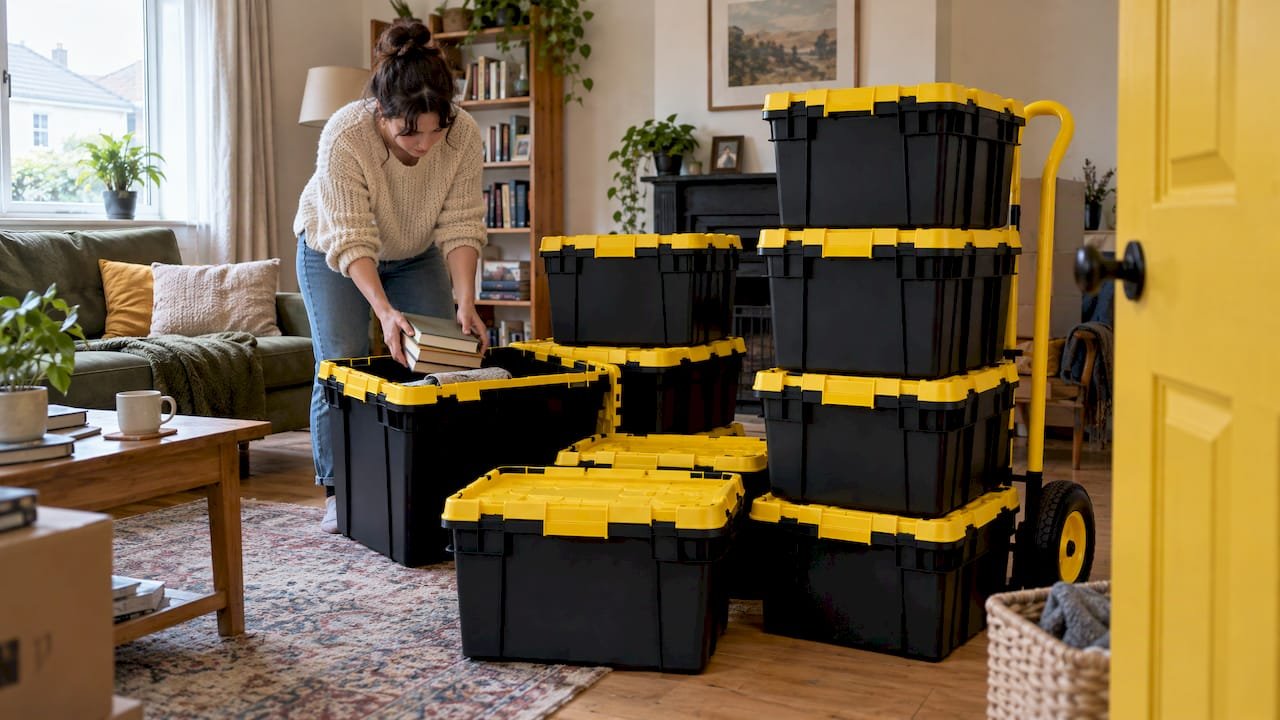
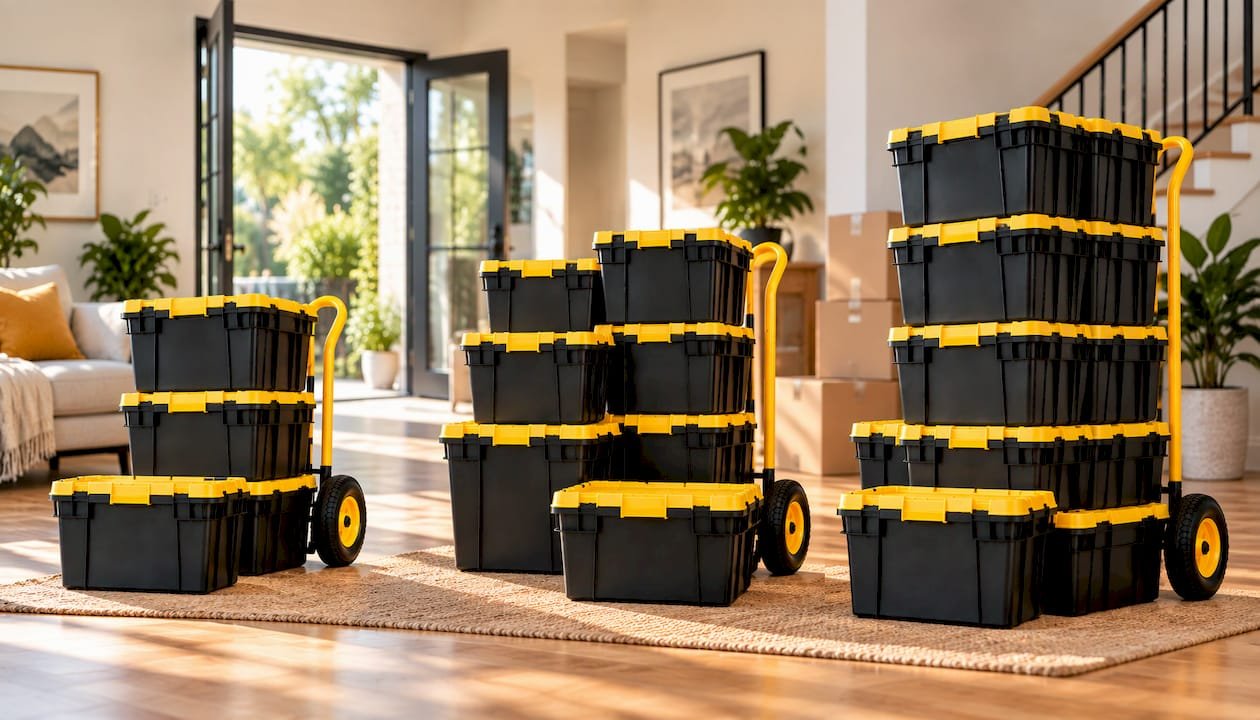
This is where uniform boxes help. Our reusable 50L plastic boxes come ready to use, with secure lids, so there is no assembly and no packing tape. Because every box is the same size, they stack neatly and are easy to carry, and the small size keeps books from turning into a back injury.
Three to two weeks before: the main push
This is the busiest stretch. Switcher suggests tackling one room at a time, with ornaments, books and personal belongings first and daily-use items last. Follow that and you will have a house that still works while it empties.
The kitchen
Kitchens take longer than anyone expects. Spread the job over several days:
- Start using up frozen and pantry food about two to three weeks out, and plan meals around what you have.
- Pack baking tins, serving dishes, special-occasion glasses and rarely used gadgets first.
- Keep a small working set: a couple of plates, mugs, a pot, a knife and a kettle, until the last morning.
- Wrap plates individually and stand them on edge. Keep liquids upright.
- Defrost and clean the fridge and freezer a day or two before the move.
Those points follow the guidance in ShamFix’s house move guide, which is useful to cross-check against your own kitchen.
Wardrobes and bedrooms
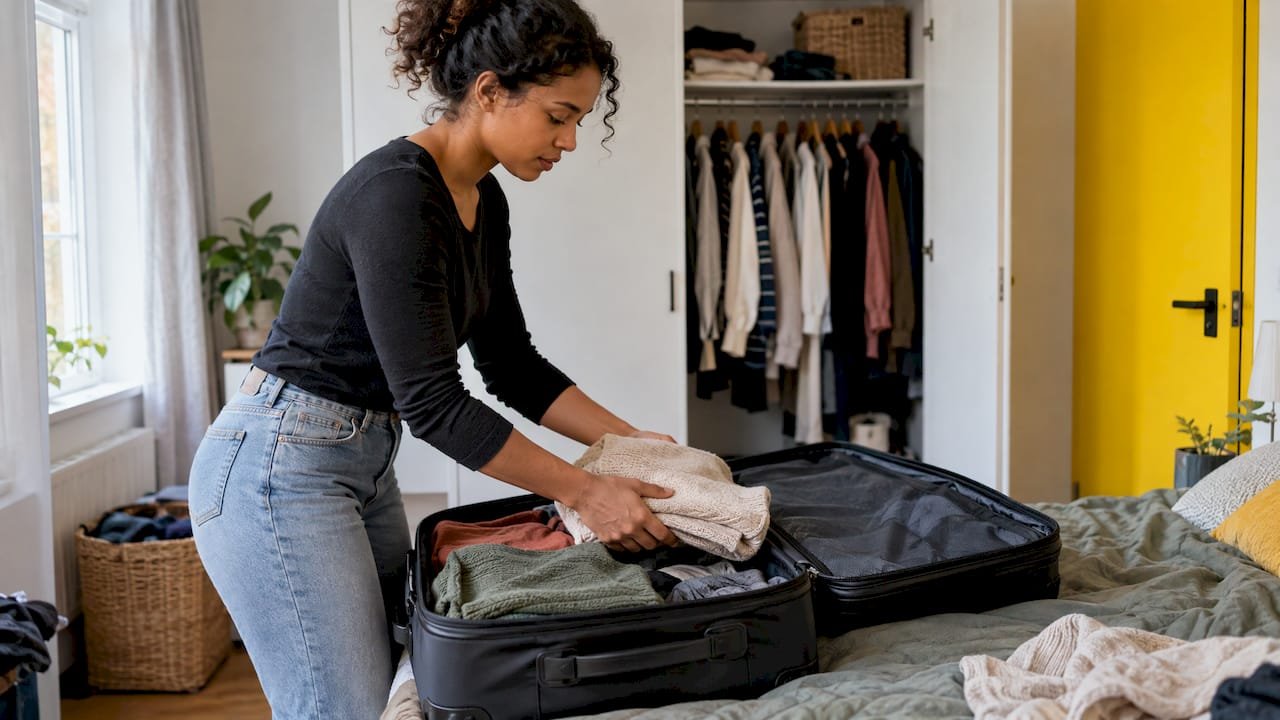
Pack off-season clothing first. Suitcases and holdalls work well for clothes, and they are a good way to cut down on the number of boxes. Leave bedding, toiletries and everyday clothes for the last day.
Furniture and big items
Take apart anything that needs it, such as flat-pack shelves and bed frames, and keep screws in labelled bags taped to the furniture. If you need a trolley for heavy boxes or small appliances, ours is included in every package, which makes loading and unloading easier on your back.
One week before: admin and the essentials bag
By now most rooms should be packed. This is the week to deal with everything that is not boxes.
- Redirect your post. Switcher notes that an An Post redirection needs to be arranged at least five days before the move.
- Sort your utilities. Citizens Information says to close or transfer electricity, gas and waste accounts, take final meter readings before leaving and take initial readings, with photographs, in the new home. Its gas guidance adds that you should give your supplier a final reading and your new address, otherwise you may stay responsible for gas used after you leave.
- Clean and photograph. If you rent, clean the property and photograph its condition, as the official guidance advises.
- Arrange childcare and pet care for moving day. Get A Mover recommends this, and it frees you to supervise the move.
Build your essentials bag
Pack one bag that travels with you, not in the removal vehicle. Include:
- Regular medication, important documents, keys, chargers and valuables
- Toiletries and a change of clothes for everyone
- Children’s essentials
- Basic kitchen items: kettle, mugs, tea and coffee, snacks
- Loo paper, cleaning products, lightbulbs and a few basic tools
This follows the advice from Get Cracking to keep the essentials bag with you so immediate-arrival items stay within reach.
The last 48 hours: what to leave until the end
Keep out only what you need to live: bedding, toiletries, the kettle, a few plates and your phone charger. Pack these on the final morning, last in, first out.
- Two days before: finish bedrooms, strip the beds of anything you will not sleep in, and clear the fridge.
- The night before: pack bathroom items, bedding and the last of the kitchen. Charge phones. Put the essentials bag by the door.
- Moving day morning: take final meter readings, do a last walk through every room, including cupboards, the attic and the shed, and check windows and doors.
- On arrival: take initial meter readings with photos and unload the boxes straight into the right rooms, using your labels.
Perspective: why we think a reusable box changes the timeline
Most packing timelines assume cardboard, and that quietly adds steps: collecting boxes, building them, taping them shut, then breaking them down and getting rid of them afterwards. Each of those is a small job, but they add up, and they tend to land at the worst moments.
We designed our service to remove them. Our 50L plastic boxes arrive ready to use, with secure lids and no packing tape. We deliver them, and we collect them when you are done, so there is no pile of flattened cardboard left in the hall. Every package includes a moving trolley, which helps most in the final days when the boxes are heaviest.
Our rental periods run from one to four weeks, so you can match them to your own timeline. Our advice is to book the boxes for the weeks when you will be doing the bulk of your packing and moving, rather than for the whole eight weeks. Start decluttering first, then bring in the boxes.
The best timeline is the one that leaves no step to chance. Reliable boxes, delivered on time, are one step you can tick off early.
Vincent
Choosing a box package to fit your timeline
We offer four rental packages: 10, 15, 20 and 25 boxes. All include delivery, collection and a moving trolley, with free delivery and collection within our specified areas. To pick a size, go through your home room by room and count honestly. A studio usually needs a smaller package, and a family home with a full attic needs a larger one. If your count falls between two sizes, remember the plan: you can pack in stages, and emptied boxes come back into use as you go.
When you are ready, see the rental packages in our shop, or go straight to the 10 box package or the 25 box package. Check the product pages for current pricing and the delivery areas we cover.
If you need somewhere to keep things while you move, our business storage box rental offers monthly plans for offices and businesses.
Common packing timeline mistakes
- Starting with the kitchen. It is the slowest room, and you need it until the end. Start with the attic instead.
- Packing before decluttering. You end up paying in time and effort to move things you then throw away.
- Overfilling boxes. Heavy boxes slow everyone down and risk injury. Put heavy items in small boxes and light items in bigger ones.
- Skipping labels. Unlabelled boxes make the first night in a new home much harder.
- Leaving admin until the final days. Utilities, post redirection and tenancy checks all need lead time.
- Packing the essentials bag into the van. Keep it with you.
FAQ
When should I start packing for a house move?
For most homes, six to eight weeks before moving day is a comfortable start. A small flat can start around five weeks out, while a large family home needs the full eight. Begin with rarely used rooms such as the attic, garage and spare room.
How many weeks does it take to pack a house?
It depends on size and how much free time you have. As a guide, a one-bedroom flat takes around five weeks of part-time packing, and a three-bedroom house needs about eight. Decluttering first usually shortens the packing itself.
What should I pack last when moving?
Pack daily items last: bedding, toiletries, a few kitchen basics, chargers and the clothes you are wearing that week. Medication, documents, keys and valuables go into an essentials bag that stays with you on moving day.
Is it too late to start packing two weeks before a move?
Not at all, but you will need to be selective. Declutter fast, pack in daily sessions, and use uniform, ready-to-use boxes to avoid time spent building and taping. Prioritise the kitchen and wardrobes, which take the longest.
When should I get my moving boxes?
Have them delivered a week or so before your main packing begins. That way you can pack in any spare hour. Rental periods of one to four weeks let you choose the window that matches your plan.
Sources
- 10 Essential Packing Tips for Moving House (Selectra)
- Moving Home Checklist (Switcher)
- 10 ways to make packing for a house move less stressful (RTÉ Lifestyle)
- Moving to a new home (Citizens Information)
- Gas: getting connected or switching (Citizens Information)
- Moving House in Dublin: What to Clear Before the Removal (HouseClearances.ie)
- Packing for a House Move in Ireland (ShamFix)
- Moving Checklist & Packing Tips (Get Cracking)
- Moving House Checklist (Get A Mover)
Leave a Reply