Category: Uncategorized

  • Moving Box Capacity: Litres, Weight and What Fits

    Moving Box Capacity: Litres, Weight and What Fits

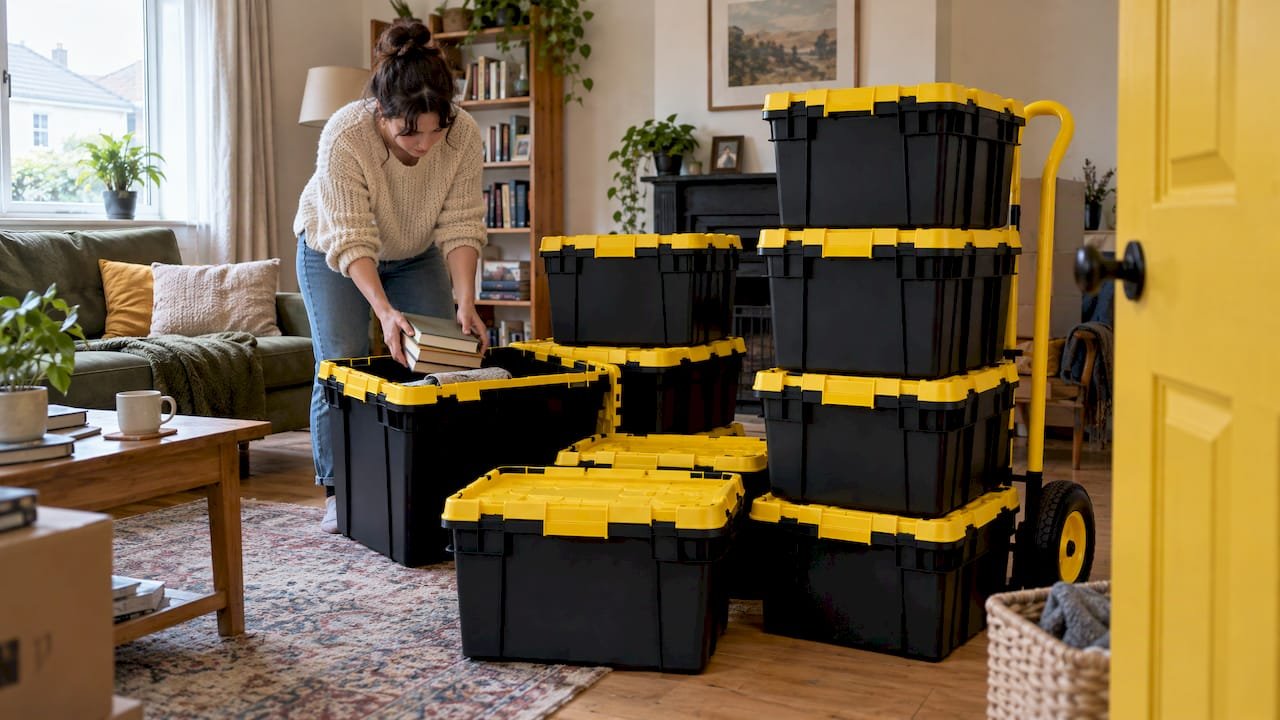
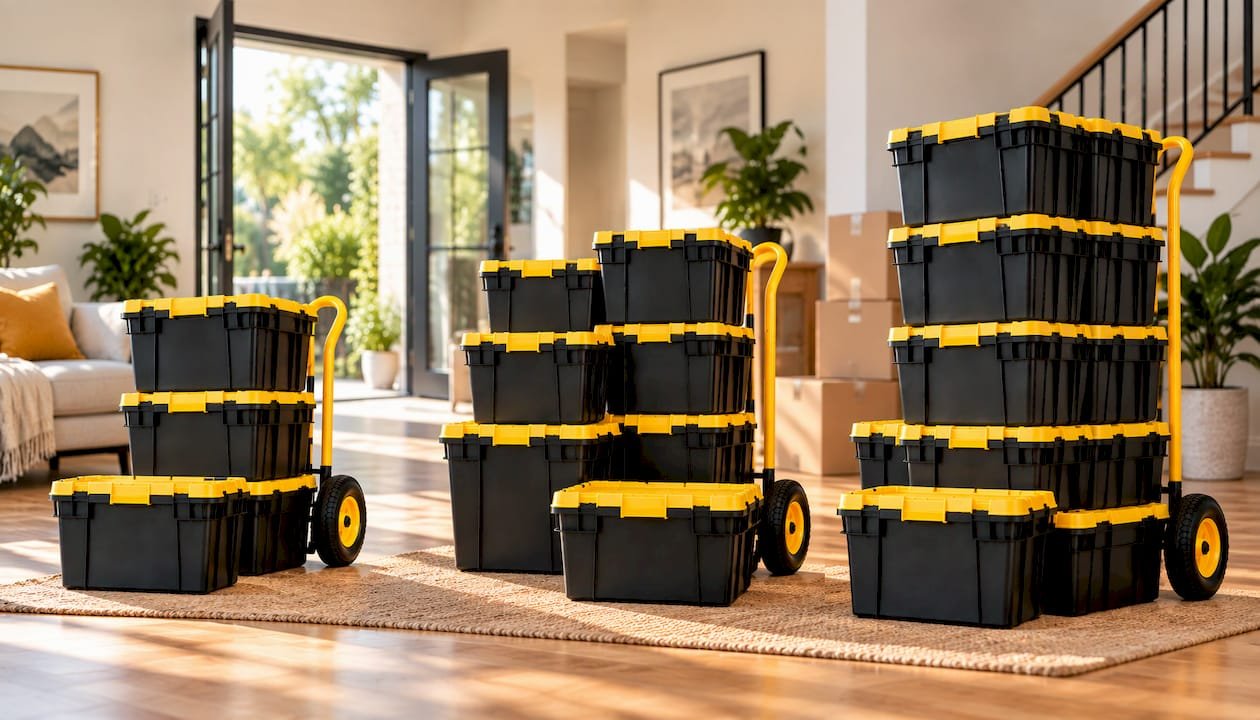
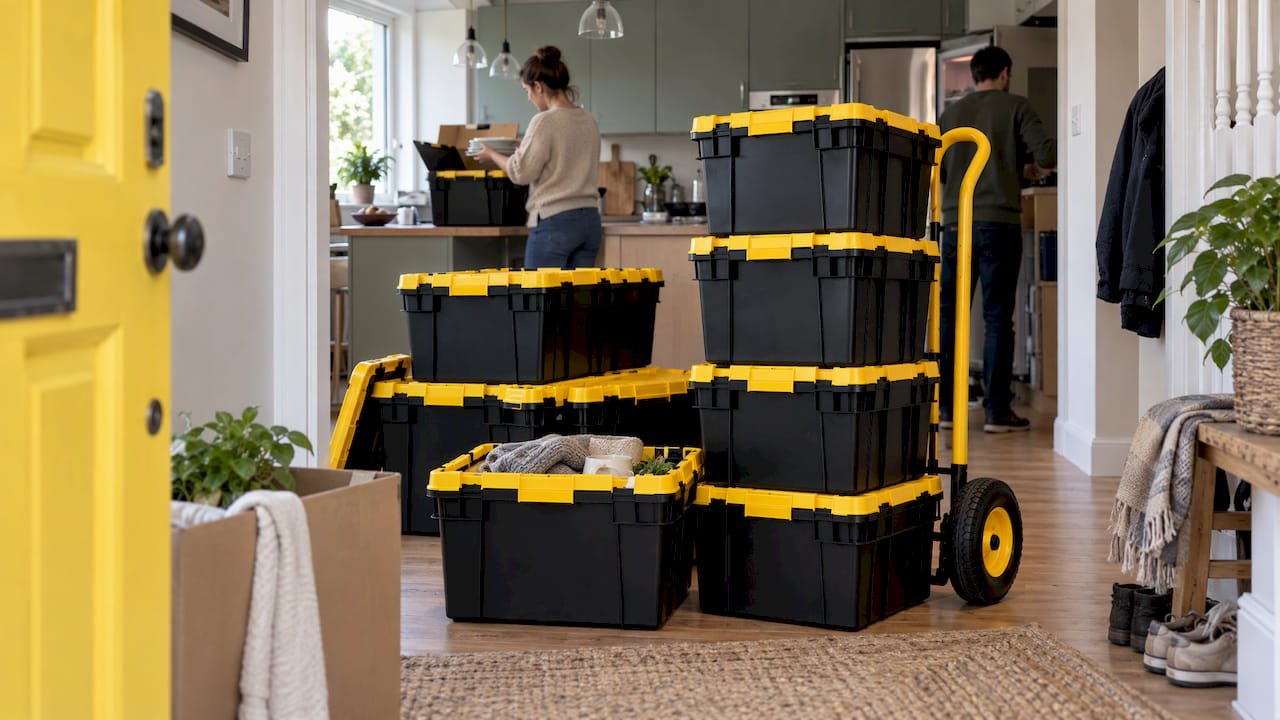
    A moving box has two capacities: the volume it holds, measured in litres, and the weight you can safely lift once it is full. Volume tells you how many boxes you need. Weight tells you how to fill them. Our reusable boxes hold 100 litres each, with secure lids, and they arrive ready to use with no assembly or tape. This guide shows how to read a box’s capacity and fill it so it stays liftable on the stairs.

    Movingboxrental
    movingboxrental.ie
    Make 100L Capacity Easier to Use
    Choose reusable 100L moving boxes that arrive ready to use, with a moving trolley to help ease the process.

    Visit

    Key Takeaways

    • Capacity is internal volume: length × width × height in centimetres, divided by 1,000, gives litres.
    • Volume and weight are separate. A big box can hold far more than you can comfortably carry, so fill by weight as well as space.
    • Pack heavy items low and in small amounts, and use the extra space for light, bulky things such as bedding, cushions and clothes.
    • A 100L box is a large box. Fill it with light bulky items and mix heavy items in only as a base layer.
    • Ready-to-use reusable boxes remove assembly and waste, and the package includes a moving trolley.

    Table of Contents

    What box capacity actually means

    Capacity is the space inside a box. Manufacturers and retailers state it in litres, which is the same unit as a milk carton or a bottle of water. One litre equals 1,000 cubic centimetres.

    The calculation is simple. Measure the inside length, width and height in centimetres, multiply them, then divide by 1,000. A box measuring 300 × 200 × 150 mm works out at 9 litres, and the same source stresses using internal measurements, because external sizes include the thickness of the walls and overstate the usable space.

    A worked example: a box with an inside length of 60 cm, width of 40 cm and height of 42 cm gives 60 × 40 × 42 = 100,800 cm³. Divide by 1,000 and you get about 100 litres. That is the size class of the boxes we rent.
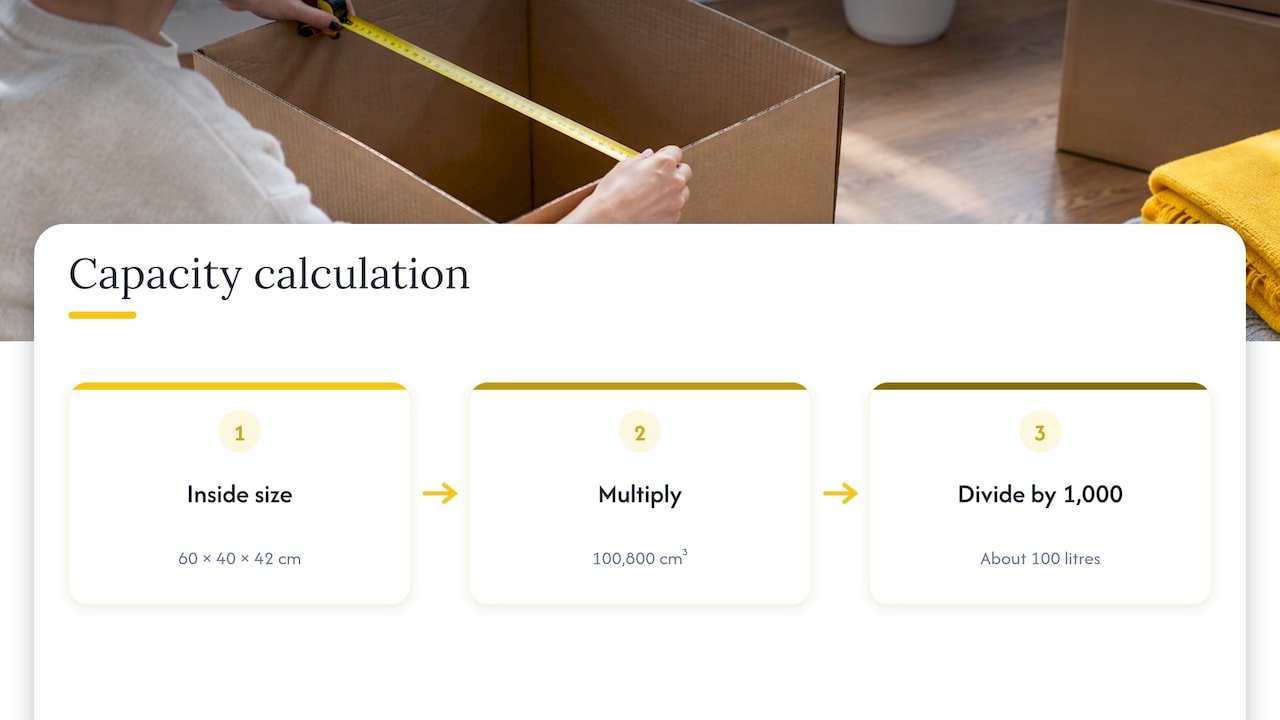
    Internal dimensions convert to approximately 100 litres

    If you like to see how volume and dimensions relate across much larger containers, this dumpster sizes and dimensions guide uses the same logic with bigger numbers.

    Common box sizes in litres

    Box sizes vary between suppliers, so it helps to know the range. One volume table lists a 40 × 30 × 30 cm box at 36 litres for books and heavy items, 50 × 35 × 35 cm at 61 litres for general use, and 60 × 40 × 40 cm at 96 litres for clothes and light items.

    Irish removal firms size their cartons by contents in much the same way. Lift IT Moving lists small, medium and large cartons at 456 × 330 × 343 mm, 456 × 456 × 508 mm and 456 × 456 × 704 mm. Using the formula above on those outside measurements, they come to roughly 52, 106 and 146 litres respectively.

    Box class Typical dimensions Approx. volume Best for
    Small 40 × 30 × 30 cm 36 L Books, tools, tinned food
    Medium 50 × 35 × 35 cm 61 L Mixed household items
    Large 60 × 40 × 40 cm 96 L Clothes, bedding, light items
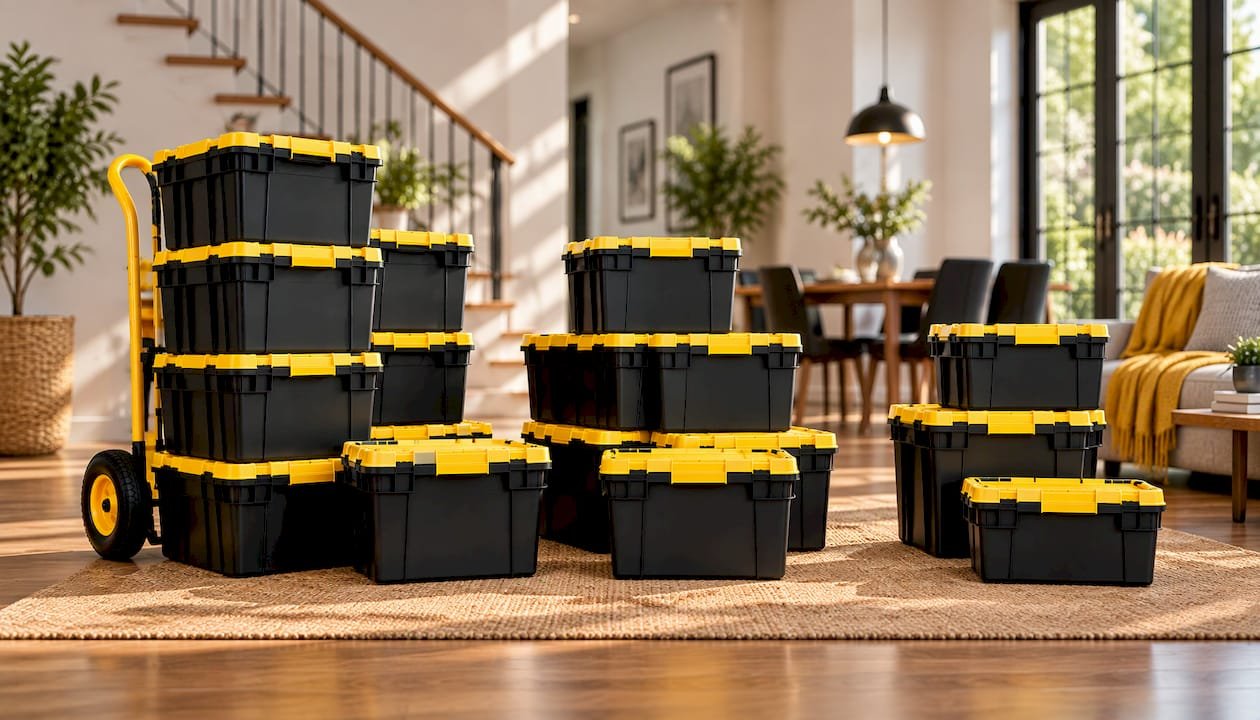
    Our reusable box 100 L 100 L Bulky, lighter items, with a secure lid

    The first three rows are illustrative sizes from the volume table above. Our box is a single 100L size, so every box in a package is the same, which makes stacking and counting straightforward.

    Why weight matters more than volume

    The number printed on a box tells you what fits, not what you can carry. A 100-litre box filled with books would be far too heavy for most people to lift, let alone carry down a flight of stairs.

    The guidance used in manual handling is a useful reference point. The NIOSH lifting equation, a US occupational safety method, sets a load constant of 23 kg (51 lb) as the most it recommends lifting under ideal conditions. Real moves are rarely ideal: you are lifting from the floor, twisting at doorways and climbing stairs. So in practice the comfortable weight is lower than that figure.

    The practical rule is to let your own strength set the limit. Pack a box, lift it to waist height and take a few steps. If that feels hard, take something out. Mark any heavy box clearly so whoever lifts it knows what to expect.
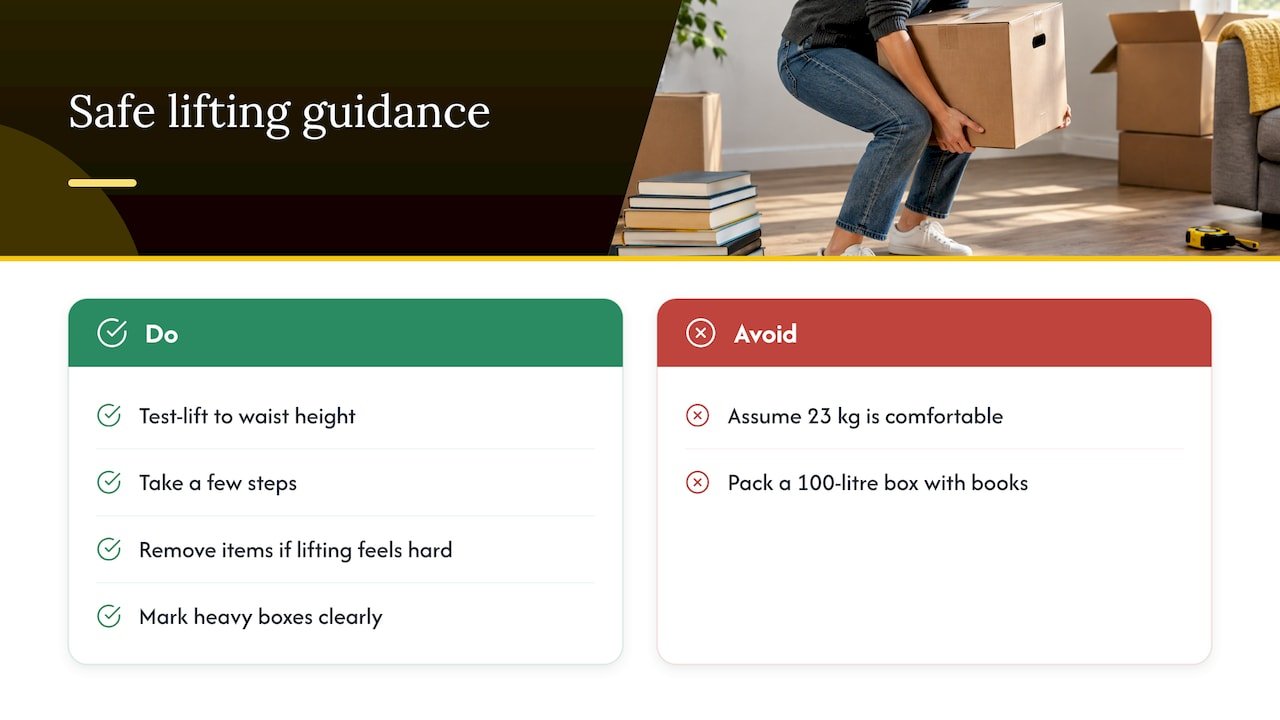
    Why weight matters more than volume

    Heavy things go in small amounts

    Irish removal crews give the same advice. Aaltonen’s packing tips sheet says large boxes are for light, bulky items such as duvets, pillows, folded clothes, lampshades and toys, and that heavy items such as books and files do not belong in them. The reason it gives is that the crew must lift boxes long distances and up and down stairs. Lift IT Moving puts it in one line: if you pack heavy, you must pack small.

    With a 100L box, that translates into a clear plan:

    • Put light bulky items in first: duvets, pillows, towels, cushions, coats, soft toys.
    • If you need to pack something dense, such as books or tins, use a single layer on the bottom and fill the rest with soft items.
    • Keep fragile items cushioned between layers of clothes or linen.
    • Stop filling when you can still lift the box comfortably.

    How to work out how many boxes you need

    Because our boxes are one standard size, estimating is easier than with a mix of cartons. A rough approach:

    1. Walk through each room and group items by type: soft and bulky, hard and heavy, fragile.
    2. Estimate how many 100-litre boxes each group fills. A wardrobe of clothes, for instance, usually fills several boxes if you fold rather than hang.
    3. Add a few spare boxes for the things you always find late: the cupboard under the stairs, the shed, the attic.
    4. Choose the package that covers the total. Packages come in 10, 15, 20 and 25 boxes.

    For a room-by-room breakdown, our guide on how many boxes you need for moving house goes through a typical home, and our page on choosing your moving boxes shows the options.

    Stacking and carrying

    Capacity also affects how boxes stack. Equal-sized boxes with lids sit flat on one another, so a van or hallway load stays stable. Put the heaviest boxes at the bottom of a stack and the lightest on top. Our guide to stackable moving boxes covers what to look for and how to build a stable stack.

    Carrying is where the moving trolley earns its place. Every package includes one, so you can wheel a stack of boxes to the van instead of carrying each one by hand.

    Why renting 100L boxes suits a house move

    Cardboard boxes arrive flat, so you have to assemble them and tape them shut. Their strength depends on the grade of board, and they are usually thrown away or left in the hall afterwards. Our reusable plastic boxes are ready to use the moment they arrive. They have secure lids, so there is no tape to buy, and nothing to flatten or recycle at the end.

    That suits the readers we hear most from: families packing a whole house over a few weeks, students who need temporary storage between terms, and people who want to move with less waste. Rental periods run from one to four weeks, and delivery and collection are free within our specified areas. For more on cutting waste in a move, see our sustainable moving tips for Irish movers.

    Our view on box size

    Most people ask about capacity because they want to know how many boxes to order. The more useful question is what they will be able to carry.

    We chose one size, 100 litres, because it is big enough to make packing fast and uniform, and the lid keeps whatever you put in it secure. The way to get the best from it is to treat it as a box for bulky, lighter things and to build heavier items in as a base layer.

    When every box is the same size, stacking is easier, counting is easier, and you do not spend the evening taping and flattening cardboard. Add the trolley and a one to four week rental, and the move becomes a routine you can plan.

    Vincent

    Choose your package

    Our packages are made for house moves: 10, 15, 20 or 25 reusable 100L boxes with a moving trolley, delivery and collection included within our specified areas, and no assembly or packing tape needed. Pick the size that matches your room count and book your rental period, from one to four weeks.
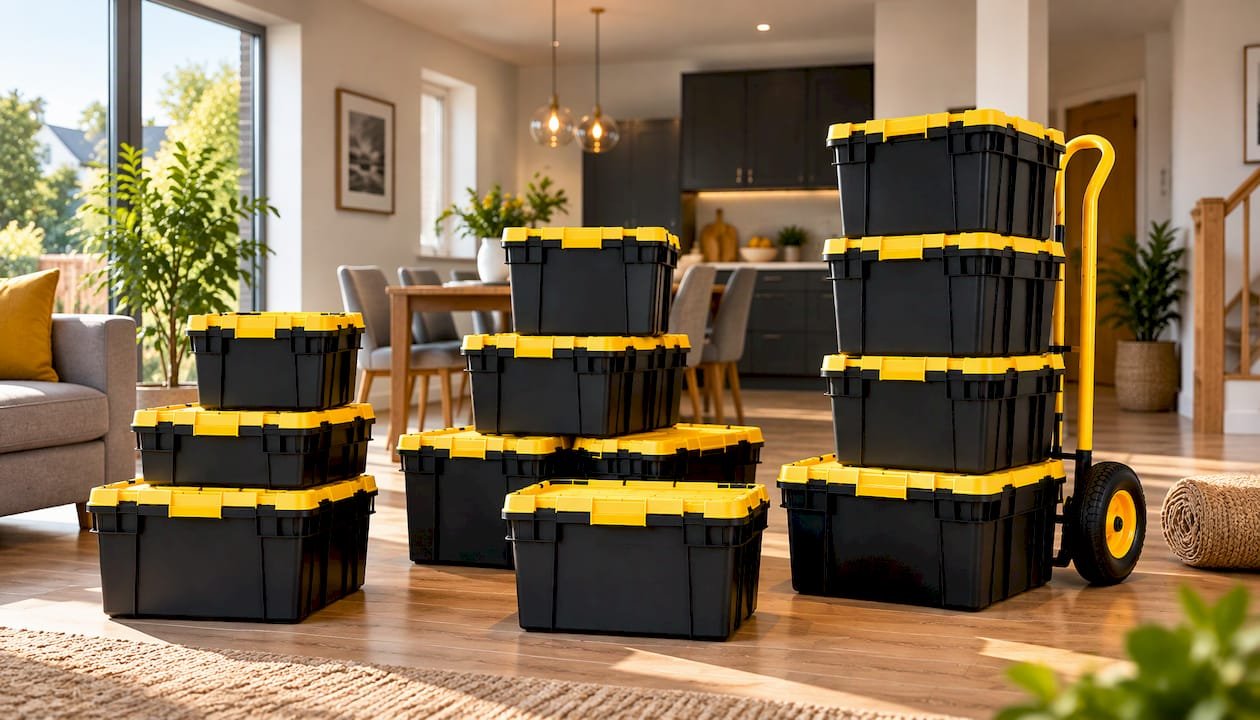
    25 Moving Box Rental Package

    See the available packages in our shop. If you need storage for an office, we also offer monthly business storage box rental at €5 per month for Small Office, €9 for Office, €16 for Business and €28 for Business Plus.

    FAQ

    How much weight can a moving box hold?

    It depends on the box’s construction, but the figure that matters is what you can lift. Manual handling guidance based on the NIOSH equation uses 23 kg as the ideal maximum, and stairs and awkward corners bring the comfortable weight lower. Lift the packed box to waist height and walk a few steps. If it is hard, remove something.

    How many litres is a standard moving box?

    There is no single standard. Small book boxes are around 36 to 50 litres, medium boxes around 60 litres, and large boxes from about 96 litres upwards. Our reusable boxes are 100 litres.

    What should I pack in a large box?

    Light, bulky items: duvets, pillows, clothes, towels, cushions and soft toys. Irish removal crews advise against putting books and files in large boxes because they become too heavy to carry up and down stairs. If you do pack something dense, use one layer at the bottom and fill the rest with soft items.

    How do I calculate how many boxes I need?

    Group your belongings by room and by type, estimate how many 100-litre boxes each group fills, then add a few spares. Our room-by-room guide gives a starting point for a typical home.

    Movingboxrental
    Questions About 100L Moving Boxes?
    Get in touch to discuss reusable moving boxes, package options, delivery and collection, or rental periods from one to four weeks.

    Sources

  • Office Move Checklist: What to Do and When

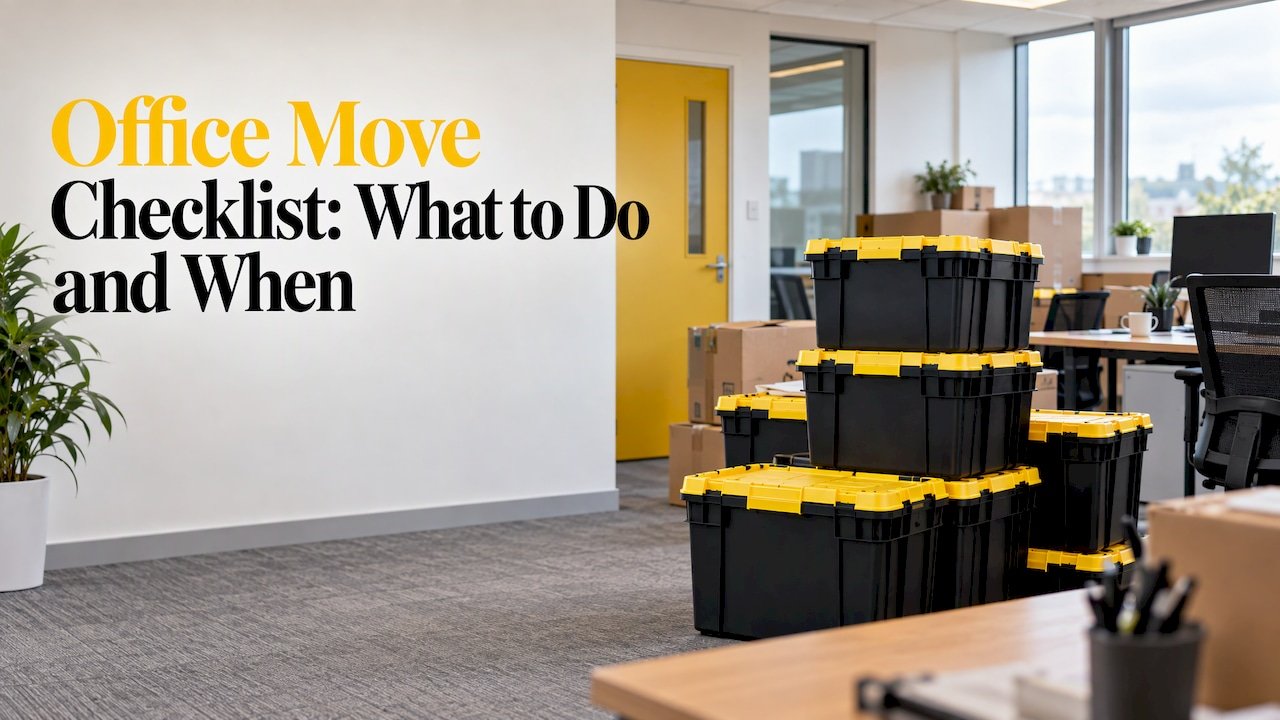
    Office Move Checklist: What to Do and When

    An office move goes well when one person owns the plan, every task has a date counting back from moving day, and packing is the simplest job on the list rather than the messiest. This checklist runs from the first decision to the first week in the new premises. It is written for owners, office managers and anyone handed the job of moving a small or medium team in Ireland. Packing is where we can take work off your hands: our reusable 100L boxes arrive ready to use, with a moving trolley, so nobody spends an afternoon building cardboard.

    Movingboxrental
    movingboxrental.ie
    Make Office Packing Simpler
    Reusable 100L boxes arrive ready to use with a moving trolley, and delivery and collection help reduce packing clutter.

    Visit

    Key Takeaways

    • Start planning three to six months out, and name one move coordinator with the authority to make decisions.
    • Book the slow things first: broadband at the new address, the removal crew, and any building access or lift bookings.
    • Check your lease before you pack, because repair and reinstatement duties can cost real money.
    • Give each department a move champion, label every box by zone, and pack from a floor plan.
    • Reusable, ready-assembled boxes with delivery and collection remove one whole job from moving week.

    Table of Contents

    Start with one owner and a realistic budget

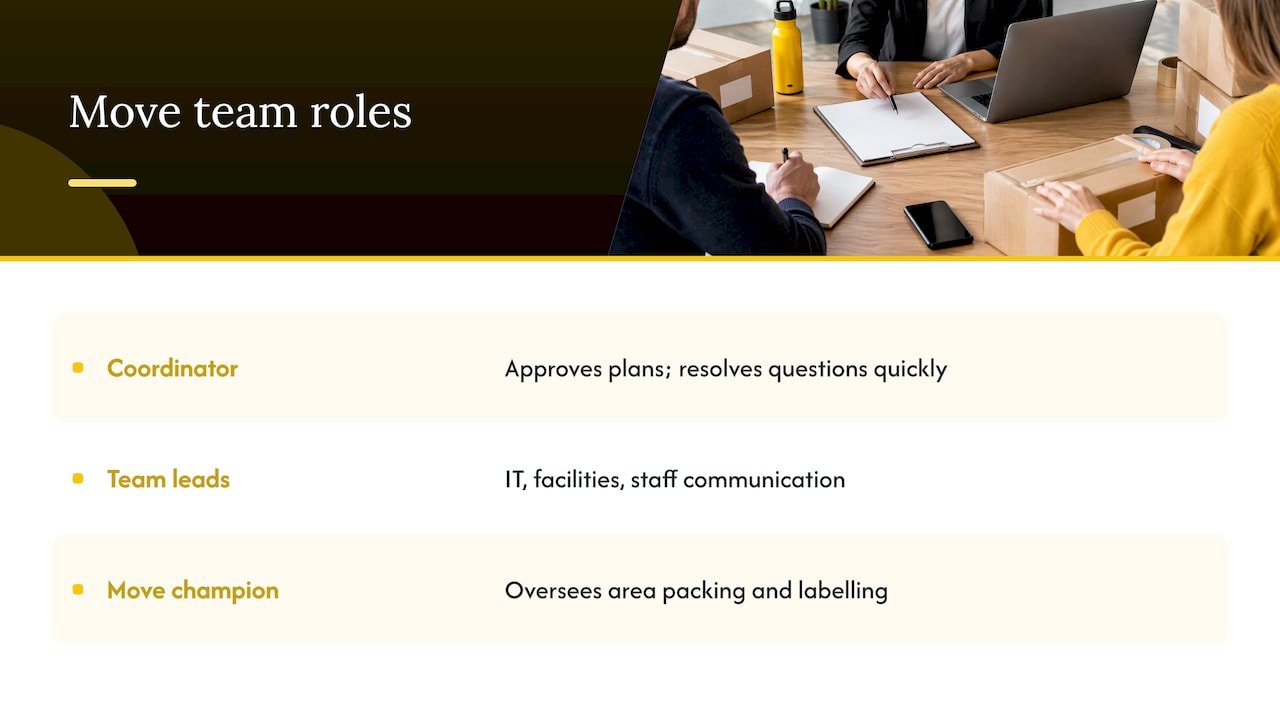
    Before any boxes or quotes, decide who is in charge. In a small business that is usually the office manager or an owner, and the title matters less than the authority. The coordinator approves plans, gets access to the new premises, talks to suppliers and settles questions quickly. Without one, small decisions (where the plotter goes, who books the lift) sit unanswered until they become problems on moving day.

    In a bigger team, add a lead for IT, a lead for facilities and someone who handles staff communication. Ask each department to nominate a move champion who oversees packing and labelling for their own area and acts as the link to the coordinator.

    Start with one owner and a realistic budget

    What the budget should cover

    The removal quote is only one line. Build a total from these:

    • Removal crew and any out-of-hours or building access fees
    • Packing materials or box rental
    • IT disconnection, reconnection and new broadband installation
    • Furniture, fit-out and signage
    • Cleaning at both ends
    • Reinstatement or repair costs at the old premises
    • Disposal of furniture and equipment you are not taking
    • A contingency, commonly set at around 10% of the total

    Fit-out is where budgets swing most. Irish cost data for the first quarter of 2026 puts indicative office fit-out at roughly €1,000 to €2,500 per sq m depending on layout and catering, excluding VAT and professional fees. Get that figure early, since it decides whether the new space is affordable at all.

    Also put a value on lost working time. A move that runs through a weekday costs you a day of output across the whole team. Paying more for out-of-hours access can be the cheaper choice.

    The timeline, counted back from moving day

    Use this as a spine and adjust it to the size of your team. Smaller offices can compress the early stages, but the long-lead items (broadband, building bookings, crew availability) do not shrink.

    When What to do
    3 to 6 months out Appoint the coordinator. Fix the budget. Confirm the new space and lease dates. Read your current lease. Request removal quotes. Start sorting what you will keep, sell, donate or discard.
    2 to 3 months out Tell staff, clients and suppliers. Book broadband at the new address. Confirm building rules and lift bookings. Book your packing boxes.
    1 month out Get the floor plan and assign departments to zones. Begin packing non-essential items. Arrange furniture disposal. Order new stationery and signage.
    2 weeks out Label everything by destination zone. Confirm the IT plan in writing. Update your address with banks, insurers, Revenue-facing records and online listings.
    1 week out Finalise packing. Confirm crew, access times and parking. Back up all data. Walk the new office with your coordinator.
    Moving day One responsible person at each address. Server room last out, first in.
    First week Test everything, check inventory, hand back the old premises.

    There is a reason the early rows are heavy. Commercial crews that work out of hours tend to be booked well ahead, and IT connectivity can take weeks. A start of 12 weeks or more gives you room to absorb a delay without moving the date.

    Sort the premises, old and new

    The lease you are leaving

    Read your commercial lease before anything is packed. Look at the deposit terms if you are ending early, who is responsible for repairs such as light bulbs, fixtures or tired paintwork, and any other move-out conditions. Handing back a property usually means returning it to the condition it was in when you arrived: logos taken down, fixtures removed or repaired, and cables taken out. Ask for the landlord’s expectations in writing and book a walk-through before you hand back the keys, so there are no arguments about your deposit afterwards.

    The space you are moving into

    Before packing starts, you need a floor plan with each department assigned to a zone. Then check the practical details with the building manager:

    1. Power socket positions and whether they match your desk layout
    2. Server or comms room dimensions
    3. Meeting room layout and screens
    4. Loading bay access, lift dimensions and booking rules
    5. Permitted moving hours and parking restrictions
    6. Any insurance certificate the building requires from your removal crew

    Put the building’s rules in an email thread so everyone has them. A lift that can only be booked between set hours has wrecked more moves than any lost box.

    Disposing of what you will not take

    A move is the natural moment to clear out old desks, chairs, filing cabinets and monitors. Some Irish clearance firms publish per-item pricing: one Dublin service lists a €100 call-out plus items such as a desk at €20 and a filing cabinet at €20, VAT included. Prices vary by firm and area, so use that as a sense of scale and get a quote for your own volume. Decide what goes before the floor plan is drawn, so you are not paying to move furniture you then throw out.

    IT, phones and utilities

    IT is the part that stops a business working if it goes wrong, so treat it as its own project with its own written plan.

    • Audit your equipment. List every device, who uses it and where it goes in the new layout.
    • Book connectivity early. Planning should begin at least 8 to 12 weeks before the move, because installation can take longer where new fibre is needed or the building has limited carrier options. Confirm what is available at the exact address, with expected install dates and a fallback.
    • Plan the phones. Know whether your system is internet-based and portable or an older line-based exchange that has to be moved or decommissioned. Porting phone numbers can take time and may involve more than one provider, so give it its own plan.
    • Back up everything. Complete and verify backups before anything leaves the old building.
    • Prepare a temporary fallback. A mobile 4G or 5G connection can keep you working if the fixed line is late.
    • Set up before staff arrive. Where possible, install and test the firewall, switches, Wi-Fi and internet in advance, then check wired and wireless access, remote connections, cloud applications, printing, DNS and email.

    Also arrange electricity, internet and phone accounts at the new address before the move, and ask the IT lead to be present when you inspect the new premises, so cabling and comms room issues are caught before the crew arrives.

    Tell people, in the right order

    Staff come first. Announce the move with a confirmed date and the new address, then map the commuting impact for each person so that no one is surprised. Block pack-down time in team calendars, and give regular updates on packing procedures, timelines and any new office rules.

    Involve people. Asking everyone to pack their own workstation and to comment on the new layout gets better results than a top-down plan, and it spreads the workload.

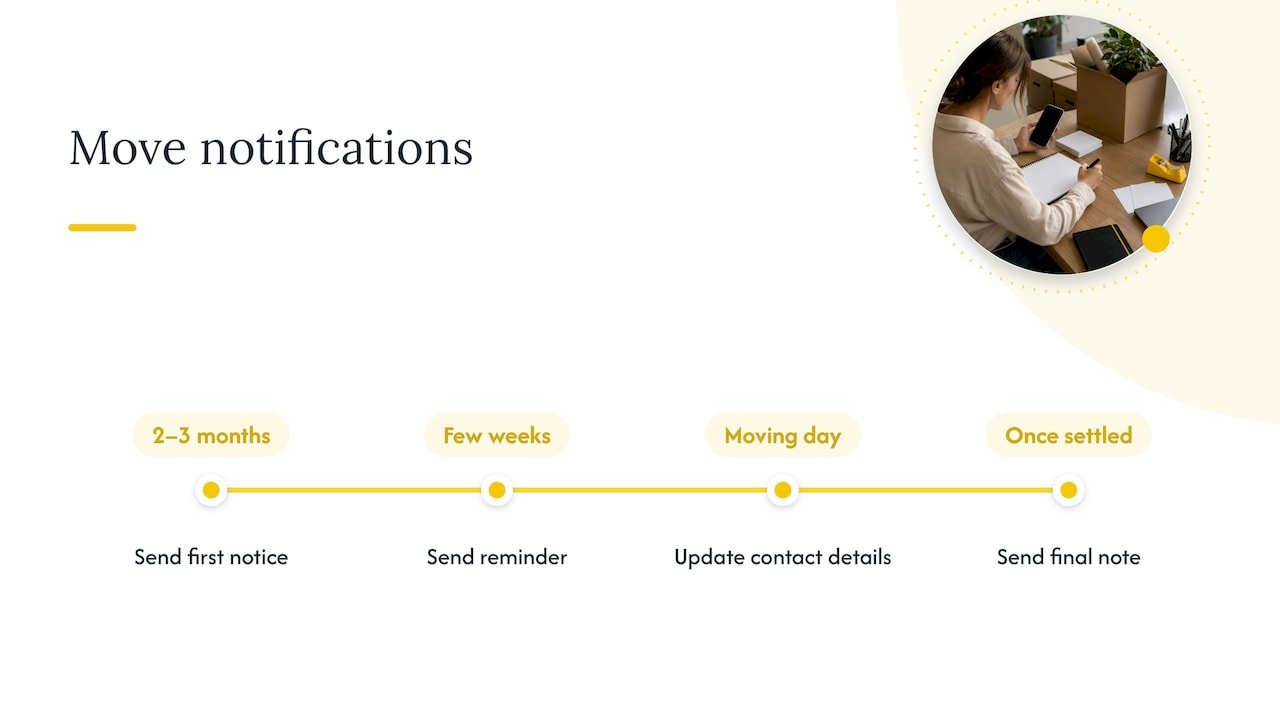
    Then tell clients, suppliers, your accountant, insurers, your bank and anyone who posts you things. Set a date for each: send notice two to three months out, a reminder a few weeks before, and a final note once you are in. Update your website, email signatures, Google Business listing and letterheads on the day of the move rather than before it.

    Office move notifications from planning to arrival

    Packing: the part you can make easy

    Packing is where most office moves lose time. Cardboard has to be built, taped, filled, re-taped, then flattened and disposed of, and it gives way when files are stacked in it. The usual way around this is to rent boxes instead of buying them.

    A sensible packing routine looks like this:

    1. Purge first. Shred or recycle old paperwork and clear dead stock before it is boxed. Check any retention rules that apply to your records before you discard.
    2. Set a packing order. Start a month out with archives, spare stationery, reference books and anything seasonal. Leave live files and equipment until the last week.
    3. Pack by zone, not by content. Each box carries a destination zone from the floor plan, the department name and a number. Your champion keeps a simple list of box numbers per desk or team.
    4. Keep weight sensible. Heavy items such as files and books go in smaller loads; lighter items fill the rest.
    5. Mark what is urgent. Anything needed on day one (chargers, cables, first-day stationery, the kettle) gets a clearly different label.
    6. Keep the IT kit separate. Label cables and peripherals with the device they belong to, and photograph rear panel connections before disconnecting.
    7. Clear the boxes out. Once unpacked, the boxes need to go back, not pile up in a corner.

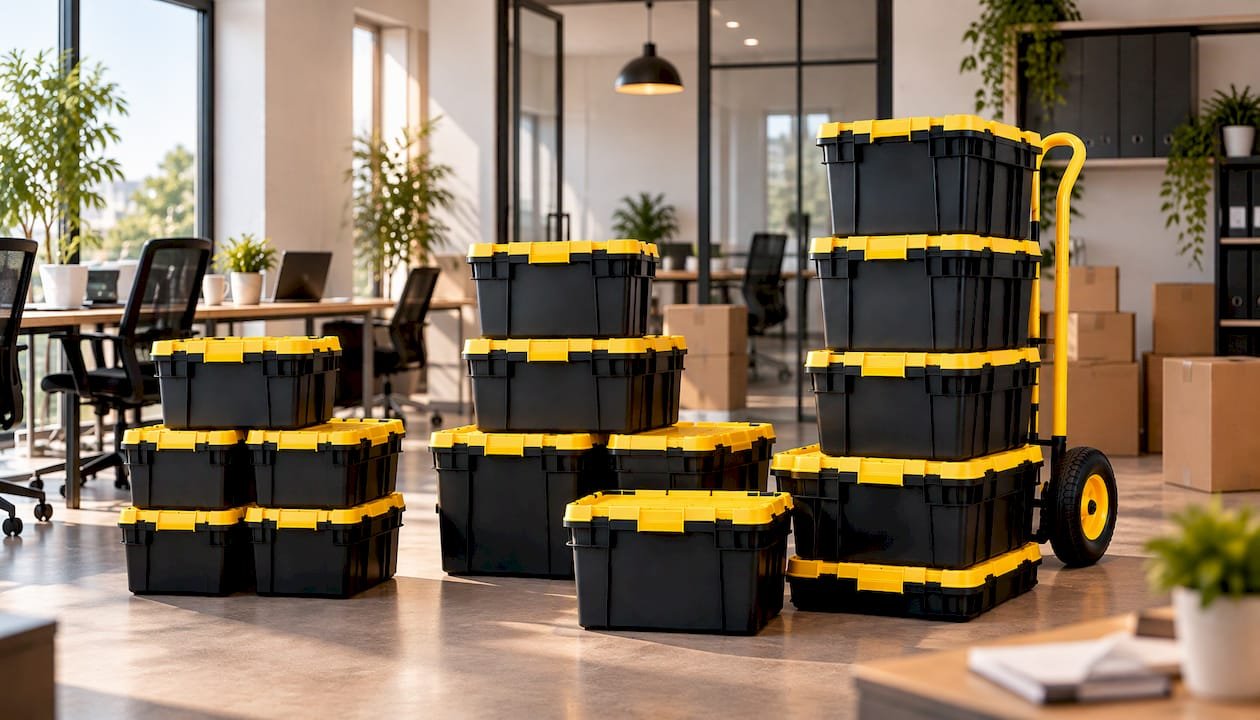
    Our boxes are reusable 100L plastic boxes with secure lids. They arrive ready to use, so there is no assembly and no packing tape, and we deliver and collect them, which removes the flat-pack and disposal steps from steps 1 to 7. Packages include a moving trolley and rental periods run from one to four weeks, so you can have the boxes for the whole packing window and the first unpacking week. Delivery and collection are free within our specified areas. If you are planning how many boxes you need, our moving boxes page shows the options, and our sustainability guide covers the waste you avoid by not using single-use cardboard.

    Moving day

    The aim on the day is that nobody has to improvise.

    • Clear walkways at both properties before the crew arrives.
    • Put one named person from your business at each address for the whole duration, and make them the only point of contact for the movers.
    • Give the crew the labelled floor plan, so boxes and furniture go straight to the right zone and no one has to ask where an item belongs.
    • Keep a printed and digital contact list: the crew supervisor, IT contractor, building managers and your internal leads.
    • Make the server or comms room the last thing out of the old building and the first set up and tested in the new one.
    • Do the final walk-through with the landlord before you hand back the keys, and photograph the condition of the space.

    The first 48 hours and the first week

    Before staff return, IT should test internet, phones, printers, shared drives, server access, door access and CCTV, and activate a 4G or 5G fallback if the fixed line is not live. Check meeting room screens and video calls too.

    In the first week:

    • Walk everyone through the layout and fire escape routes.
    • Check your inventory against the pre-move list and log any missing or damaged items within seven days.
    • Confirm access cards, parking permits and waste collection are working.
    • Return any rented boxes and the trolley on the agreed date.
    • Send your final address-change notices and close out supplier bills for the old premises.

    Moving box rental for your office move

    For the packing stage, our rental packages are built around the job: reusable boxes with lids, delivered, collected and supported by a moving trolley, for one to four weeks. You can see the available packages on our shop page.

    10 Moving Box Rental Package

    If your business also needs somewhere to keep archives or overflow stock after the move, we offer monthly storage box rental with flexible quantities and replacements for damaged boxes. The plans are Small Office at €5 per month, Office at €9 per month, Business at €16 per month and Business Plus at €28 per month. Details are on our business storage box rental page.

    Our view on packing an office

    Most of the effort in an office move is not lifting. It is the hundreds of small decisions that surface on the day because something was not labelled, planned or booked.

    We think packing should be the one stage that needs no decisions. A box that arrives ready to use, closes securely and goes back to us afterwards means your team spends its time on the plan, not on tape and flattened cardboard. A trolley with the package means fewer trips and fewer people carrying heavy loads by hand.

    There is also the waste. Moving a team through cardboard creates a mountain of single-use material in a week. Reusable boxes leave nothing to dispose of, which is how we think an Irish business should move in 2026.

    Pack by zone, label clearly and give every department a champion. With that in place, the boxes are the easy part.

    Vincent

    FAQ

    How far ahead should I start planning an office move?

    Three to six months is a good starting point for most small and medium offices. The long-lead items are broadband installation, crew availability and building access, so book those first. If your move is smaller and simpler, you can compress the timeline, but not below the lead time for connectivity.

    How much does it cost to move an office in Ireland?

    It depends on volume, distance, access and how much packing you do yourself. One Dublin commercial removals service gives estimates of €1,000 to €2,000 for a small office, €2,000 to €4,000 for a medium one and €3,000 and above for a large relocation. Add IT, fit-out, cleaning, reinstatement and disposal, plus a contingency, for the true total.

    Who should be in charge of the move?

    One named move coordinator, with authority to approve decisions and to deal with suppliers and the building manager. In a larger team add IT and facilities leads and a move champion in each department. Keep it to one point of contact per address on moving day.

    What do I need to arrange with my landlord?

    Check your lease for deposit terms, repair duties and reinstatement requirements, such as removing logos and cabling. Agree these in writing and book a final walk-through before you return the keys. At the new building, confirm moving hours, lift and loading bay rules and any insurance requirements for the crew.

    Can I rent moving boxes for an office move?

    Yes. We rent reusable 100L plastic boxes with secure lids to individuals, families and businesses, delivered and collected, with a moving trolley included in our packages. Rental periods run from one to four weeks. You can choose a package on our shop page.

    MMovingboxrental
    Questions About Office Packing?
    Get in touch to discuss reusable moving boxes, flexible rental periods, delivery and collection for your office move.

    Sources

  • Stackable Moving Boxes: What to Look For and How to Use Them

    Stackable Moving Boxes: What to Look For and How to Use Them

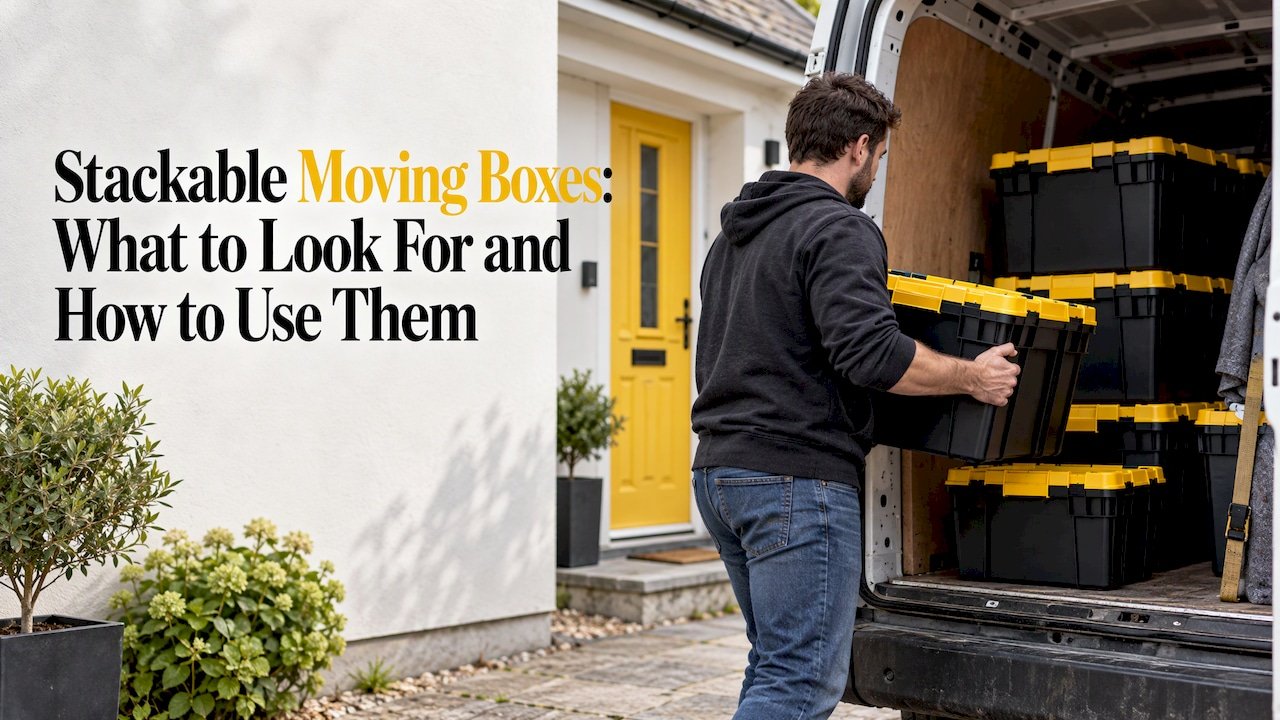
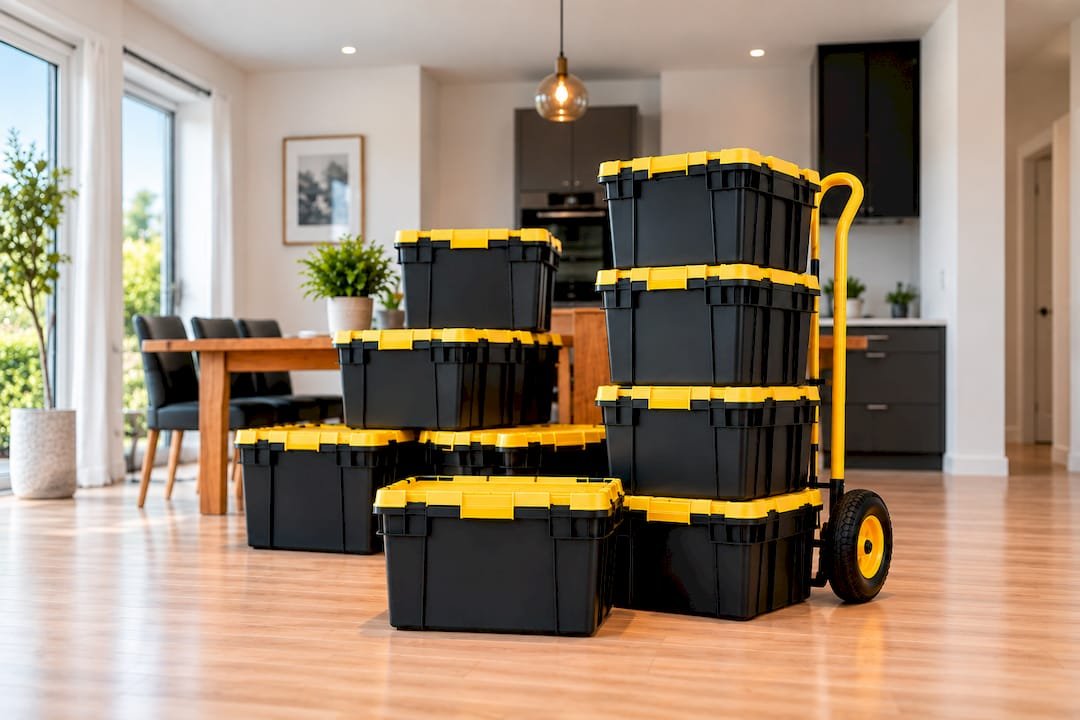
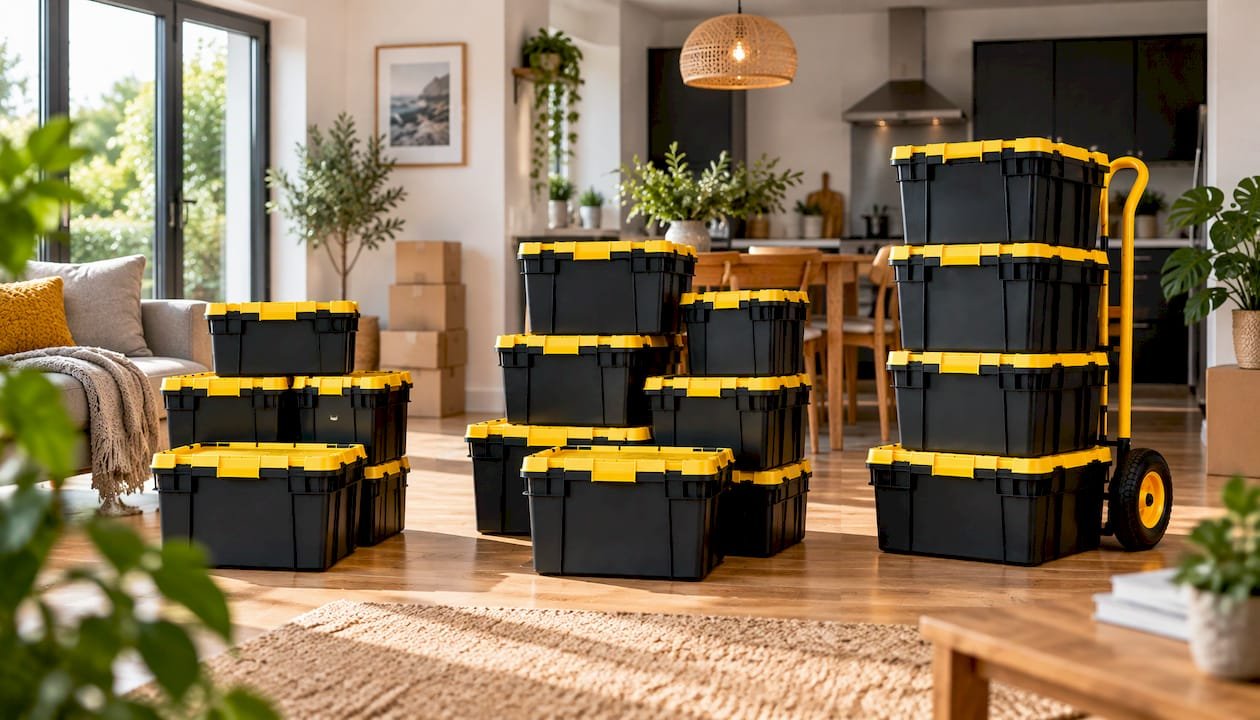
    The best stackable moving boxes for a house move are rigid plastic crates with secure lids, because they hold their shape under weight, carry a stack without crushing and go back to where they came from when you finish. In Ireland you can rent them instead of buying: our 100L plastic boxes arrive ready to use, with no assembly or packing tape, and every package includes a moving trolley, delivery and collection for one to four weeks.

    This guide explains what makes a box genuinely stackable, how to load and stack crates so they stay upright in a van, and what to check before you commit to any crate.

    Movingboxrental
    movingboxrental.ie
    Make Stacking Easier With Reusable Boxes
    Rent 100L plastic moving boxes with a trolley, plus delivery and collection for a rental period of one to four weeks.

    Visit

    Key Takeaways

    • A stackable box needs a rigid body and a lid that locks or sits flat, so the stack stays level and the contents stay dry and closed.
    • Pack heavy items low and in the box itself, and keep the heaviest boxes at the bottom of any stack.
    • A 100L box is big, so fill it with light and bulky things, and put books and tools in part-filled boxes.
    • Use a trolley for any carry of more than about 10 metres, rather than lifting a full crate by hand.
    • Rented crates mean no flattening, taping or recycling afterwards, which suits students, families and anyone moving locally.

    Table of Contents

    What makes a moving box stackable?

    Any box can be piled on another. A stackable box is one that still works when the pile gets to waist height or more. Three things decide that.

    A rigid body. Cardboard is fine for the first box on top of the pile and weaker for the one at the bottom, especially if it is damp or has been used before. Moulded plastic walls keep their shape under the weight above.

    A flat, secure lid. The lid is the platform for the next box. A lid that locks or fits firmly keeps the box closed if the stack shifts, and gives the box above a level seat. Retail examples show the idea: IKEA describes its SAMLA 130L box as stackable thanks to a click-lock lid, and Irish DIY stores list clear storage boxes as stackable in use and nestable when empty.

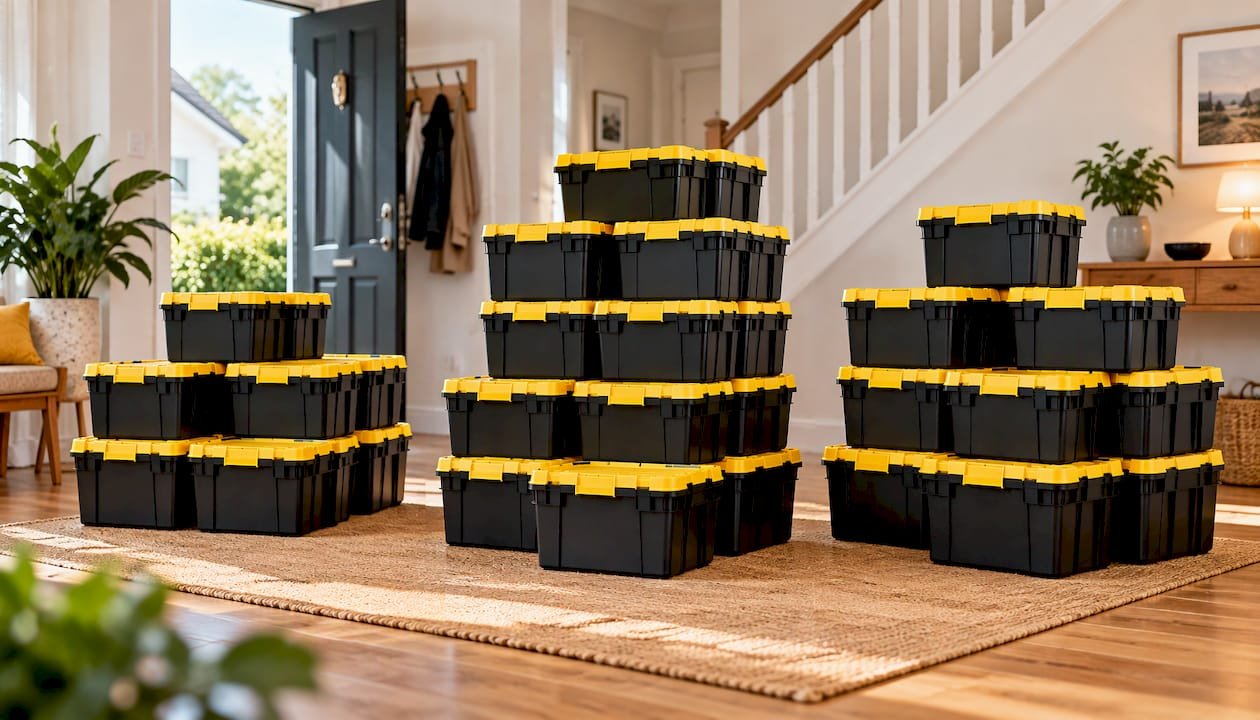
    A uniform shape. Identical boxes sit square on each other. Mixed sizes leave overhangs and gaps, and that is where stacks lean. This is why a set of matching crates packs a hallway, a van and a new living room more neatly than a pile of odd cartons.

    One word on terms. “Crates”, “totes”, “bins” and “boxes” are used loosely. When people search for stackable moving crates, they mean the same thing: a lidded plastic container built to be carried, stacked and reused.

    Why plastic crates suit a house move

    A house move is mostly handling: lifting boxes in, carrying them out, lifting them into a van, lifting them again. Anything that cuts the friction in that chain helps.

    • No assembly. Cardboard has to be built and taped before you can pack a single item. Our boxes arrive ready to use, with no packing tape required.
    • No clutter afterwards. Once the move is done, cardboard has to be broken down and sorted. Rented crates are collected from your home, so there is nothing to flatten.
    • Strength for the awkward stuff. Kitchenware, books, shoes, toys and bedding all go in the same type of box, and the lid stays on.
    • Easy to move around. Identical shape means a trolley can take a neat stack in one go.

    If you want a sense of how many you will need, our room-by-room guide to how many boxes for moving house gives a starting point for each size of home.

    Picking the right crate size

    Size is the trade-off in every stackable box. A small crate is easy to lift but you need a lot of them. A big one carries more but gets heavy fast.

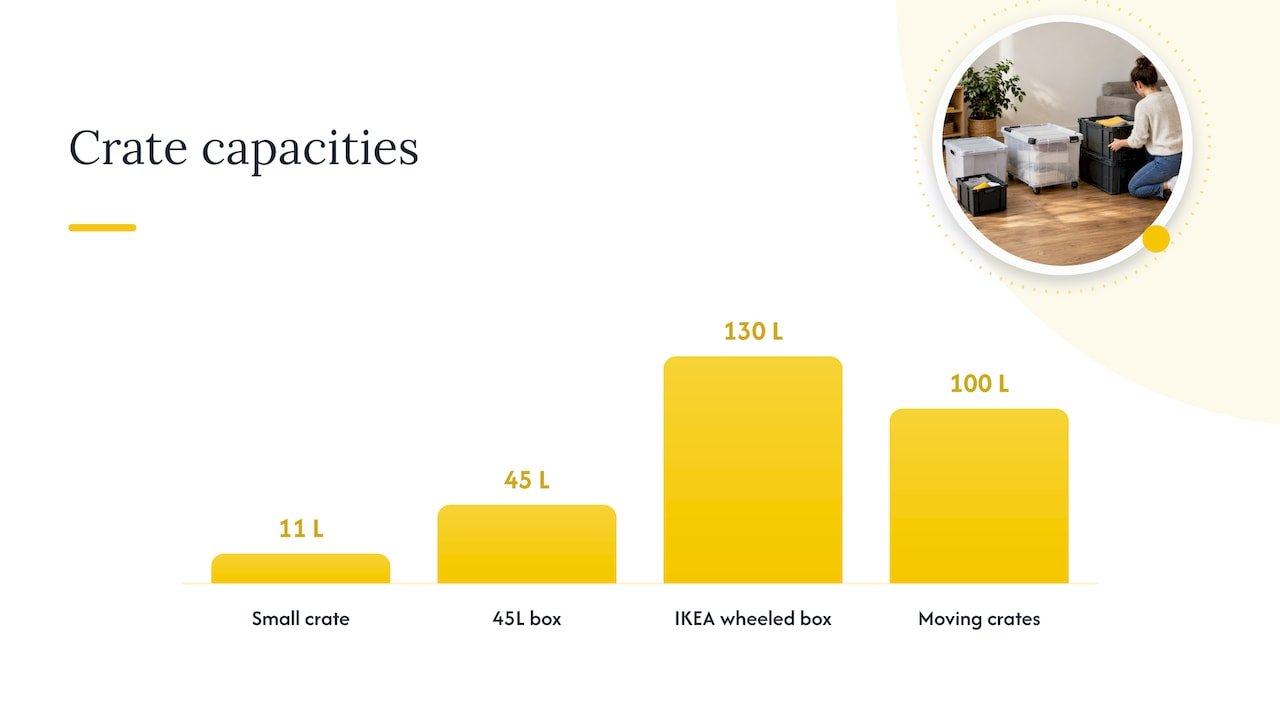
    Retail examples show the range. An 11L crate measuring 36.5 x 25 x 17 cm suits ornaments, accessories and office supplies. A 45L box measuring 60 x 40 x 25 cm is suggested for books, garden tools and thick coats. IKEA’s 130L box measures 79 x 57 x 43 cm and comes on wheels.

    Picking the right crate size

    Our moving boxes are 100L, sitting towards the top of that range. That is a deliberate size for a house move: fewer boxes to count, label and carry, and enough room for duvets, coats, kitchen equipment and clothes without splitting a room’s contents over many small containers.

    With a large crate, the packing rule is volume versus weight:

    What you are packing How to fill a 100L box
    Bedding, towels, cushions, coats Fill to the lid
    Clothes and shoes Fill to the lid, shoes towards the bottom
    Kitchenware and glassware Wrap fragile pieces, fill gaps with towels or tea cloths
    Books, tools, tins, paperwork Fill only a part of the box, or mix with lighter items on top
    Electronics and cables Pack with soft items around them, keep cables together in a bag

    A full crate of books is the classic mistake. It is the same box as a crate of duvets but many times heavier. If you are packing a bookcase, share it between several crates and keep each manageable.

    How to load and stack crates safely

    Stability starts inside the box and ends in the van. Follow this order.

    1. Pack so the lid closes flat

    Do not heap items above the rim. A bulging lid makes the stack tilt and the box above rock. If something will not fit, move it to another crate. The lid is part of the structure.

    2. Put the heavy items at the bottom of the box

    Heavier items go first and lighter ones on top. Fill gaps with soft items such as towels or jumpers so nothing slides when the crate is tilted on a trolley.

    3. Build stacks with the heaviest crates at the base

    IKEA’s own safety note for its stackable box recommends a maximum stacking height of 90 cm, with heavy items kept at the bottom. That figure applies to that product, but the principle carries over. A stack you can reach the top of without stretching is a stack you can control. Keep it lower on stairs, in narrow hallways and for trolley journeys.

    4. Match the stack to the trip

    A stack that is steady in the hallway can topple on a bend. In a van, fill a row from the back wall outwards, keep stacks tight against each other and the sides, and never leave a single tall tower standing alone. Light crates go on top and the heavy ones stay at the bottom.

    5. Label the side, not just the top

    Once boxes are stacked, the lid is hidden. Write the room name on the side that faces out so you can unload straight to the right room.

    Lifting and carrying: what the guidance actually says

    Ireland does not set one legal weight limit for lifting. The Health and Safety Authority’s manual handling guidance says the Regulations set no specific weight limits, and instead offers guideline weights that reduce with repetition and with where the lift starts and ends. It advises avoiding heavy lifts that begin at floor level or above shoulder height, and long carrying distances. That guidance is written for workplaces, but the logic applies at home too: a house move is a long day of repeated lifting.

    Two practical numbers from Irish manual handling training material:

    So bring the crate close to your body, bend your knees and let the handles do the work. If a crate feels too heavy, take something out. That is easier with identical boxes: swap a few items into a half-empty one. Every rental package we offer includes a moving trolley, so the long carry from the front door to the van does not need to be done by hand. If you have a back condition or an injury, speak to your GP or physiotherapist before a heavy moving day.

    What to check when renting stackable crates

    Renting is different from buying a set, and the details decide whether it saves you effort. Before you book, check these.

    1. Box size and count. Know the litre capacity and how many you get. Our packages come in 10, 15, 20 and 25 box options, so you can match a studio, a flat or a family home.
    2. Lids. Each box should come with a secure lid, since lids make stacking possible.
    3. Rental length. Moves rarely run to the day. Our rental periods run from one to four weeks, which covers packing ahead, moving day and unpacking.
    4. Delivery and collection. Check they are included for your address. We offer free delivery and collection within specified areas, to homes or businesses.
    5. Extras. Our packages include a moving trolley, which turns a stack of crates into a single trip.
    6. Cleanliness and condition. You want ready-to-use boxes you can pack straight away.
    7. How to book. Our packages are booked online or by phone, on a fixed term.

    You can see the package options on our shop page, or look at our overview of moving boxes for moving house for how the boxes work.

    The environmental case for reusable crates

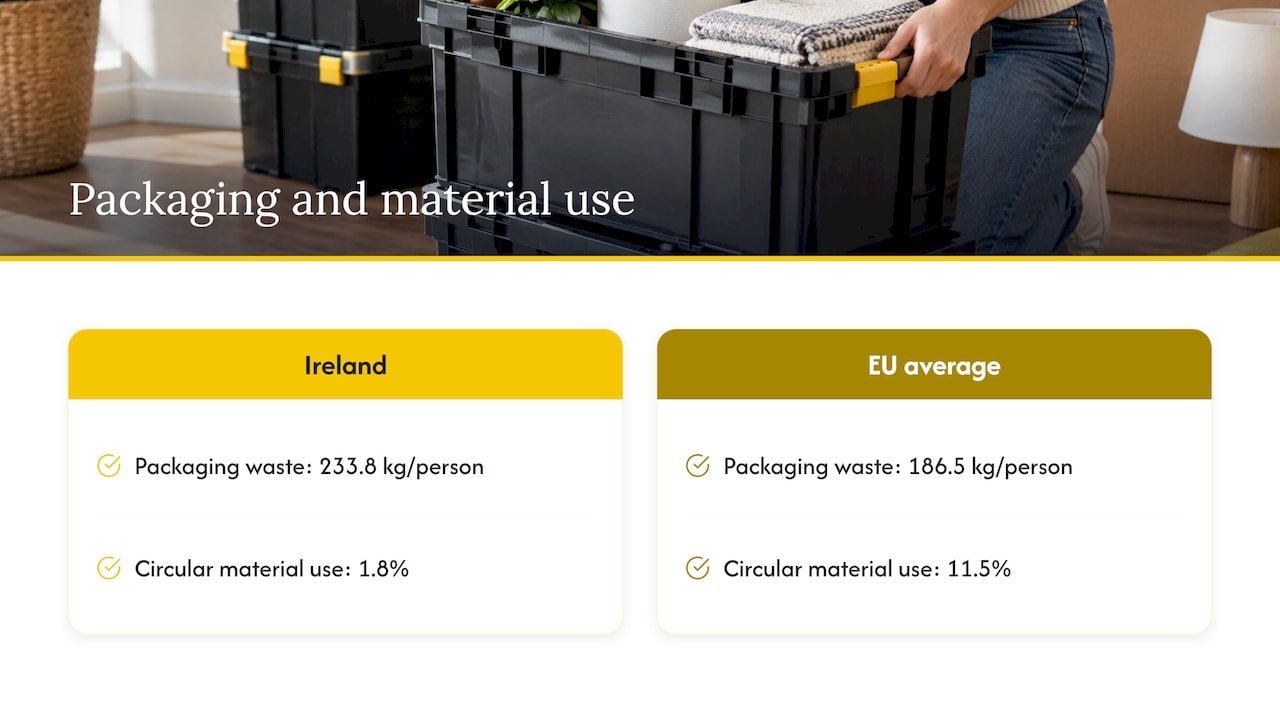
    Ireland has a packaging problem. According to a roundup of EU data, Ireland produced 233.8 kg of packaging waste per person in 2022, against an EU average of 186.5 kg. The European Environment Agency’s 2024 profile for Ireland reports a circular material use rate of 1.8%, compared with an EU average of 11.5%, and lists increased use of re-usable products and materials among national targets.

    A move is a small example of that. It is a burst of single-use packaging: dozens of cartons, rolls of tape and wrapping, used for a few days. A reusable crate reverses that. The benefit comes from the number of times a crate is used: as one moving-industry writer puts it, the sustainability gain comes from reuse cycles, and the same source notes that crates suit local and apartment moves with better stacking and fewer crushed boxes. Our boxes are rented, collected and rented again, so each crate does that job many times rather than once. For more ways to cut waste in a move, see our sustainable moving tips for Irish movers.

    The environmental case for reusable crates

    Who this suits

    Families moving house. A larger home means many boxes. Matching 100L crates with a trolley make a long day shorter, and you do not spend the weekend before building cardboard.

    Students. Moving into and out of accommodation each year means temporary storage and a short window. Renting for a week or two means you do not keep a pile of boxes in a small room afterwards.

    Eco-conscious movers. Reuse, no tape and no cardboard to dispose of.

    Businesses and offices. Our monthly storage box rental is built for tidy archive and stock storage. Plans are listed at €5 per month for Small Office, €9 for Office, €16 for Business and €28 for Business Plus, with flexible quantities and replacements for damaged boxes.

    Our offer

    If you want stackable crates without buying them, our rental packages come with everything for the job: strong, reusable 100L plastic boxes with secure lids, a moving trolley, and delivery and collection. There is nothing to assemble and no tape to buy, and you can keep the boxes for one to four weeks.

    Choose from the 10, 15, 20 or 25 box packages on our shop page, or start from our homepage if you want to see how it works first.

    10 Moving Box Rental Package

    Our view on stackable boxes

    We started from a simple observation about moving: the box is the problem. Cardboard has to be built, taped, carried, then broken down and thrown away, and it is at its weakest when it is full.

    A stackable crate fixes that. The body is rigid, the lid is secure, and the shape is the same every time, so stacks are predictable and a trolley can take them. That is why we chose a 100L box for house moves: it keeps the box count low and the day simple.

    We also believe that a box you use once is a poor use of material. Renting means the same crate does the job again for the next family, which is why we focus on reuse and offer packages with delivery, collection and a trolley included. Our advice is simple: pick one size of box, pack heavy items low, keep stacks short and let the trolley take the strain.

    Vincent

    FAQ

    Are stackable moving boxes better than cardboard?

    For a house move, rigid plastic crates are easier to stack and carry, and they do not need assembly or tape. They also do not collapse when stacked or when they get damp. Our rental boxes are reusable, so there is no cardboard left over after your move.

    How high can I stack moving crates?

    Keep stacks short enough that you can reach and steady the top box. IKEA’s safety guidance for its own stackable box recommends no more than 90 cm, with heavy items at the bottom. In a van, pack stacks tight against each other and the walls, and put the lightest crates on top.

    How heavy can I fill a 100L crate?

    There is no single legal limit in Ireland, as the HSA’s guidance sets guideline weights that fall with repetition and awkward lifts. Pack light, bulky items to the top and keep books and tools to part-filled boxes. If it feels too heavy to lift comfortably, take items out.

    Can I rent stackable crates for a few weeks only?

    Yes. Our moving box rental packages run from one to four weeks, and delivery and collection are included within our specified areas. Pick the package that matches your home on our shop page.

    Movingboxrental
    Questions About Renting Moving Boxes?
    Call to ask about reusable 100L boxes, rental periods, delivery and collection for your move.

    Sources

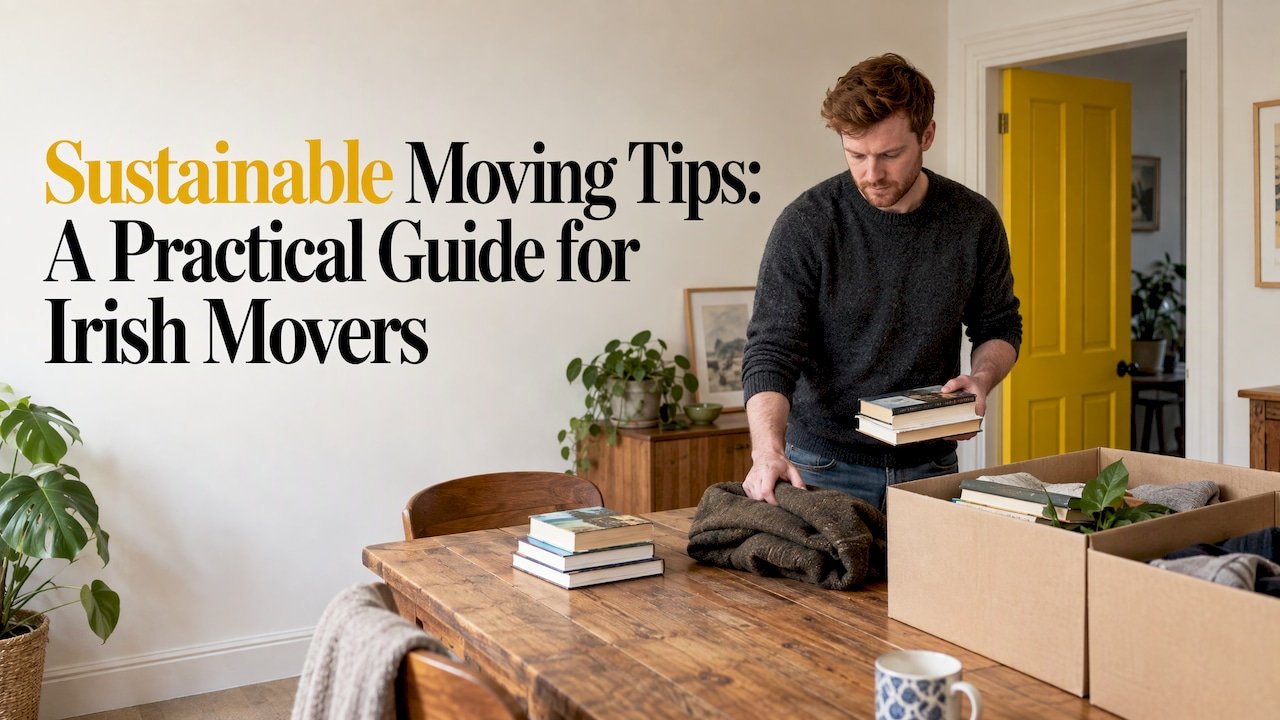
  • Sustainable Moving Tips: A Practical Guide for Irish Movers

    Sustainable Moving Tips: A Practical Guide for Irish Movers

    The most sustainable move is the one that carries less, packs in containers that get used again and again, and makes as few trips as possible. In practice that means four habits: clear out before you pack, use what you already own, swap single-use cardboard for reusable boxes, and deal with whatever is left over through the right Irish disposal route. At Moving Box Rental we deliver reusable 100L plastic boxes with secure lids and collect them when you are done, so there is nothing to assemble, tape or recycle afterwards.

    This guide takes you through the move in the order you will actually do it, with Irish sources for the rules on donating, recycling and disposal.

    Movingboxrental
    Make Your Move Reusable
    Choose reusable 100L boxes instead of single-use cardboard, with delivery, collection and a moving trolley included.

    Visit

    Key Takeaways

    • Every item you do not move saves packing materials, van space and fuel, so declutter room by room before you buy or book anything.
    • Suitcases, laundry baskets, bags and blankets can carry and cushion a good share of your belongings at no cost.
    • Reusable boxes replace a pile of cardboard and tape with containers that are delivered, used and collected.
    • Use Irish routes for what you do not keep: charity, resale, the dry recycling bin and your local civic amenity site.
    • Fewer, fuller trips beat many half-empty ones, whether you drive yourself or hire help.

    Table of Contents

    Why the sustainable part of a move starts before packing

    Most of the environmental cost of a move is decided by how much you take. Every extra bookshelf, bag of old clothes or box of cables you carry needs packing materials, space in a vehicle and, often, more journeys. The David Suzuki Foundation’s green moving guide makes the same point: reduce the load first, because fewer belongings mean fewer packing materials, a smaller vehicle and fewer trips. The guide is international rather than Irish, but the logic holds anywhere.

    So the first sustainable decision is not which box to choose. It is what you are going to put in it.

    Start early and clear out room by room

    Give yourself weeks, not days. Rushed clear-outs end in skips, because there is no time to find a charity that will take the sofa or to sell the bookcase. Starting early also lets you use up the food in your freezer and cupboards rather than carrying it or binning it.

    The South West Region Waste Management Office’s Circular Guide to Clear Outs (2025) recommends working through your home room by room and sorting everything into six groups, and says this applies when you move house too:

    1. Keep: what you will genuinely use in the new home.
    2. Reuse: what you can repurpose yourself, for example as packing material.
    3. Donate: usable items for friends, family or charity.
    4. Sell: anything with real resale value.
    5. Recycle: items accepted in the dry recycling bin or at a civic amenity site.
    6. Dispose: only what cannot go anywhere else, through authorised routes.

    A civic amenity site is the local authority recycling centre, often called “the dump” or “the recycling centre”. Do the clear-out one room at a time, as the Irish Times also advises, so that you finish each room rather than starting ten piles.

    Where unwanted items should go in Ireland

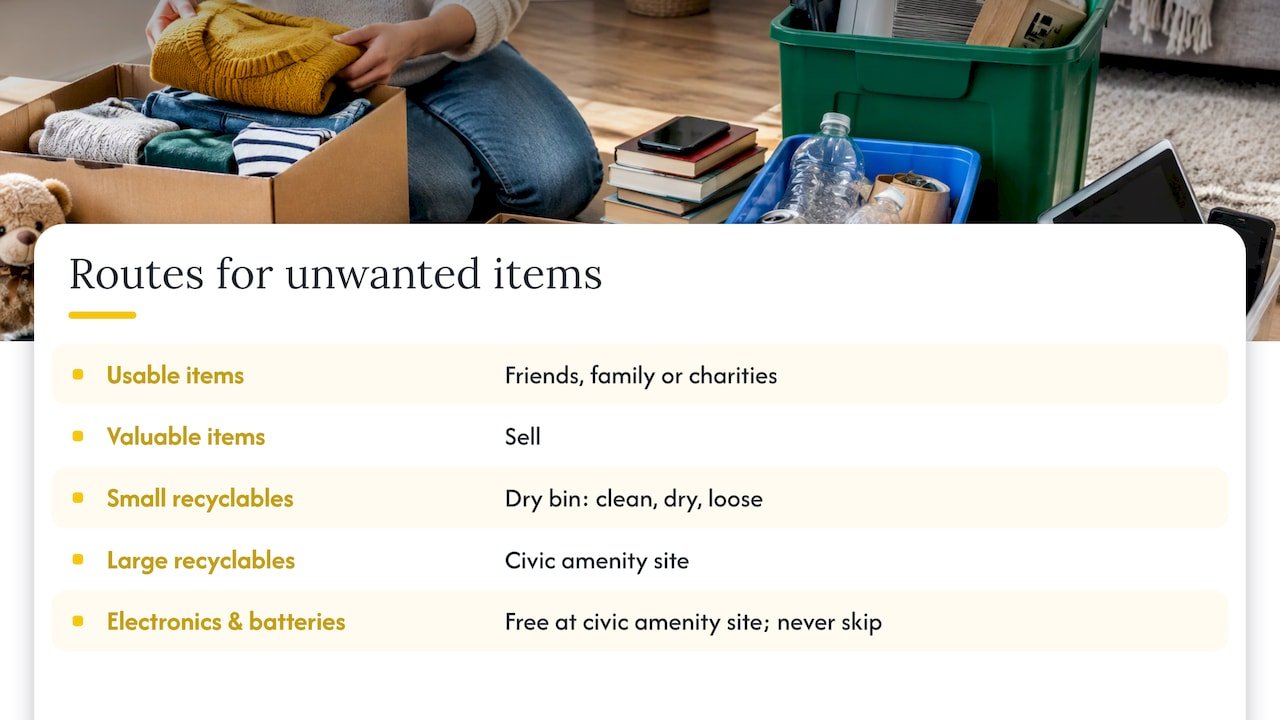
    The same Circular Guide sets out the routes. Usable items can go to friends, family or charities, and valuable items can be sold. It names kitchen cabinets, counters, doors and fireplaces as examples of things people forget are reusable. Small recyclable materials go into the dry recycling bin clean, dry and loose, and larger recyclables go to a civic amenity site.

    Routes for reusing and recycling unwanted items

    For furniture, MyWaste’s large-items guidance says usable pieces may be donated to a local charity, and that some charities collect. It also advises donating only what is suitable for resale, so that a charity is not left paying to dispose of it. Bulky furniture, mattresses and old fitness or play equipment can be recycled by special arrangement, and it is worth checking whether your local authority runs a fee-based bulky-goods collection.

    The Irish Times reports that electrical items, batteries and battery-powered items can be recycled free at a local civic amenity site and should not go in a skip. Old chargers, kettles and toys with batteries are the usual culprits in a move.

    A worked example

    Take a family leaving a three-bed house. In the kids’ room they find outgrown clothes (donate), a working toy kitchen (sell), a broken light-up toy (battery and electrical recycling at the civic amenity site) and a bag of paper scraps (dry recycling). The living room yields a spare bookcase that a neighbour wants. None of that goes in a box or on the van. By the end of the week they have probably removed several boxes’ worth of belongings, and every box not packed is one less to buy, carry and get rid of.

    Ireland has room to improve here. The EPA’s circular economy progress page reports a reuse rate of 15.5 kg per person per year in 2024, against a target above 20 kg per person by 2030. A move is one of the few moments when a household handles almost everything it owns, which makes it a good time to put more of it back into use.

    If you are also pacing your packing around a pregnancy, a practical plan for moving house during pregnancy shows how spreading the work over several weeks keeps the lifting manageable, and that same slower pace is what lets you sort and rehome things properly instead of binning them.

    Use what you already own

    Before buying anything, look around the house. You already own a lot of containers and cushioning:

    • Suitcases, holdalls and gym bags carry clothes and shoes.
    • Laundry baskets and drawer units can be moved with their contents in place.
    • Reusable shopping bags suit soft or light items.
    • Towels, blankets, bedding and jumpers wrap fragile items such as glasses and framed pictures, replacing plastic bubble wrap with things you were going to move anyway.

    The benefit is double. You avoid buying single-use packaging, and the wrapping materials arrive at the new house already clean and ready to put away. Pack the soft items first so they are on hand to protect the breakables later.

    There is a limit, though. Suitcases and baskets are awkward to stack, and they are not the same size, so they waste van space. That is where a consistent set of boxes earns its place.

    Choose packing materials that do not become waste

    The usual answer to “what should I pack in?” is cardboard, and cardboard is recyclable. But recyclable is not the same as low-waste. Moving boxes typically need folding, taping and labelling, and when you finish unpacking you are left with a heap of flattened board, tape that should be peeled off, and a trip to the recycling bin.

    The EPA reports Ireland’s municipal waste recycling rate at 43% in 2024, with a 2030 target above 60%. Material that is reused sits above recycling in the usual waste hierarchy, because it needs no reprocessing at all. A box that is used for ten moves beats a box that is recycled after one.

    Here is how the main options compare for a typical house move:

    Option Assembly or tape Stacks evenly What is left afterwards
    Cardboard boxes, new Yes Yes, until they sag Flattened board to recycle
    Cardboard boxes, second-hand Yes Depends on condition Board to recycle sooner
    Bags, baskets and suitcases No No Nothing, you keep them
    Rented reusable 100L plastic boxes No Yes, with secure lids Nothing, they are collected

    A mix usually works best: your own suitcases and baskets for soft items and awkward shapes, and a set of reusable boxes for the bulk of the packing.

    Reusable boxes: how rental fits a low-waste move

    Buying plastic boxes you will use once is not sustainable. Renting boxes that are designed to be used over and over is a different thing: the same container serves move after move, and you keep nothing you do not need.

    10 Moving Box Rental Package

    This is how our service works. We rent strong, reusable 100L plastic moving boxes with secure lids. We deliver them to your home and collect them afterwards, with free delivery and collection within our specified areas. The boxes arrive ready to use, with no assembly and no packing tape. Each package includes a moving trolley, and you choose a rental period of one to four weeks.

    Here is how that maps onto the habits in this guide:

    • No tape, no flattening. Lids close securely, so there is no tape to peel and no board to break down.
    • A defined end date. A one to four week rental gives you a clear window to pack, move and unpack, and the boxes leave with the collection.
    • A moving trolley in the package. It lets you move several boxes in one go, which makes loading faster and helps you keep the trips down.
    • Uniform boxes. Matching boxes stack neatly, which helps you fill a van properly.

    How many boxes do you need?

    Our packages come in sets of 10, 15, 20 and 25 boxes. The right number depends on the size of the home and how much you cleared out first, which is another reason to declutter early. Our room-by-room guide to how many boxes you need for moving house walks through it, and you can see the full range on our moving boxes page.

    For students and short-term storage

    Students moving between term-time accommodation and home often need a few boxes for a few weeks. The same logic applies: rent what you need for the length of time you need it, and hand it back. Sorting your things first, as above, keeps the number of boxes down.

    Pack in a way that cuts trips and damage

    How you pack changes how many journeys you make.

    1. Fill each box properly. Put heavy items such as books at the bottom of a box and lighter items above. A 100L box is large, so keep heavy things in smaller amounts so it stays liftable.
    2. Fill gaps with soft items. Towels and clothes stop glasses and ornaments rattling, so you do not need bubble wrap.
    3. Label by room. Write the destination room on the box so it goes straight to the right place and you do not move things twice.
    4. Load in one go if you can. The Suzuki guide recommends consolidating the load and, if you use your own vehicle, avoiding peak times. Two full journeys use less fuel than four half-empty ones.
    5. Choose the vehicle to match the load. The smaller the load after your clear-out, the smaller the vehicle you need.

    If you are hiring a van or a removals firm, ask about the vehicle and whether the route can be combined with other stops. Doing the packing yourself with ready-to-use boxes also means the van arrives to a finished job and is not waiting while you tape the last boxes.

    After the move: return, reuse, recycle

    The end of the move is where waste normally appears, so plan it on the first day.

    • Return rented items promptly. The Suzuki guide advises returning rented bins and borrowed gear quickly so others can use them. With us, collection is arranged as part of the package, so unpack and have the boxes ready for the end of your rental period.
    • Rehome leftovers. Spare packing materials, wrapping blankets you no longer need and extra boxes can go to a neighbour, friend or someone moving soon.
    • Recycle what is left properly. Flatten unusable cardboard and remove non-recyclable tape or labels first, as the Suzuki guide suggests. Keep recyclables clean, dry and loose in the dry recycling bin, as the Circular Guide says.
    • Take electricals and batteries to the civic amenity site. Do not leave them in a skip.

    Then look at the new home. Hanging washing outside to dry, switching to efficient lighting and planning a simple waste routine in the first week all stick best when you set them up while the house is still half unpacked.

    Promo: reusable boxes for your next move

    If you want to move without cardboard, tape or flat-pack clutter, our reusable 100L boxes come with a moving trolley, delivery and collection, and a one to four week rental. Choose a package of 10, 15, 20 or 25 boxes on our shop page, or see the 10 Moving Box Rental Package if you are moving a flat or a few rooms.

    10 Moving Box Rental Package

    For an office, we also rent storage boxes by the month, with flexible quantities and replacements for damaged boxes: Small Office at €5 per month, Office at €9 per month, Business at €16 per month and Business Plus at €28 per month. The details are on our business storage box rental page.

    Our view: the greenest box is the one that gets used again

    We started Moving Box Rental because we saw what a house move leaves behind: stacks of flattened cardboard, rolls of tape and a recycling bin full by the second day. None of it is a mistake by the person moving. It is simply how single-use packing works.

    Our answer is to make the box a service rather than a purchase. A strong 100L box with a secure lid comes to your door, does its job over one to four weeks, and goes back out on the next move. There is nothing to assemble and no tape to use, and with the moving trolley in the package, moving the boxes is easier too.

    The best advice we can give is to combine the two ideas in this guide. Clear out first, using the donate, sell and recycle routes available in Ireland, so you pack less. Then pack what remains in containers that are built to be reused. That is a move you can feel good about, and it is also simply less work.

    Vincent

    FAQ

    How do I make my move more eco-friendly on a budget?

    Start with what you own: suitcases, laundry baskets, bags and towels cost nothing and cover a lot of packing. Clear out first so you carry less, and sell what has value. For the bulk of your belongings, a short rental of reusable boxes avoids buying materials you will throw away.

    What can I do with moving boxes after the move?

    With reusable rented boxes, you simply hand them back for collection. If you have used cardboard, flatten it, remove tape and labels, and put it in your dry recycling bin clean and dry. Spare boxes in good condition can also go to someone else who is about to move.

    Where can I take unwanted furniture and electricals in Ireland?

    Donate usable furniture to a local charity, and check first whether it can be resold. For bulky items such as mattresses, ask your local authority about a fee-based bulky-goods collection. Electrical items and batteries can go free to your local civic amenity site, according to the Irish Times.

    How far ahead should I start planning a sustainable move?

    Allow several weeks. That is enough time to go through each room, find the right home for unwanted items, use up food and book your boxes. Last-minute moves are where most waste and skip use happen.

    Movingboxrental
    Questions About Reusable Moving Boxes?
    Get in touch to discuss reusable boxes, flexible rental periods and delivery and collection for your move.

    Sources

  • Packing Shoes for Moving: A Pair-by-Pair Guide

    Packing Shoes for Moving: A Pair-by-Pair Guide

    The best way to pack shoes for a move is to sort them first, clean and dry every pair, stuff each shoe so it holds its shape, keep each pair together, and put them in a rigid box with the heavy pairs at the bottom. A strong, lidded reusable box makes this easier, because there is nothing to assemble and nothing that gives way under the load. Here is the full routine, step by step, with what goes wrong at each stage.

    Movingboxrental
    Pack Shoes Without Cardboard Waste
    Reusable 100L plastic moving boxes arrive ready to use, with delivery, collection and a moving trolley included in the service.

    Key Takeaways

    • Sort shoes into keep, donate and bin piles before you buy a single sheet of packing paper. Fewer pairs means fewer boxes.
    • Clean and fully dry every pair. Damp or muddy shoes can spread dirt to other pairs and develop mould or mildew in transit.
    • Stuff each shoe with socks or paper, then keep the pair together by tying laces or wrapping the two as one.
    • Pack heavy pairs upright at the bottom, light and delicate pairs on top, and fill gaps so nothing shifts.
    • Wrap in plain paper rather than newsprint, and choose reusable containers to cut down on waste.

    Table of Contents

    Start by deciding which shoes are coming with you

    Most households own more shoes than they wear. A move is the cheapest moment to sort them, because every pair you carry has to be cleaned, wrapped, boxed, lifted and unpacked.

    Make three piles on the floor or the bed:

    1. Keep: pairs you wore in the last year, plus occasion shoes you genuinely want.
    2. Donate: wearable pairs that no longer fit your life. Charity shops in Ireland generally take clean, paired shoes in good condition.
    3. Bin: split soles, broken heels, shoes with no partner.

    While you sort, check each pair for damage. A loose heel or a worn sole is easier to deal with now than after it has been squashed in a box for a fortnight.

    If the move also depends on selling your current home, the timeline matters for when you pack. A guide to selling your house before moving can help you plan the order of the bigger decisions, so that the shoe sorting does not end up in the last panicked evening.

    The volume you end up with sets how many boxes you need. Our room-by-room guide to how many boxes you need for moving house shows how to count for the whole home, wardrobe and hallway included.

    Clean and dry every pair first

    This is the step people skip, and it is the one that causes the problems. Dirt rubs off onto neighbouring pairs, and shoes that go in damp can develop mould or mildew. Nike’s Irish guide makes both points: clean dirty shoes before packing, and make sure they are completely dry.

    A simple routine for each type:

    • Trainers and canvas: brush off dried mud, wipe the uppers with a damp cloth, and take out insoles and laces if you can so they dry properly.
    • Leather: wipe clean and apply polish if you normally do. Leave it to dry before it goes near a box.
    • Suede: use a suede brush rather than water.
    • Wellies and walking boots: knock out the mud, rinse the soles, and give them a full day to dry. Irish weather means these are often the wettest items in the house, so start early.

    Air-dry everything away from direct heat. Radiators can warp glue and leather. If a pair smells, a sprinkle of baking soda inside, left overnight and tipped out, or a silica gel sachet in the box helps keep things fresh during the journey.

    Give yourself a day or two for this stage. Drying is the slow part, and it is the reason shoe packing should begin a week or so before the move rather than on the morning of it.

    Keep every pair together

    A single shoe in the wrong box is a small disaster when you are unpacking at the other end. There are three reliable ways to keep a pair as a pair:

    • Tie the laces of one shoe to the other, as the Nike guide suggests.
    • Bag the pair in a small cloth or plain bag and fold the top over.
    • Wrap the pair together in two or three sheets of plain packing paper.

    For flats, sandals and heels without laces, a bag or a paper wrap is the way. Never rely on the shoes simply sitting next to each other in a box. They will drift apart the first time the box tilts on the stairs.

    Stuff each shoe so it keeps its shape

    An empty shoe collapses under pressure. The fix costs nothing: push a pair of rolled socks or a crumpled sheet of plain paper into each shoe, toe first, so the front is supported. Nike’s guide recommends exactly this for shoes you care about.

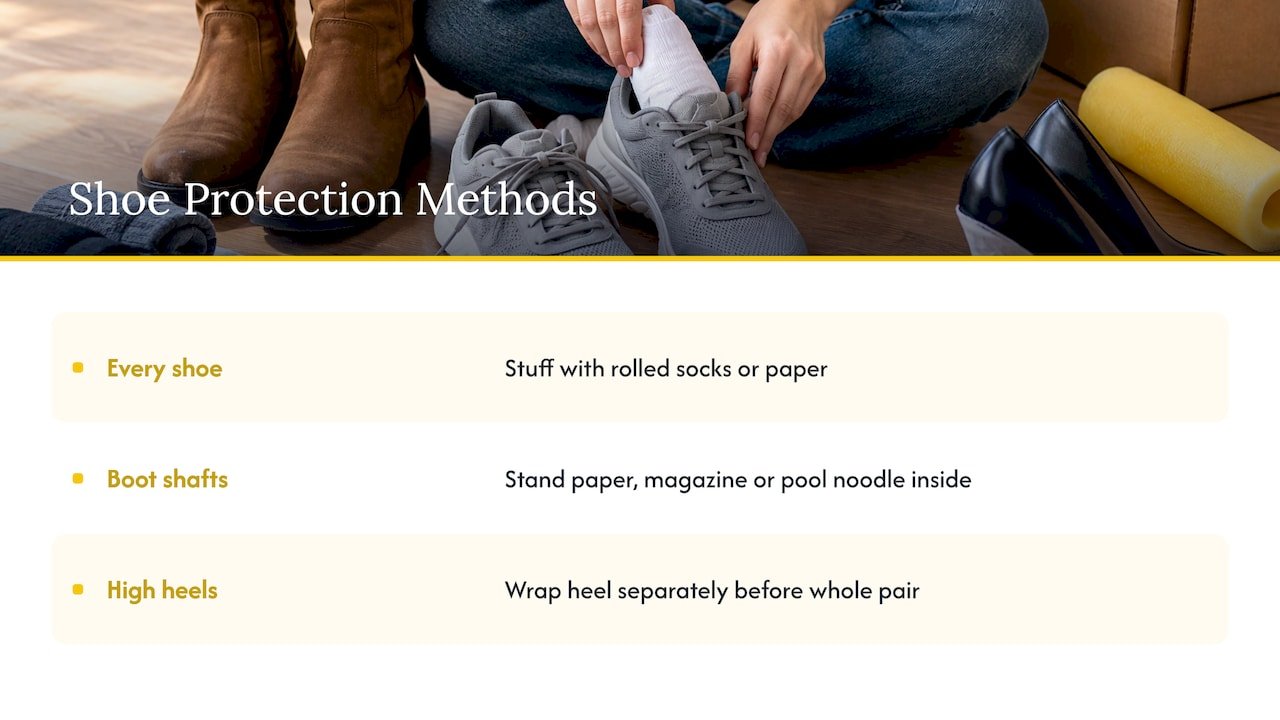
    Tall boots need more thought. A boot shaft that folds in half will crease, and the crease often stays. Roll a sheet of paper, a magazine or a pool noodle section and stand it inside the leg so the boot holds upright. Pack boots standing up, or lay them on their sides with the shaft supported.

    For heels, wrap the heel on its own with a sheet of paper before wrapping the whole pair. A thin stiletto heel can otherwise work its way through a single layer of paper and mark the shoe beside it.

    Three ways to protect shoes during a move

    What to use for each type of shoe

    Not every pair needs the same treatment. This table sorts it by what you own.

    Shoe type Fill the inside Wrap Where it goes in the box
    Trainers, everyday shoes Socks Pair bagged or tied Upright, towards the bottom
    Work boots, walking boots, wellies Rolled paper in the shaft Pair tied or bagged Upright, bottom layer
    Leather dress shoes Shoe tree or paper Each shoe wrapped, then the pair, in plain paper Middle or top, own compartment
    Heels, occasion shoes Tissue or paper in the toe Heel wrapped first, then each shoe Top layer, or original box
    Sandals, flip-flops Not needed Pair bagged Top layer, or gaps between heavier pairs
    Children’s shoes Socks Pairs bagged together by size Anywhere with space

    Two extra details are worth knowing. First, use blank paper for anything pale. Newsprint can leave ink on light leather and canvas. Second, avoid wrapping shoes in sealed plastic bags for long periods, because plastic can trap moisture. A cloth bag or paper lets shoes breathe.

    Original shoe boxes: use them with care

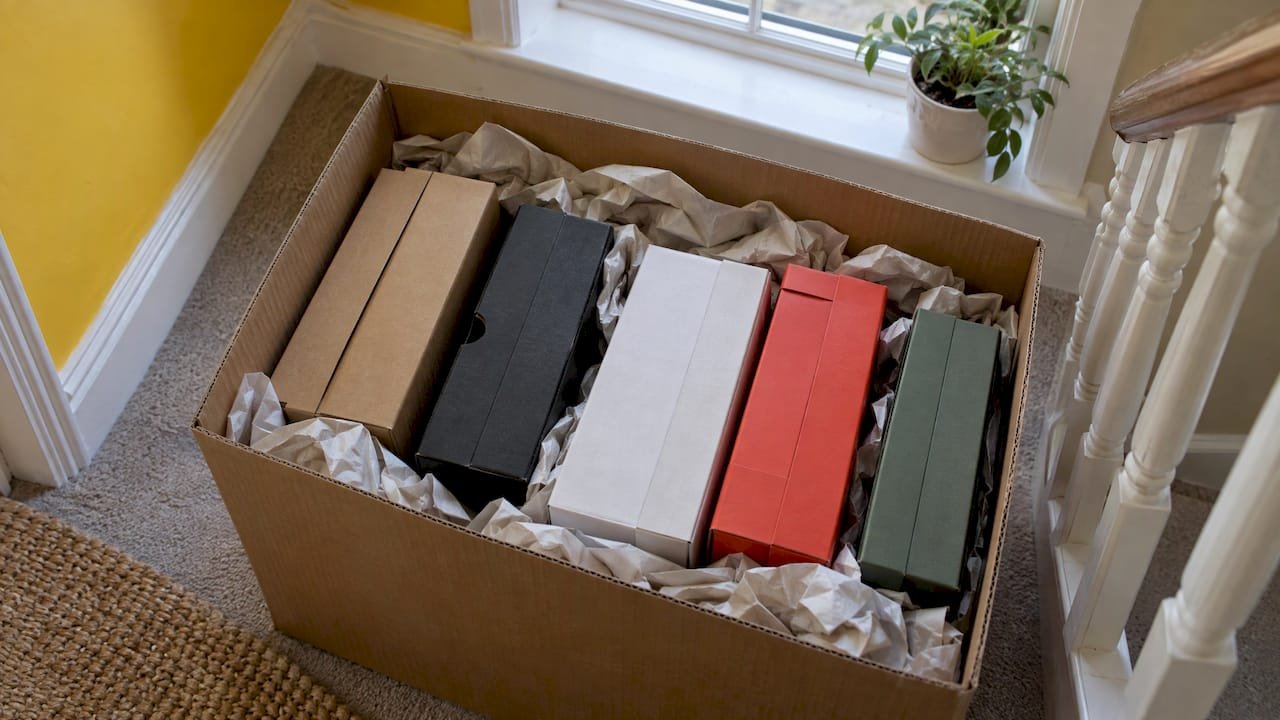
    Original boxes are ideal for your most expensive or delicate pairs, because each shoe has its own protected space. Their weakness is stacking: the lids crush. If you keep a few, stand them on their sides inside a larger, rigid container and fill the spare room with paper so they cannot move.

    Shoe boxes stored sideways inside a sturdy container

    The mistake to avoid is cramming many pairs into one small box. They get squashed and the heels deform. It is far better to give the shoes a larger, sturdy box and pack them in layers.

    Packing the box: weight, layers and gaps

    Shoes are not heavy individually, but a full box of boots is. Pack in a sensible order:

    1. Bottom layer: heavy pairs such as boots and work shoes, upright and in pairs.
    2. Paper layer: a sheet of plain paper across the top so the layers do not rub.
    3. Middle layer: trainers and everyday shoes.
    4. Top layer: lighter and more delicate pairs, laid on their sides if needed.
    5. Gaps: fill every space with socks, scarves or crumpled paper, so that nothing shifts when the box is carried.

    Keep shoes in their own box. Do not pack them in with clothes, especially delicate shoes. Shoe soles carry dirt, and a pair of heels can mark or crush what lies against it. If you are stuck for space, a shoe-only box with a few spare socks in the gaps is more efficient than a mixed box.

    Label the lid and one side with the contents and the destination room, for example “Shoes, hallway” or “Boots, utility”. When you arrive, you will want the everyday pairs out first. Keep the pair you need for moving day, plus one spare, out of the boxes and in a bag you carry yourself.

    Why a rigid, lidded box suits shoes

    Cardboard is the usual choice, and it works if it is strong enough. But it has to be built, taped, and then thrown away, and a damp wellie or a heavy boot at the bottom can test a weak base. Rigid plastic boxes with secure lids do away with those problems. There is no assembly, no tape, and the lid keeps the contents clean and in place.

    Our boxes are 100 litre reusable plastic boxes, which is generous for footwear: you can lay boots in one layer, add a paper divider and have room for a second. For a family, a single box often covers one person’s shoes, which makes unpacking simple: one box per person, labelled with a name.

    If you want to see the boxes themselves, our page on moving boxes for moving house shows what you get.

    Cut down on packing waste

    Shoe packing can create a surprising amount of rubbish: paper, bubble wrap, tape, bags and flattened cartons. A few swaps reduce it:

    • Use what you own: socks, tea towels, scarves and T-shirts all pad a shoe as well as paper does, and they need packing anyway.
    • Reuse the bags: shoe bags, dust bags from handbags and cotton tote bags protect pairs and then go back to the wardrobe.
    • Choose plain paper over bubble wrap where you can. Paper can go into household recycling afterwards.
    • Skip tape and cardboard by using reusable boxes that are collected after the move.
    • Donate before you pack. A pair that goes to a charity shop is one pair you never have to wrap.

    For storage, whether you are a student with a few weeks between tenancies or a family between homes, the same rule applies: only store dry, clean shoes, add a silica gel sachet if you have one, and keep the box somewhere cool and dry rather than a damp shed or garage.

    A timeline that works

    • Two weeks before: sort into keep, donate and bin. Book your boxes.
    • One week before: clean everything, then leave it to dry. Collect socks, paper and bags.
    • Three days before: stuff, tie and wrap. Pack seasonal and rarely worn shoes first.
    • The day before: pack the rest, keeping one pair out, then label and close the lids.
    • After the move: unpack shoes early, so that any that arrived slightly damp can air.

    Our view on shoes and boxes

    We rent reusable 100 litre plastic boxes with secure lids, and shoes are one of the jobs they do best. Shoes are awkward: odd shapes, dirty soles, delicate heels. A rigid box with a lid gives them a clear, contained space, and there is no flattened cardboard left over once you have unpacked.

    Our packages are delivered and collected, include a moving trolley, and need no assembly or packing tape. Rental runs from one to four weeks, so you can pack the shoes early, dry and ready, and return everything when the move is done.

    The less you throw away, the better the move feels. Reusable boxes are the simplest way we know to get there.

    Vincent

    Pack your shoes in boxes that go back after the move

    Our rental packages come as 10, 15, 20 or 25 boxes, delivered to you and collected afterwards, with a moving trolley included and no assembly or tape. You can choose a rental period of one to four weeks. Browse the packages in the shop and pick the size that matches your home.

    20 Moving Box Rental Package

    If you are choosing between sizes, the 15 Moving Box Rental Package is a common place to look at for a typical home, and the room-by-room guide shows how to count. Students and small businesses needing longer-term space can look at our business storage box rental, from €5 per month for the Small Office plan.

    FAQ

    Should I pack shoes in their original boxes?

    For delicate or expensive pairs, yes. Stand the boxes on their sides in a larger rigid container and fill the gaps with paper so they do not crush or slide. For everyday pairs, bagging or wrapping them in pairs saves space and works just as well.

    What is the best way to stop shoes getting crushed?

    Stuff each shoe with socks or paper, pack heavy pairs upright at the bottom and light pairs on top, and fill all gaps. Use a rigid box with a lid so the load does not give way, and never squeeze many pairs into a small box.

    Can I pack shoes with clothes?

    It is better not to. Soles carry dirt and heels can mark or crush fabric, and delicate shoes can be squashed by soft items packed tightly around them. Give shoes their own box, and use socks and scarves as padding inside it.

    How do I pack wet or muddy shoes?

    Do not pack them wet. Brush off the mud, wipe the shoes down, and let them air-dry completely away from direct heat, as Nike’s guide advises. Damp shoes can develop mould or mildew in a closed box.

    How should I pack boots?

    Clean and dry them, then support the shaft with rolled paper so it cannot fold. Tie or bag each pair, then stand them upright in the bottom layer of the box, where the weight sits best.

    Movingboxrental
    Questions About Moving Boxes?
    Call to discuss reusable moving boxes, package options, delivery and collection, and rental periods from one to four weeks.

    Sources

  • Where to Get Moving Boxes in Ireland: Your Options

    Where to Get Moving Boxes in Ireland: Your Options

    In Ireland you can get moving boxes in four main ways: buy new cardboard from a packaging supplier, get them from your removal company, pick up used ones from shops and online adverts, or rent reusable plastic boxes that are delivered to your door and collected when you are done. The right choice depends on how many boxes you need, how long you will have them and how much you want to deal with at both ends of the move. This guide goes through each route, what it costs, and how to decide.

    Movingboxrental
    Move Without Cardboard Clutter
    Rent reusable 100L plastic boxes with secure lids, a moving trolley, delivery and collection, for one to four weeks.

    Explore box rental

    Key Takeaways

    • Buying new cardboard, taking free used boxes, using a removal firm’s supply and renting plastic boxes are the four routes. Each suits a different type of move.
    • Rental is the only route where the boxes leave again. You do not assemble them, tape them or dispose of them afterwards.
    • Our 100L plastic boxes come with secure lids, and every package includes a moving trolley, delivery and collection, for rental periods of one to four weeks.
    • Work out your box count before you order. Our room-by-room guide helps with that.
    • Cardboard you do end up with goes in the household recycling bin when it is clean and dry.

    Table of Contents

    The four ways to get moving boxes in Ireland

    Most people start by searching for a shop. That is a sensible first step, but it is only one of the options, and often not the most convenient one for a house move. Here is how the routes compare at a glance.

    Route Where it comes from Good for What you handle
    New cardboard Packaging suppliers, online or by phone, with delivery nationwide Long-term storage, shipping, one-way moves Collecting or receiving, assembling, taping, disposing
    Used cardboard Shops, neighbours, online classified adverts A handful of boxes for a small move Finding them, checking their condition, disposing
    Removal company supply Included or added to a quote Full-service moves Little, but you pay as part of the quote
    Reusable plastic rental Rental service with delivery and collection Most house moves, student moves, short-term storage Packing and unpacking only

    We will take each in turn.

    Buying new cardboard

    Ireland has a good number of packaging suppliers that sell cardboard moving boxes, tape, bubble wrap and packing paper, many of them delivering nationwide, often next day. Standard sizes are small boxes for books, medium boxes for kitchen items and large ones for bedding and clothes. Specialist wardrobe boxes with a hanging rail are sold separately.

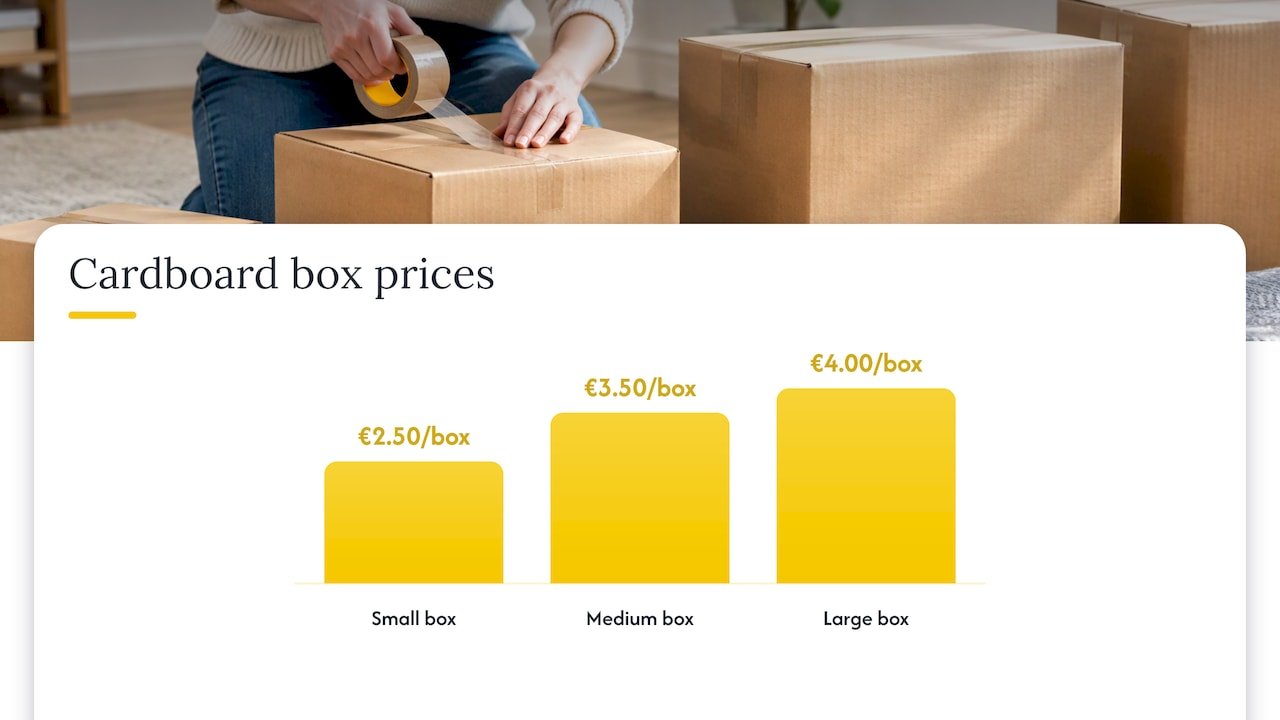
    Cost is the main consideration. One Irish moving guide estimates typical box prices at about €2.50 for a small box, €3.50 for a medium and €4.00 for a large, with tape, bubble wrap and packing paper on top. Those are estimates from 2024, so treat them as a guide and check current prices with the supplier. For a typical house you are buying dozens of boxes, and delivery charges can add to the total.

    Cardboard also arrives flat. Every box has to be assembled and taped shut, and after the move you have a pile of bulky material to flatten and get rid of.

    Buying new cardboard

    Used boxes from shops and adverts

    People regularly ask where to get a few boxes cheaply, and the usual answer is to ask local shops, or to browse classified adverts where people give away or sell boxes after their own move. This works if you need a small number and have time to collect them.

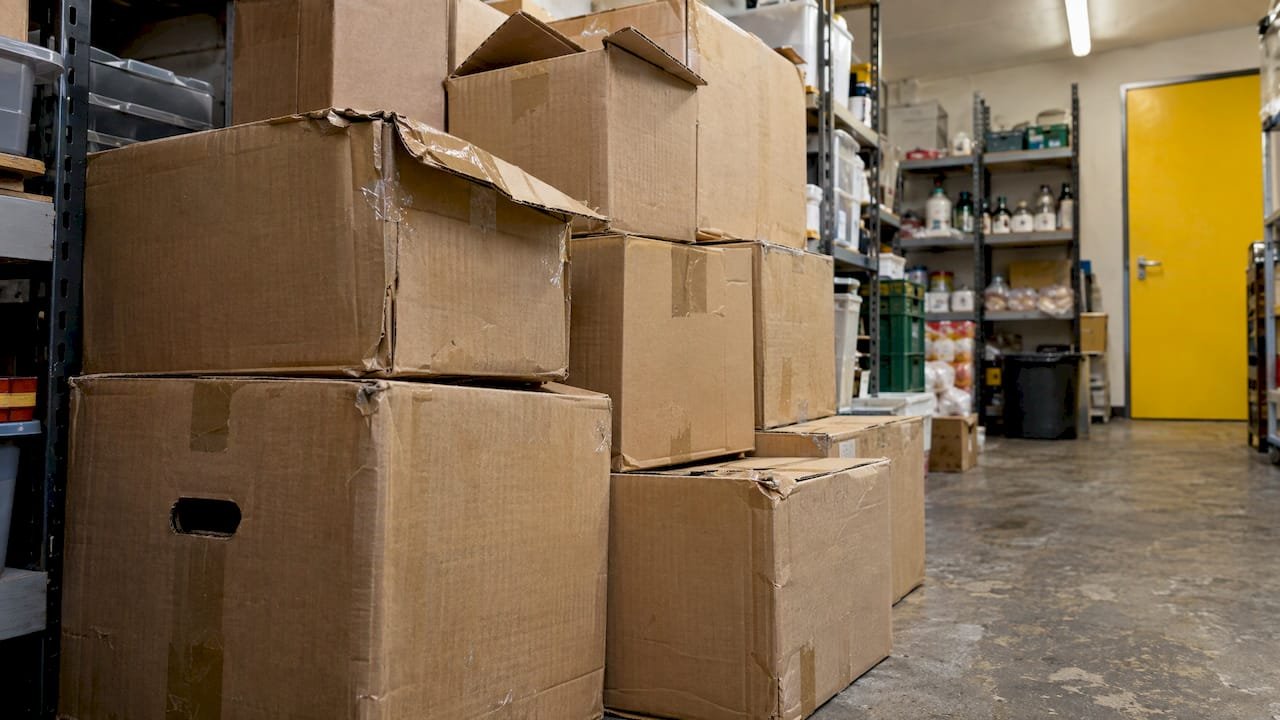
    The trade-offs are practical. The boxes come in mixed sizes, which makes stacking and loading harder. Their strength is unknown, and a box that has already been through one move may not hold a full load of books. You also still need tape, and you still have to dispose of them afterwards.

    Mixed used cardboard boxes in a storeroom

    Boxes from your removal company

    If you hire a removal company, ask what is included. Many removal firms include packing supplies in their price or provide the boxes for free. That is worth confirming when you compare quotes, because it changes what you need to arrange yourself.

    If you are moving yourself, using a van hire or a friend’s car, or if your removal company only transports furniture, you need to source boxes separately. That is where rental fits in.

    Renting reusable plastic boxes

    Renting is the route we offer. Instead of buying boxes you will use once, you hire strong, reusable plastic boxes for the period of your move. They are delivered ready to use, and we collect them when you are finished.

    The practical differences from cardboard are simple:

    • No assembly and no tape. The boxes arrive ready, with secure lids.
    • No waste. Nothing to flatten, store or recycle afterwards.
    • Consistent size. Identical boxes stack neatly in a hall, a van or a new room.
    • Delivery and collection included within our service areas.
    • A moving trolley comes with every package, so you are not carrying every box by hand.

    Our boxes are 100 litres, which is a generous size. We explain below how to pack them so they stay manageable.

    How our rental packages work

    We offer four house-move packages: 10, 15, 20 and 25 boxes. You pick the one closest to your needs, choose a rental period from one to four weeks, and book online or by phone. You can see the packages and current pricing on our shop page, and the individual pages for the 10-box, 15-box, 20-box and 25-box options.

    The period you choose should cover three phases: packing at the old place, moving day, and unpacking at the new one. Many people want the boxes for longer at the end than they expect, because unpacking drags on. If your move is complicated, with a gap between moving out and moving in, the longer rental periods give you room.

    Free delivery and collection: what to check

    People often search for rental with free delivery in a specific county, Cork being a common one. Our packages include delivery and collection within specified areas. Before you book, check these points on our site and in our terms and conditions:

    1. Whether your address falls inside our delivery area.
    2. The delivery date, which should land a few days before you start packing.
    3. The collection date, and how it relates to your chosen rental period.
    4. What happens if a box is damaged.

    The same four questions are worth asking of any delivery service, whether it is boxes, furniture or a van.

    Choosing the right number and size of boxes

    The single most common mistake is guessing the number. Too few and you are buying extra cardboard at the last minute. Too many and you are paying for space you do not use.

    A rough way to think about it: a one-bedroom flat or a student room is a small move, a two or three-bedroom home is a medium one, and a family house with a full kitchen, attic and garage is a large one. Our room-by-room guide to how many boxes you need walks through each room so you can count rather than guess. You can also see how our moving boxes are laid out before you choose.

    Packing 100L boxes sensibly

    A 100-litre box can hold a lot, and a full one can be heavy. A few habits keep it manageable:

    • Put heavy, dense items such as books at the bottom, and fill the box only partly with them. Top up with lighter things.
    • Use soft items, such as towels and bedding, to fill gaps so contents do not shift.
    • Label the lid and one side with the destination room.
    • Use the trolley for anything you would struggle to lift. Lifting heavy loads incorrectly is a common cause of back injuries, so if a box feels too heavy, take something out.

    Because the boxes are identical, you can stack them evenly, with the heaviest at the bottom.

    What to check before you get boxes, wherever from

    Whichever route you choose, five questions save time and money:

    1. How many do I really need? Count by room, then add a margin.
    2. How long will I need them? Include packing time and unpacking time.
    3. Who delivers, and when? A box supplier that delivers next day is no use if you move tomorrow.
    4. What is included? Tape, trolley, lids, delivery, collection.
    5. What happens afterwards? Disposal, collection, return.

    The last one is easy to forget. With cardboard, “afterwards” is your problem. With rental, it is part of the service.

    Our perspective

    We built this service because we saw the same pattern every time someone moved. People ordered a stack of flat cardboard, spent an evening building boxes and taping them, then spent another weekend after the move wondering what to do with them.

    Our view is that a box is a tool you need for a few weeks, not something you need to own. A strong 100L plastic box with a lid does the same job from the first packed item to the last unpacked one, and then it goes back into use for someone else’s move.

    That is why every package includes delivery, collection and a moving trolley. The trolley matters more than people expect: it turns a day of lifting into a day of rolling. And because there is no assembly or tape, the packing starts the moment the boxes arrive.

    If you are moving house, a student heading home for the summer, or a family relocating, choose the package that matches your home, pick one to four weeks, and let us handle the delivery and the collection.

    Vincent

    Rent your boxes from us

    If you want boxes that arrive ready, come with a trolley and leave when you do, choose a package on our shop page. Pick 10, 15, 20 or 25 boxes, set a rental period of one to four weeks, and we deliver and collect.

    15 Moving Box Rental Package

    If you want to see our range first, start at Moving Box Rental Ireland.

    Storage boxes for offices and businesses

    Not every box need is a house move. Offices often need extra storage for files, stock or seasonal items, without buying shelving or pallets of cardboard. We offer monthly storage box rental for businesses, with flexible quantities and replacements for damaged boxes. The plans on our business storage box rental page are:

    Plan Price per month
    Small Office €5
    Office €9
    Business €16
    Business Plus €28

    Because it is a monthly arrangement, you can scale up when a project lands and scale back when it is over, rather than holding on to boxes you no longer need.

    Students and short-term storage

    Students have a particular pattern: a few weeks between the end of term and the start of a summer job or a new rental. Boxes that need no assembly are useful at that point, since there is often no space or time for taping cardboard together. A small package for one to four weeks covers the gap, and our collection means you do not have to carry the empties anywhere.

    Reusing and recycling boxes after a move

    If you end up with cardboard from your move, whether you bought it or were given it, there are three sensible options:

    • Pass it on. Neighbours, friends or local groups often want sturdy boxes for their own move.
    • Recycle it. Cardboard packaging goes in the household recycling bin, and it must be clean and dry. Wet or soiled cardboard cannot be recycled. For large volumes, use the waste services locator on the same site.
    • Flatten it first. Flat boxes take up far less room in the bin and in the car.

    With rental, none of this applies. The boxes are collected and used again, which is the core of our sustainability approach.

    A simple move-week timeline

    Planning the order of things makes the whole move calmer. This is the sequence we suggest for most households:

    1. Two to three weeks before: count boxes by room and choose a package. Book your delivery.
    2. One week before: boxes arrive. Start with rooms you use least, such as the attic, spare room and books.
    3. Three days before: pack the kitchen and bathroom, keeping a box of essentials aside.
    4. Moving day: use the trolley to load. Pack the heaviest boxes first and the essentials box last, so it comes off first.
    5. After the move: unpack room by room, bedrooms and kitchen first. Arrange collection once the last box is empty.

    If you are unsure how long you will need, choose a longer rental period. Unpacking nearly always takes longer than packing.

    FAQ

    Where is the cheapest place to get moving boxes in Ireland?

    Free used boxes from shops or neighbours cost the least in cash, but they take time to collect and vary in size and strength. New cardboard is cheap per box but adds up across a house, along with tape and delivery. Renting trades a per-box purchase for a package that includes delivery, collection and a trolley.

    Can I rent plastic moving boxes in Ireland?

    Yes. We rent 100L reusable plastic boxes with secure lids to individuals, families and students, in packages of 10, 15, 20 or 25 boxes for one to four weeks. Delivery and collection are included within our service areas, so check our site for whether your address is covered.

    How many boxes do I need to move a house?

    It depends on the size of the home and how much you own. A small flat may need a couple of dozen smaller boxes, while a family house needs many more. Our room-by-room guide to how many boxes you need helps you count rather than estimate.

    Do I need tape or assembly with rental boxes?

    No. Our boxes arrive ready to use, with secure lids, so there is no assembly and no packing tape. You pack, close the lid and label it.

    What should I do with cardboard boxes after moving?

    Pass on any that are in good condition, and flatten the rest. Clean, dry cardboard goes in your household recycling bin, while wet or soiled cardboard cannot be recycled.

    Movingboxrental
    Questions About Renting Moving Boxes?
    Call to ask about reusable moving boxes, package options, delivery and collection, or rental periods for your move.
    MMovingboxrental

    Call us+353 85 839 2698

    Sources

    Created with BabyLoveGrowth’s tools

  • Moving Packing Timeline: What to Pack and When

    Moving Packing Timeline: What to Pack and When

    Start packing about six to eight weeks before moving day, and begin with the things you never use. Smaller homes can start closer to the date, while a family house with three or more bedrooms needs the full eight weeks. The rest of this guide gives you a week-by-week plan, a room order that works, and a clear idea of what to leave until the last 48 hours.

    Movingboxrental
    Keep Your Packing Timeline Moving
    Reusable 50L boxes arrive hassle-free and are collected after your move, with flexible rental periods from one to four weeks.

    Explore moving box rental

    TL;DR

    • Plan the move two months out and start sorting belongings about one month out, as Selectra advises. Start packing seriously from week six to eight.
    • Pack in this order: storage areas, spare rooms and offices, living rooms, kitchen non-essentials, bedrooms, then bathroom and everyday items.
    • Declutter before you pack. Every item you donate or sell is one less thing to box, carry and unpack.
    • Keep an essentials bag with medication, documents, keys, chargers and a change of clothes. It travels with you, not in the removal vehicle.
    • Get your boxes delivered about a week before you start packing in earnest, so the plan never stalls for lack of them.

    Table of Contents

    How early should you start packing for a house move?

    The honest answer depends on the size of your home and how much free time you have. A studio or one-bedroom flat can be packed in around five weeks of evenings and weekends. A three-bedroom house with an attic, a garage and a shed needs closer to eight. If you work long hours or have children at home, add a week or two on top.

    Suggested packing time by home size

    Irish guidance points the same way. Selectra recommends planning at least two months ahead and sorting belongings into essential and non-essential about a month before you leave. Switcher calls six weeks plenty of time to get prepared, with packing and decluttering room by room from about three weeks out.

    A professional organiser quoted by RTÉ Lifestyle makes a point worth remembering: you don’t have to do a whole room in a day. Chipping away gently beats cramming it all into the final weekend.

    What changes your start date

    • Size of the home. More rooms, more weeks. Count the storage spaces too, because attics and garages are where time disappears.
    • Your schedule. Packing around a job, school runs or exams slows everything down.
    • How much you own that you no longer need. If a clear-out is needed, it comes first and adds time.
    • Time of year and month. Moves at the end of the month and in summer are busy for everyone, so key dates tend to get booked up early. Your own packing plan needs to work back from a fixed date.
    • Where you are going. A cross-country move leaves less room for last-minute fixes than a move across the same town.

    The eight-week packing timeline at a glance

    When Main job Pack
    8 weeks out Measure the new place, plan boxes, start clearing Nothing yet, or the attic and shed
    6 weeks out Declutter, sell or donate, order boxes Garage, storage, rarely used items
    4 weeks out Pack non-essentials Spare room, office, books, decorations
    3 weeks out Keep going room by room Living and dining rooms, ornaments, CDs and games
    2 weeks out Kitchen and wardrobe edits Baking tins, serving dishes, off-season clothes
    1 week out Admin, essentials bag Most bedrooms, pictures, mirrors
    Final 48 hours Last packing and cleaning Bathroom, bedding, kettle, daily items

    Treat the table as a skeleton. If your home is small, squeeze the early rows together. If it is big, spread each stage across extra days.

    Eight to six weeks before: clear and plan

    This stage involves almost no boxes, which is why people skip it and regret it later.

    1. Measure the new home. Check which furniture will actually fit, so you do not pack and move things you will then have to get rid of.
    2. Start with the rooms you use least. An Irish clearance guide from HouseClearances.ie suggests the attic, garage, shed and spare room for the six-to-eight-week window.
    3. Sort into keep, sell, donate and bin. Do it in short sessions of an hour or so.
    4. Estimate how many boxes you need. Walk through each room and make a rough count. It is easier to adjust a plan than to panic with a half-packed living room.
    5. Check your tenancy or sale paperwork. If you rent, Citizens Information says to check your tenancy conditions and inventory, and to settle any outstanding bills so your deposit is not at risk.

    Why boxes should be ordered now

    When the boxes arrive early, you can start the moment a spare hour appears. If you rent, our 1 to 4 week rental periods are long enough to cover a staggered pack, so you can plan your delivery for when you really begin, rather than too early. Our moving boxes page shows what you get.

    Six to four weeks before: pack what you will not miss

    Now the boxes come out. The principle is simple: pack what you will not need before moving day, and leave daily items to the end.

    A room order that Irish moving guides commonly recommend runs like this: storage areas first, then guest rooms and offices, living and dining rooms, kitchen non-essentials, bedrooms, and finally bathrooms and everyday items.

    What goes in first

    • Books, CDs, DVDs and board games
    • Ornaments, vases and framed prints you can live without
    • Seasonal items: Christmas decorations, summer gear, camping kit, garden tools
    • Spare linen and towels beyond the set you use
    • Paperwork you rarely touch, kept together in a clearly marked box

    Packing habits that save time later

    Label every box with the contents and the room it is going to. Get Cracking recommends putting heavier items at the bottom, not overfilling boxes and wrapping fragile things individually. Keep liquids upright and never lift loads that are unsafe to handle.

    This is where uniform boxes help. Our reusable 50L plastic boxes come ready to use, with secure lids, so there is no assembly and no packing tape. Because every box is the same size, they stack neatly and are easy to carry, and the small size keeps books from turning into a back injury.

    Three to two weeks before: the main push

    This is the busiest stretch. Switcher suggests tackling one room at a time, with ornaments, books and personal belongings first and daily-use items last. Follow that and you will have a house that still works while it empties.

    The kitchen

    Kitchens take longer than anyone expects. Spread the job over several days:

    • Start using up frozen and pantry food about two to three weeks out, and plan meals around what you have.
    • Pack baking tins, serving dishes, special-occasion glasses and rarely used gadgets first.
    • Keep a small working set: a couple of plates, mugs, a pot, a knife and a kettle, until the last morning.
    • Wrap plates individually and stand them on edge. Keep liquids upright.
    • Defrost and clean the fridge and freezer a day or two before the move.

    Those points follow the guidance in ShamFix’s house move guide, which is useful to cross-check against your own kitchen.

    Wardrobes and bedrooms

    Pack off-season clothing first. Suitcases and holdalls work well for clothes, and they are a good way to cut down on the number of boxes. Leave bedding, toiletries and everyday clothes for the last day.

    Off-season clothes being packed into a suitcase

    Furniture and big items

    Take apart anything that needs it, such as flat-pack shelves and bed frames, and keep screws in labelled bags taped to the furniture. If you need a trolley for heavy boxes or small appliances, ours is included in every package, which makes loading and unloading easier on your back.

    One week before: admin and the essentials bag

    By now most rooms should be packed. This is the week to deal with everything that is not boxes.

    • Redirect your post. Switcher notes that an An Post redirection needs to be arranged at least five days before the move.
    • Sort your utilities. Citizens Information says to close or transfer electricity, gas and waste accounts, take final meter readings before leaving and take initial readings, with photographs, in the new home. Its gas guidance adds that you should give your supplier a final reading and your new address, otherwise you may stay responsible for gas used after you leave.
    • Clean and photograph. If you rent, clean the property and photograph its condition, as the official guidance advises.
    • Arrange childcare and pet care for moving day. Get A Mover recommends this, and it frees you to supervise the move.

    Build your essentials bag

    Pack one bag that travels with you, not in the removal vehicle. Include:

    • Regular medication, important documents, keys, chargers and valuables
    • Toiletries and a change of clothes for everyone
    • Children’s essentials
    • Basic kitchen items: kettle, mugs, tea and coffee, snacks
    • Loo paper, cleaning products, lightbulbs and a few basic tools

    This follows the advice from Get Cracking to keep the essentials bag with you so immediate-arrival items stay within reach.

    The last 48 hours: what to leave until the end

    Keep out only what you need to live: bedding, toiletries, the kettle, a few plates and your phone charger. Pack these on the final morning, last in, first out.

    1. Two days before: finish bedrooms, strip the beds of anything you will not sleep in, and clear the fridge.
    2. The night before: pack bathroom items, bedding and the last of the kitchen. Charge phones. Put the essentials bag by the door.
    3. Moving day morning: take final meter readings, do a last walk through every room, including cupboards, the attic and the shed, and check windows and doors.
    4. On arrival: take initial meter readings with photos and unload the boxes straight into the right rooms, using your labels.

    Perspective: why we think a reusable box changes the timeline

    Most packing timelines assume cardboard, and that quietly adds steps: collecting boxes, building them, taping them shut, then breaking them down and getting rid of them afterwards. Each of those is a small job, but they add up, and they tend to land at the worst moments.

    We designed our service to remove them. Our 50L plastic boxes arrive ready to use, with secure lids and no packing tape. We deliver them, and we collect them when you are done, so there is no pile of flattened cardboard left in the hall. Every package includes a moving trolley, which helps most in the final days when the boxes are heaviest.

    Our rental periods run from one to four weeks, so you can match them to your own timeline. Our advice is to book the boxes for the weeks when you will be doing the bulk of your packing and moving, rather than for the whole eight weeks. Start decluttering first, then bring in the boxes.

    The best timeline is the one that leaves no step to chance. Reliable boxes, delivered on time, are one step you can tick off early.

    Vincent

    Choosing a box package to fit your timeline

    We offer four rental packages: 10, 15, 20 and 25 boxes. All include delivery, collection and a moving trolley, with free delivery and collection within our specified areas. To pick a size, go through your home room by room and count honestly. A studio usually needs a smaller package, and a family home with a full attic needs a larger one. If your count falls between two sizes, remember the plan: you can pack in stages, and emptied boxes come back into use as you go.

    When you are ready, see the rental packages in our shop, or go straight to the 10 box package or the 25 box package. Check the product pages for current pricing and the delivery areas we cover.

    15 Moving Box Rental Package

    If you need somewhere to keep things while you move, our business storage box rental offers monthly plans for offices and businesses.

    Common packing timeline mistakes

    • Starting with the kitchen. It is the slowest room, and you need it until the end. Start with the attic instead.
    • Packing before decluttering. You end up paying in time and effort to move things you then throw away.
    • Overfilling boxes. Heavy boxes slow everyone down and risk injury. Put heavy items in small boxes and light items in bigger ones.
    • Skipping labels. Unlabelled boxes make the first night in a new home much harder.
    • Leaving admin until the final days. Utilities, post redirection and tenancy checks all need lead time.
    • Packing the essentials bag into the van. Keep it with you.

    FAQ

    When should I start packing for a house move?

    For most homes, six to eight weeks before moving day is a comfortable start. A small flat can start around five weeks out, while a large family home needs the full eight. Begin with rarely used rooms such as the attic, garage and spare room.

    How many weeks does it take to pack a house?

    It depends on size and how much free time you have. As a guide, a one-bedroom flat takes around five weeks of part-time packing, and a three-bedroom house needs about eight. Decluttering first usually shortens the packing itself.

    What should I pack last when moving?

    Pack daily items last: bedding, toiletries, a few kitchen basics, chargers and the clothes you are wearing that week. Medication, documents, keys and valuables go into an essentials bag that stays with you on moving day.

    Is it too late to start packing two weeks before a move?

    Not at all, but you will need to be selective. Declutter fast, pack in daily sessions, and use uniform, ready-to-use boxes to avoid time spent building and taping. Prioritise the kitchen and wardrobes, which take the longest.

    When should I get my moving boxes?

    Have them delivered a week or so before your main packing begins. That way you can pack in any spare hour. Rental periods of one to four weeks let you choose the window that matches your plan.

    Movingboxrental
    Ask About Boxes for Your Move
    Call to discuss reusable moving boxes, package options, delivery and collection, and rental periods that fit your move.

    Sources

    Created with BabyLoveGrowth for content creation

  • How Many Boxes for Moving House? A Room-by-Room Guide

    How Many Boxes for Moving House? A Room-by-Room Guide

    Most Irish homes need somewhere between 20 and 30 boxes for a studio or one-bed, and 80 to 120 or more for a three-bed, depending on how much you own. The quickest way to get your own figure is to count by room, add a small buffer, and declutter before you pack. This guide shows you how, with worked examples for flats, family homes and student moves.

    Movingboxrental
    movingboxrental.ie
    Choose Boxes That Fit Your Move
    Explore reusable 50L moving boxes in packages from 10 to 25, with delivery, collection and a moving trolley included.

    Explore moving box packages

    TL;DR

    • A studio or one-bed typically needs about 20 to 30 boxes. A three-bed often needs 80 to 120, based on Irish estimates by home size.
    • Count by room instead: roughly 8 to 12 boxes for a lived-in bedroom or living room and 10 to 15 for a kitchen is a sound starting point.
    • Add about 10% for last-minute packing, then subtract everything you sell, donate or bin first.
    • Uniform, stackable boxes make the count easier to check, because every box is the same size.
    • Our 10, 15, 20 and 25 box packages include delivery, collection and a moving trolley.

    Table of Contents

    The short answer by home size

    Published estimates vary, and that is normal: a minimalist couple and a family of five can live in the same three-bed. Use the table as a range, then refine it with the room method below.

    Home Typical number of boxes
    Studio or one-bed 20 to 30
    Two-bed 60 to 90
    Three-bed 80 to 120
    Four-bed 100 to 140
    Five-bed 140 to 180

    These figures come from an Irish estimate by home size, which also advises getting a few extra boxes for last-minute packing. Other guides give lower numbers, especially where they count large cardboard boxes or assume you will move furniture contents in drawers. Treat the range as a ceiling for an average-to-full home and a floor for a very full one.

    The gap between a one-bed and a two-bed in that table looks large. It is, because a second bedroom usually brings a wardrobe, a chest of drawers, a second set of bedding and the things that migrate into a spare room. That is why counting rooms beats relying on bedroom numbers alone.

    The short answer by home size

    How to count boxes room by room

    Estimated moving box ranges by room

    The most reliable method takes about twenty minutes with a notepad. Walk through your home and give each room a box count, using the guide numbers below. They are our own rule of thumb for a standard 50L plastic box, not an industry standard, so adjust them to your belongings.

    Kitchen: 10 to 15 boxes

    The kitchen is usually the room people underestimate. Plates, glasses, pots, small appliances, tins and spices add up fast. Heavy items like cast iron and crockery suit a smaller box that you can still lift, so do not fill a box to the lid with plates. Spread the weight.

    Living room: 6 to 10 boxes

    Books, DVDs, ornaments, board games, cables and photo frames. Books are the trap: a few books fill a box and make it heavy, so spread them across several boxes with lighter items on top.

    Bedrooms: 6 to 12 boxes each

    Clothes on hangers can go in wardrobe boxes or bags, but folded clothes, shoes, bedding and personal items go in standard boxes. A child’s room with toys can hit the top of the range quickly.

    Bathroom, hall and utility: 3 to 6 boxes in total

    Toiletries, towels, cleaning products, shoes, coats and the contents of the under-stairs cupboard.

    Attic, shed and garage: 5 to 20 boxes

    This is where the number swings most. Tools, camping gear, Christmas decorations and storage you have not opened since your last move. We come back to these below, because they are also where you can save the most boxes.

    A worked example

    Take a two-bed house in Cork with a family of three:

    1. Kitchen: 12
    2. Living room: 8
    3. Main bedroom: 8
    4. Child’s bedroom: 8
    5. Spare room or office: 6
    6. Bathroom and hall: 4
    7. Shed and attic: 8

    That is 54 boxes. Add 10% for the things you find at the last minute and you reach about 60, which sits at the lower end of the 60 to 90 range for a two-bed. A fuller household would push towards 90.

    What pushes the number up or down

    Two households in identical homes can differ by 30 boxes or more. These are the factors that matter.

    How long you have lived there. Ten years in a house means ten years of accumulation, much of it out of sight in cupboards and lofts.

    Who is moving. Children, hobbies, home offices and collections (books, records, craft supplies) all add boxes. Students and young renters usually sit at the bottom of the range.

    What the new place already has. Advice from a Dublin clearance service is to start with the new space rather than the old one: get the floor plan, measure the main rooms, and note what is already there, such as fitted wardrobes, a built-in kitchen or appliances. If the new kitchen has everything, you may not need to pack the old appliances at all.

    Large furniture decisions. The same source points out that the real question is not whether you still want something, but whether it will fit and be used in the new home. A wardrobe or sofa that will not go through the new doors is better dealt with before moving day. Every piece you let go also frees the boxes that would have packed its contents.

    Whether you declutter first. This is the biggest lever you control, and it is covered next.

    Declutter first, then count

    Counting boxes for things you will not keep is the most common reason people over-order. Declutter before you do the count, not after.

    A few approaches that work:

    • Use the same four piles in every room: keep, give or sell, recycle, let go. One Irish clear-out guide recommends finishing one room before starting the next so the process does not stall, and checking every pocket, drawer and box before it is bagged.
    • Start with the forgotten spaces. Another Irish guide advises clearing the attic, shed and garage first because they are the most forgotten and dustiest, and notes that decluttering early reduces both the number of boxes and the weight you carry.
    • Set a deadline. Aim to finish decluttering at least two weeks before the move so your count is firm when you book boxes.

    Once the piles are sorted, recount. Many people find the total drops by a fifth or more.

    Flats, studios and student moves

    Smaller moves are simpler to estimate. A studio or one-bed flat normally lands in the 20 to 30 box range. A guide on what fits in a van says a large panel van usually takes the contents of a studio or one-bed flat in a single load, with room for a bed, wardrobe, sofa, table and chairs, plus around 20 to 30 boxes. It adds that a student move is one load, and a two-bed flat is one or two loads.

    For students, the practical points are:

    • Count 8 to 15 boxes for clothes, books, kitchen basics and electronics.
    • If you are going home for summer, you may only need boxes for the stuff you are leaving behind, so count that separately.
    • A short rental period suits term-time moves, since you will not want boxes sitting in a small room for weeks.

    A one-week rental is usually enough for a flat move: a couple of days to pack, the move itself, and a few days to unpack before collection.

    Boxes of the same size make counting easier

    Cardboard boxes come in small, medium, large and extra-large, and guides disagree on the best mix. One popular split is 20 to 30 small, 15 to 20 medium and 10 to 15 large for a large home. That makes planning harder, because you have to guess how much each room needs in each size.

    With a single standard size, the sum is simpler. Our boxes are 50L reusable plastic boxes with secure lids, so every box holds the same volume and stacks the same way. You count rooms, add them up, and pick the package that covers the total. There is also nothing to assemble and no tape to buy, so you will not discover halfway through that you are one roll short.

    Plastic boxes are also designed for repeated use. An Irish removals blog notes that plastic boxes can be reused many times while cardboard may tear after one use, and that they are easy to stack and carry thanks to built-in handles.

    Perspective

    Every month we hear the same worry: “I have no idea how many boxes I need, so I’ll order too many.” Our advice is to stop guessing at the whole house and start with one room.

    Pack the kitchen first, because it is the hardest room and teaches you most. See how many of our 50L boxes it takes, and multiply that lesson across the rest of the house. Most people are surprised by how quickly the number becomes clear.

    We built our packages around this. A set of ready-to-use boxes with lids, delivered to your door, with a moving trolley included, means you spend your time packing and not assembling, taping or breaking down cardboard afterwards. When you are finished, we collect the boxes, so there is nothing to recycle or store.

    Choose a package a little above your estimate rather than exactly on it. A few spare boxes cost far less stress than a missing one on the last evening.

    Vincent

    Choosing the right package

    We offer four package sizes: 10, 15, 20 and 25 boxes. Every package includes delivery, collection and a moving trolley, and rental periods run from one to four weeks. Use this as a starting guide:

    Your move Likely boxes Where to start
    Student room or bedsit 10 to 15 10 box package or 15 box package
    Studio or one-bed flat 20 to 30 20 box package or 25 box package
    Larger homes 60 and above Get in touch through the shop page to talk through your count

    The price for each package is listed on its product page. Delivery and collection are free within our specified areas, so check yours when you book.

    How long to rent for

    A week is enough for a small flat. For a family home, packing room by room over two to three weeks is more realistic, especially if you are decluttering at the same time. Four weeks gives you room to unpack at the other end before we collect.

    Book your boxes

    Once you have your count, you can pick a package in a few minutes. Our reusable 50L boxes arrive ready to use, with lids, and we collect them when you are done. See all four sizes on our moving box rental shop and choose the one that matches your estimate.

    25 Moving Box Rental Package

    If you are looking for storage for an office rather than a house move, we also rent boxes monthly to businesses. Plans are €5 per month for Small Office, €9 for Office, €16 for Business and €28 for Business Plus.

    A simple packing timeline

    Knowing your number is half the job. The other half is not running out of time.

    1. Four to six weeks before: declutter the attic, shed and garage. Sell or donate what you can.
    2. Three weeks before: finish the other rooms, one at a time. Do your room-by-room count and book your boxes.
    3. Two weeks before: pack things you rarely use: books, off-season clothes, decorations, spare bedding.
    4. One week before: pack the living room and spare rooms. Label each box with its room and a short list of contents.
    5. Final days: pack the kitchen, bathroom and bedrooms, keeping an essentials box with kettle, mugs, chargers, toiletries and a change of clothes.
    6. Moving day: use the trolley for heavy loads, stack boxes by room in the new home and unpack the essentials first.

    Label the side of each box, not the lid, because lids are hidden once stacked.

    FAQ

    How many boxes do I need for a three-bedroom house?

    Most three-bed homes need between 80 and 120 boxes according to Irish estimates by home size. A tidy household that has decluttered may need far fewer, and a family with children and a full attic may need more. Count room by room, add 10%, and then adjust.

    How many boxes do I need for a one-bed flat?

    Usually 20 to 30. A van guide says a studio or one-bed flat with around 20 to 30 boxes is typically a single van load. Our 20 and 25 box packages cover that range.

    Should I order extra boxes?

    Yes, a small buffer of about 10% is sensible. Last-minute items always appear, and the Irish estimate by home size also recommends a few extra boxes. If you end up with spare ones, you simply return them at collection.

    Is it better to use plastic boxes or cardboard?

    Plastic boxes are built for repeated use, stack easily and have built-in handles, with no assembly or tape. Our 50L boxes have secure lids, and we deliver and collect them, so you are not left with a pile of flattened cardboard after the move.

    How long should I rent boxes for?

    One week suits a small flat or student move. A family home usually needs two to three weeks to pack and unpack calmly. Our rental periods run from one to four weeks, so you can match the time to the size of your move.

    MMovingboxrental
    Questions About Your Box Count?
    Call to discuss reusable moving boxes and package options for your home move, including delivery, collection and a moving trolley.

    Sources

    Created with BabyLoveGrowth tools