
An office move goes well when one person owns the plan, every task has a date counting back from moving day, and packing is the simplest job on the list rather than the messiest. This checklist runs from the first decision to the first week in the new premises. It is written for owners, office managers and anyone handed the job of moving a small or medium team in Ireland. Packing is where we can take work off your hands: our reusable 100L boxes arrive ready to use, with a moving trolley, so nobody spends an afternoon building cardboard.
Key Takeaways
- Start planning three to six months out, and name one move coordinator with the authority to make decisions.
- Book the slow things first: broadband at the new address, the removal crew, and any building access or lift bookings.
- Check your lease before you pack, because repair and reinstatement duties can cost real money.
- Give each department a move champion, label every box by zone, and pack from a floor plan.
- Reusable, ready-assembled boxes with delivery and collection remove one whole job from moving week.
Table of Contents
- Start with one owner and a realistic budget
- The timeline, counted back from moving day
- Sort the premises, old and new
- IT, phones and utilities
- Tell people, in the right order
- Packing: the part you can make easy
- Moving day
- The first 48 hours and the first week
- Moving box rental for your office move
- Our view on packing an office
- FAQ
- Sources
Start with one owner and a realistic budget
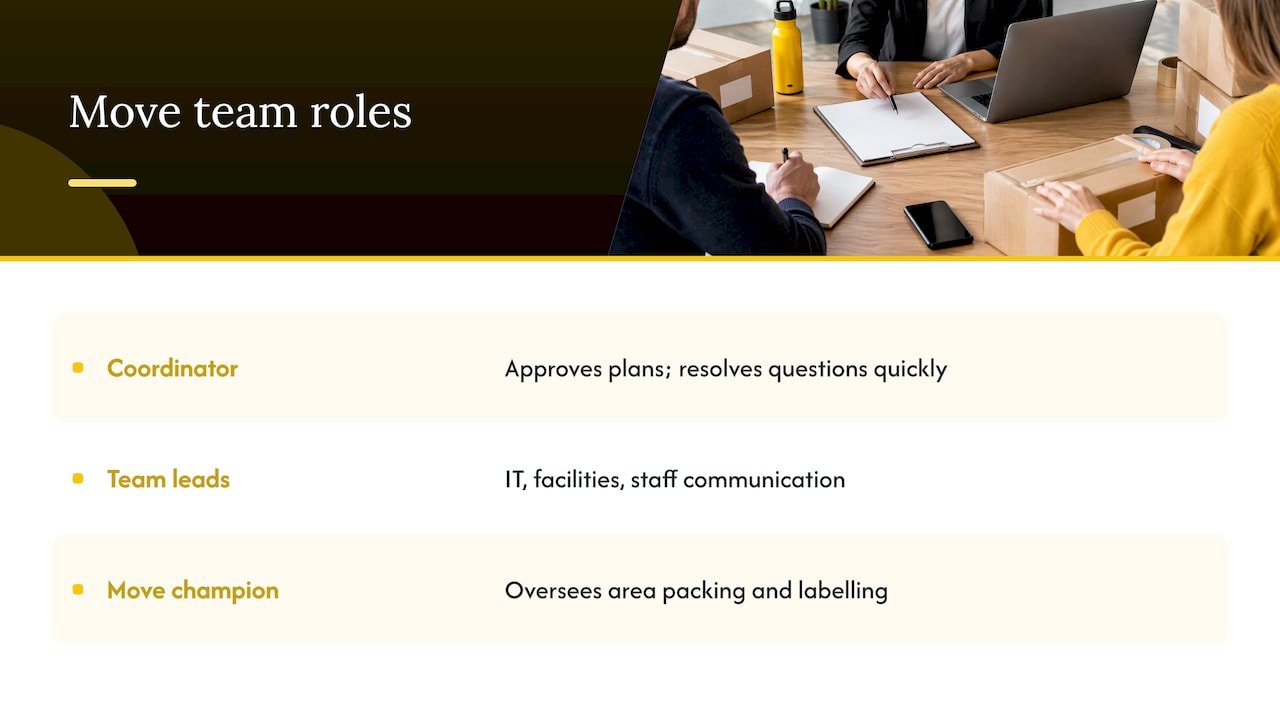
Before any boxes or quotes, decide who is in charge. In a small business that is usually the office manager or an owner, and the title matters less than the authority. The coordinator approves plans, gets access to the new premises, talks to suppliers and settles questions quickly. Without one, small decisions (where the plotter goes, who books the lift) sit unanswered until they become problems on moving day.
In a bigger team, add a lead for IT, a lead for facilities and someone who handles staff communication. Ask each department to nominate a move champion who oversees packing and labelling for their own area and acts as the link to the coordinator.
What the budget should cover
The removal quote is only one line. Build a total from these:
- Removal crew and any out-of-hours or building access fees
- Packing materials or box rental
- IT disconnection, reconnection and new broadband installation
- Furniture, fit-out and signage
- Cleaning at both ends
- Reinstatement or repair costs at the old premises
- Disposal of furniture and equipment you are not taking
- A contingency, commonly set at around 10% of the total
Fit-out is where budgets swing most. Irish cost data for the first quarter of 2026 puts indicative office fit-out at roughly €1,000 to €2,500 per sq m depending on layout and catering, excluding VAT and professional fees. Get that figure early, since it decides whether the new space is affordable at all.
Also put a value on lost working time. A move that runs through a weekday costs you a day of output across the whole team. Paying more for out-of-hours access can be the cheaper choice.
The timeline, counted back from moving day
Use this as a spine and adjust it to the size of your team. Smaller offices can compress the early stages, but the long-lead items (broadband, building bookings, crew availability) do not shrink.
| When | What to do |
|---|---|
| 3 to 6 months out | Appoint the coordinator. Fix the budget. Confirm the new space and lease dates. Read your current lease. Request removal quotes. Start sorting what you will keep, sell, donate or discard. |
| 2 to 3 months out | Tell staff, clients and suppliers. Book broadband at the new address. Confirm building rules and lift bookings. Book your packing boxes. |
| 1 month out | Get the floor plan and assign departments to zones. Begin packing non-essential items. Arrange furniture disposal. Order new stationery and signage. |
| 2 weeks out | Label everything by destination zone. Confirm the IT plan in writing. Update your address with banks, insurers, Revenue-facing records and online listings. |
| 1 week out | Finalise packing. Confirm crew, access times and parking. Back up all data. Walk the new office with your coordinator. |
| Moving day | One responsible person at each address. Server room last out, first in. |
| First week | Test everything, check inventory, hand back the old premises. |
There is a reason the early rows are heavy. Commercial crews that work out of hours tend to be booked well ahead, and IT connectivity can take weeks. A start of 12 weeks or more gives you room to absorb a delay without moving the date.
Sort the premises, old and new
The lease you are leaving
Read your commercial lease before anything is packed. Look at the deposit terms if you are ending early, who is responsible for repairs such as light bulbs, fixtures or tired paintwork, and any other move-out conditions. Handing back a property usually means returning it to the condition it was in when you arrived: logos taken down, fixtures removed or repaired, and cables taken out. Ask for the landlord’s expectations in writing and book a walk-through before you hand back the keys, so there are no arguments about your deposit afterwards.
The space you are moving into
Before packing starts, you need a floor plan with each department assigned to a zone. Then check the practical details with the building manager:
- Power socket positions and whether they match your desk layout
- Server or comms room dimensions
- Meeting room layout and screens
- Loading bay access, lift dimensions and booking rules
- Permitted moving hours and parking restrictions
- Any insurance certificate the building requires from your removal crew
Put the building’s rules in an email thread so everyone has them. A lift that can only be booked between set hours has wrecked more moves than any lost box.
Disposing of what you will not take
A move is the natural moment to clear out old desks, chairs, filing cabinets and monitors. Some Irish clearance firms publish per-item pricing: one Dublin service lists a €100 call-out plus items such as a desk at €20 and a filing cabinet at €20, VAT included. Prices vary by firm and area, so use that as a sense of scale and get a quote for your own volume. Decide what goes before the floor plan is drawn, so you are not paying to move furniture you then throw out.
IT, phones and utilities
IT is the part that stops a business working if it goes wrong, so treat it as its own project with its own written plan.
- Audit your equipment. List every device, who uses it and where it goes in the new layout.
- Book connectivity early. Planning should begin at least 8 to 12 weeks before the move, because installation can take longer where new fibre is needed or the building has limited carrier options. Confirm what is available at the exact address, with expected install dates and a fallback.
- Plan the phones. Know whether your system is internet-based and portable or an older line-based exchange that has to be moved or decommissioned. Porting phone numbers can take time and may involve more than one provider, so give it its own plan.
- Back up everything. Complete and verify backups before anything leaves the old building.
- Prepare a temporary fallback. A mobile 4G or 5G connection can keep you working if the fixed line is late.
- Set up before staff arrive. Where possible, install and test the firewall, switches, Wi-Fi and internet in advance, then check wired and wireless access, remote connections, cloud applications, printing, DNS and email.
Also arrange electricity, internet and phone accounts at the new address before the move, and ask the IT lead to be present when you inspect the new premises, so cabling and comms room issues are caught before the crew arrives.
Tell people, in the right order
Staff come first. Announce the move with a confirmed date and the new address, then map the commuting impact for each person so that no one is surprised. Block pack-down time in team calendars, and give regular updates on packing procedures, timelines and any new office rules.
Involve people. Asking everyone to pack their own workstation and to comment on the new layout gets better results than a top-down plan, and it spreads the workload.
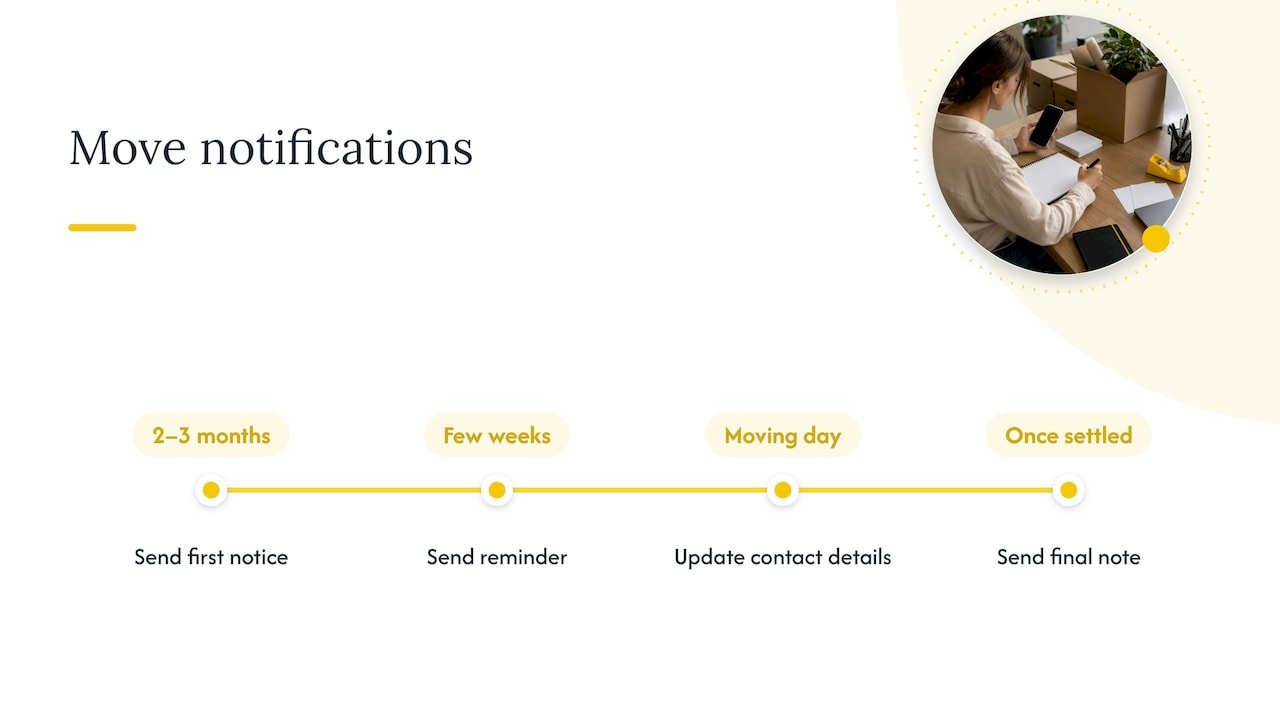
Then tell clients, suppliers, your accountant, insurers, your bank and anyone who posts you things. Set a date for each: send notice two to three months out, a reminder a few weeks before, and a final note once you are in. Update your website, email signatures, Google Business listing and letterheads on the day of the move rather than before it.
Packing: the part you can make easy
Packing is where most office moves lose time. Cardboard has to be built, taped, filled, re-taped, then flattened and disposed of, and it gives way when files are stacked in it. The usual way around this is to rent boxes instead of buying them.
A sensible packing routine looks like this:
- Purge first. Shred or recycle old paperwork and clear dead stock before it is boxed. Check any retention rules that apply to your records before you discard.
- Set a packing order. Start a month out with archives, spare stationery, reference books and anything seasonal. Leave live files and equipment until the last week.
- Pack by zone, not by content. Each box carries a destination zone from the floor plan, the department name and a number. Your champion keeps a simple list of box numbers per desk or team.
- Keep weight sensible. Heavy items such as files and books go in smaller loads; lighter items fill the rest.
- Mark what is urgent. Anything needed on day one (chargers, cables, first-day stationery, the kettle) gets a clearly different label.
- Keep the IT kit separate. Label cables and peripherals with the device they belong to, and photograph rear panel connections before disconnecting.
- Clear the boxes out. Once unpacked, the boxes need to go back, not pile up in a corner.
Our boxes are reusable 100L plastic boxes with secure lids. They arrive ready to use, so there is no assembly and no packing tape, and we deliver and collect them, which removes the flat-pack and disposal steps from steps 1 to 7. Packages include a moving trolley and rental periods run from one to four weeks, so you can have the boxes for the whole packing window and the first unpacking week. Delivery and collection are free within our specified areas. If you are planning how many boxes you need, our moving boxes page shows the options, and our sustainability guide covers the waste you avoid by not using single-use cardboard.
Moving day
The aim on the day is that nobody has to improvise.
- Clear walkways at both properties before the crew arrives.
- Put one named person from your business at each address for the whole duration, and make them the only point of contact for the movers.
- Give the crew the labelled floor plan, so boxes and furniture go straight to the right zone and no one has to ask where an item belongs.
- Keep a printed and digital contact list: the crew supervisor, IT contractor, building managers and your internal leads.
- Make the server or comms room the last thing out of the old building and the first set up and tested in the new one.
- Do the final walk-through with the landlord before you hand back the keys, and photograph the condition of the space.
The first 48 hours and the first week
Before staff return, IT should test internet, phones, printers, shared drives, server access, door access and CCTV, and activate a 4G or 5G fallback if the fixed line is not live. Check meeting room screens and video calls too.
In the first week:
- Walk everyone through the layout and fire escape routes.
- Check your inventory against the pre-move list and log any missing or damaged items within seven days.
- Confirm access cards, parking permits and waste collection are working.
- Return any rented boxes and the trolley on the agreed date.
- Send your final address-change notices and close out supplier bills for the old premises.
Moving box rental for your office move
For the packing stage, our rental packages are built around the job: reusable boxes with lids, delivered, collected and supported by a moving trolley, for one to four weeks. You can see the available packages on our shop page.

If your business also needs somewhere to keep archives or overflow stock after the move, we offer monthly storage box rental with flexible quantities and replacements for damaged boxes. The plans are Small Office at €5 per month, Office at €9 per month, Business at €16 per month and Business Plus at €28 per month. Details are on our business storage box rental page.
Our view on packing an office
Most of the effort in an office move is not lifting. It is the hundreds of small decisions that surface on the day because something was not labelled, planned or booked.
We think packing should be the one stage that needs no decisions. A box that arrives ready to use, closes securely and goes back to us afterwards means your team spends its time on the plan, not on tape and flattened cardboard. A trolley with the package means fewer trips and fewer people carrying heavy loads by hand.
There is also the waste. Moving a team through cardboard creates a mountain of single-use material in a week. Reusable boxes leave nothing to dispose of, which is how we think an Irish business should move in 2026.
Pack by zone, label clearly and give every department a champion. With that in place, the boxes are the easy part.
Vincent
FAQ
How far ahead should I start planning an office move?
Three to six months is a good starting point for most small and medium offices. The long-lead items are broadband installation, crew availability and building access, so book those first. If your move is smaller and simpler, you can compress the timeline, but not below the lead time for connectivity.
How much does it cost to move an office in Ireland?
It depends on volume, distance, access and how much packing you do yourself. One Dublin commercial removals service gives estimates of €1,000 to €2,000 for a small office, €2,000 to €4,000 for a medium one and €3,000 and above for a large relocation. Add IT, fit-out, cleaning, reinstatement and disposal, plus a contingency, for the true total.
Who should be in charge of the move?
One named move coordinator, with authority to approve decisions and to deal with suppliers and the building manager. In a larger team add IT and facilities leads and a move champion in each department. Keep it to one point of contact per address on moving day.
What do I need to arrange with my landlord?
Check your lease for deposit terms, repair duties and reinstatement requirements, such as removing logos and cabling. Agree these in writing and book a final walk-through before you return the keys. At the new building, confirm moving hours, lift and loading bay rules and any insurance requirements for the crew.
Can I rent moving boxes for an office move?
Yes. We rent reusable 100L plastic boxes with secure lids to individuals, families and businesses, delivered and collected, with a moving trolley included in our packages. Rental periods run from one to four weeks. You can choose a package on our shop page.
Sources
- Ireland Cost Database Q1 2026, KeoConsult
- Moving Offices? Business Move Checklist, Selectra Ireland
- Office clearance Dublin price list, Junk Ireland
- Your Office IT Relocation Checklist for SMEs, Host-It
- Commercial Removals Dublin, Man with Van Dublin
Leave a Reply